
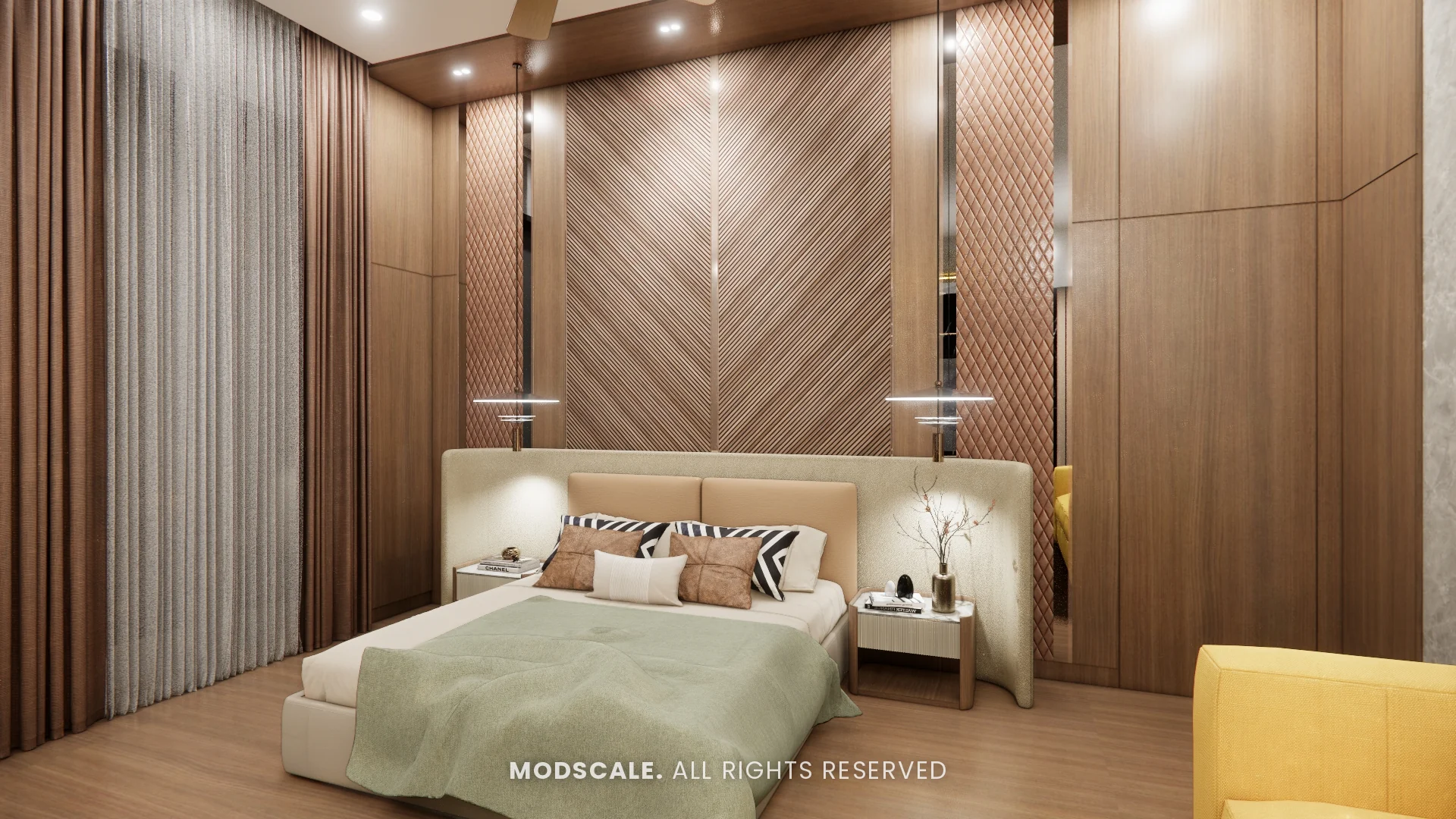
A bedroom has four walls, and each one does a different job. The wall behind the bed is the focal point, the wardrobe wall is mostly storage, the window wall controls light, and the wall opposite the bed is often where the TV or a desk goes. Good bedroom wall design treats them as one scheme so the room feels calm rather than busy. Here is how to plan each wall.
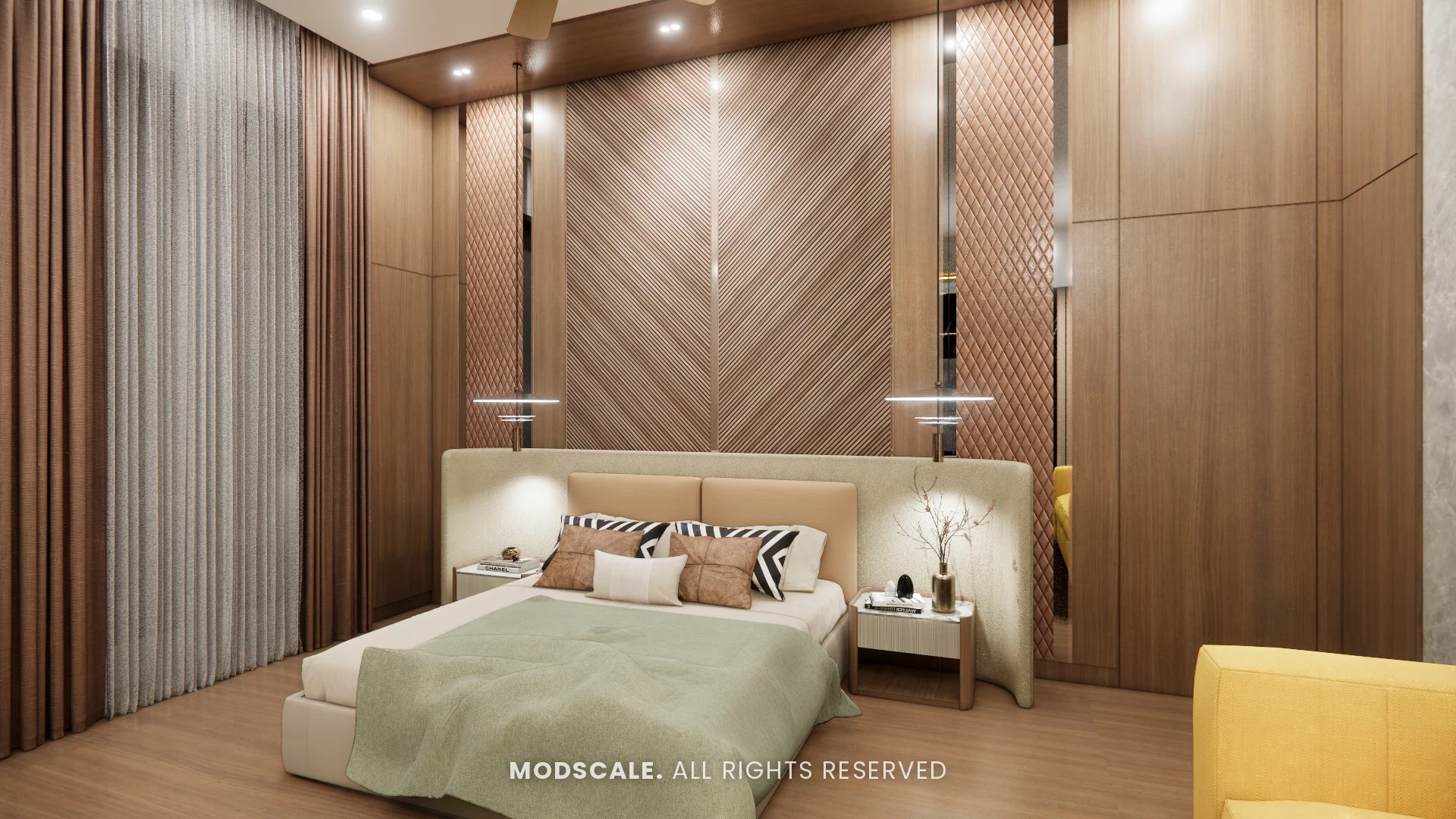
Start with a colour plan
- Choose one main wall colour, one accent and one wood or neutral tone, and repeat them across the walls, bedding and curtains.
- Soft, slightly warm neutrals (beige, greige, warm white) suit most Bangalore bedrooms and work with any furniture.
- Deeper colours such as sage, olive, dusty blue or terracotta work best on one wall only.
- Keep the ceiling lighter than the walls so the room does not feel low.
Need help with finishes? See interior wall paint finishes and wallpaper vs paint vs texture.
The wall behind the bed
This is where most of the design budget should go. Popular options are an upholstered or channel-tufted headboard panel, a chevron or fluted wood wall, framed moulding, a wallpaper panel or a marble-finish panel. Our bed back wall design guide covers these in detail.
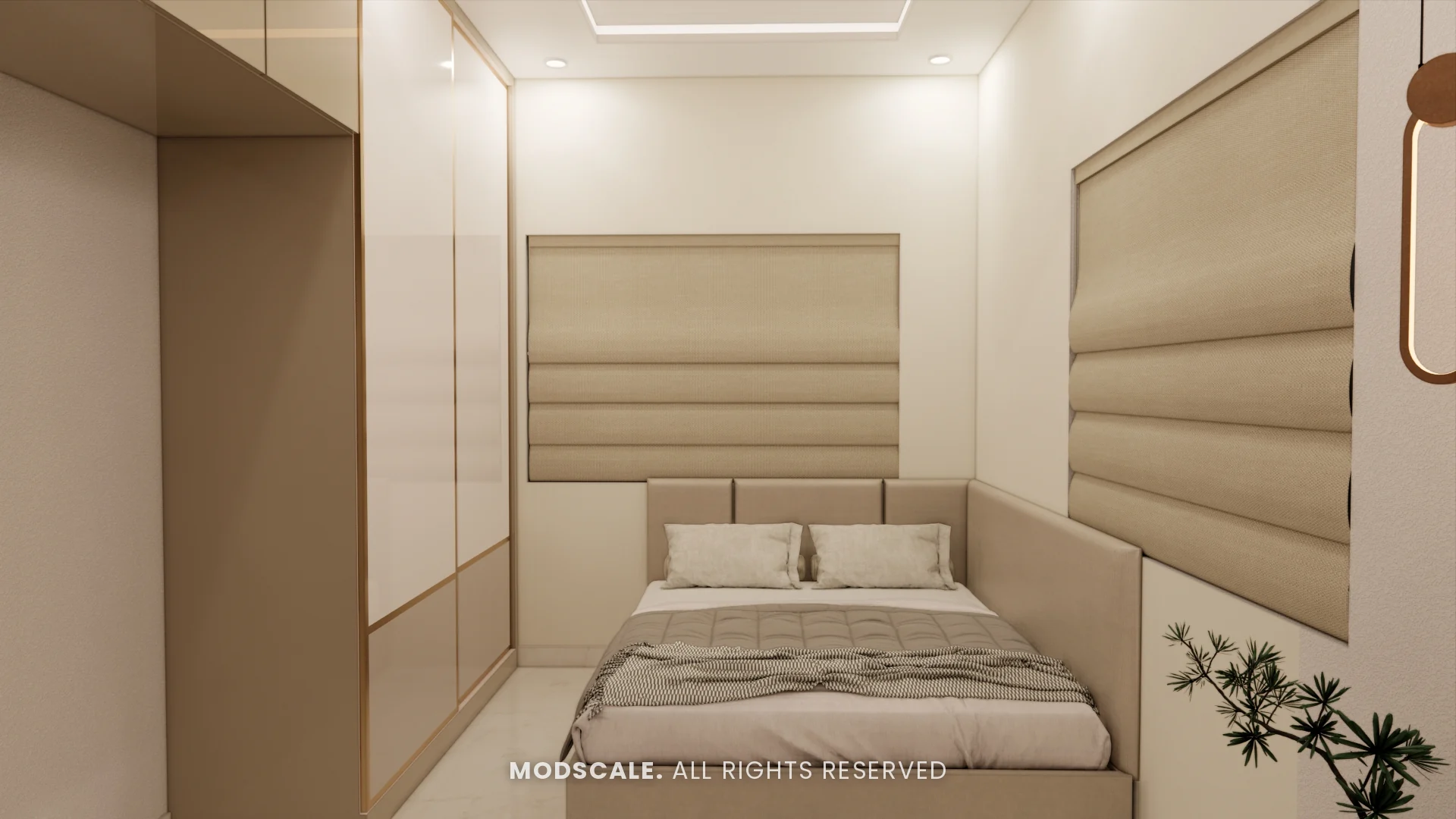
Bedroom wall design ideas
Two-tone wall
A darker shade on the lower part and a lighter shade above, divided by a straight line or a slim moulding. It is affordable and makes a plain wall look intentional.
Wall moulding
Box frames or simple lines painted in the wall colour add depth without much cost. See wall moulding design.
Fluted or slatted panels
Vertical fluting in laminate, veneer or PVC adds texture and makes the ceiling feel higher. Use it on one wall or as a strip behind the side tables.
Wallpaper or textured paint
Botanical, linen or subtle geometric wallpaper on one wall adds pattern. Textured paint such as limewash gives a soft, handmade look.
Floating shelves and niches
A few open shelves or a lit niche display books and decor, and replace bulky furniture in small bedrooms.
Mirror panel
A tall mirror on the wardrobe or beside the dresser makes a small bedroom feel larger. Many families avoid a mirror facing the bed; see bedroom Vastu for apartments.
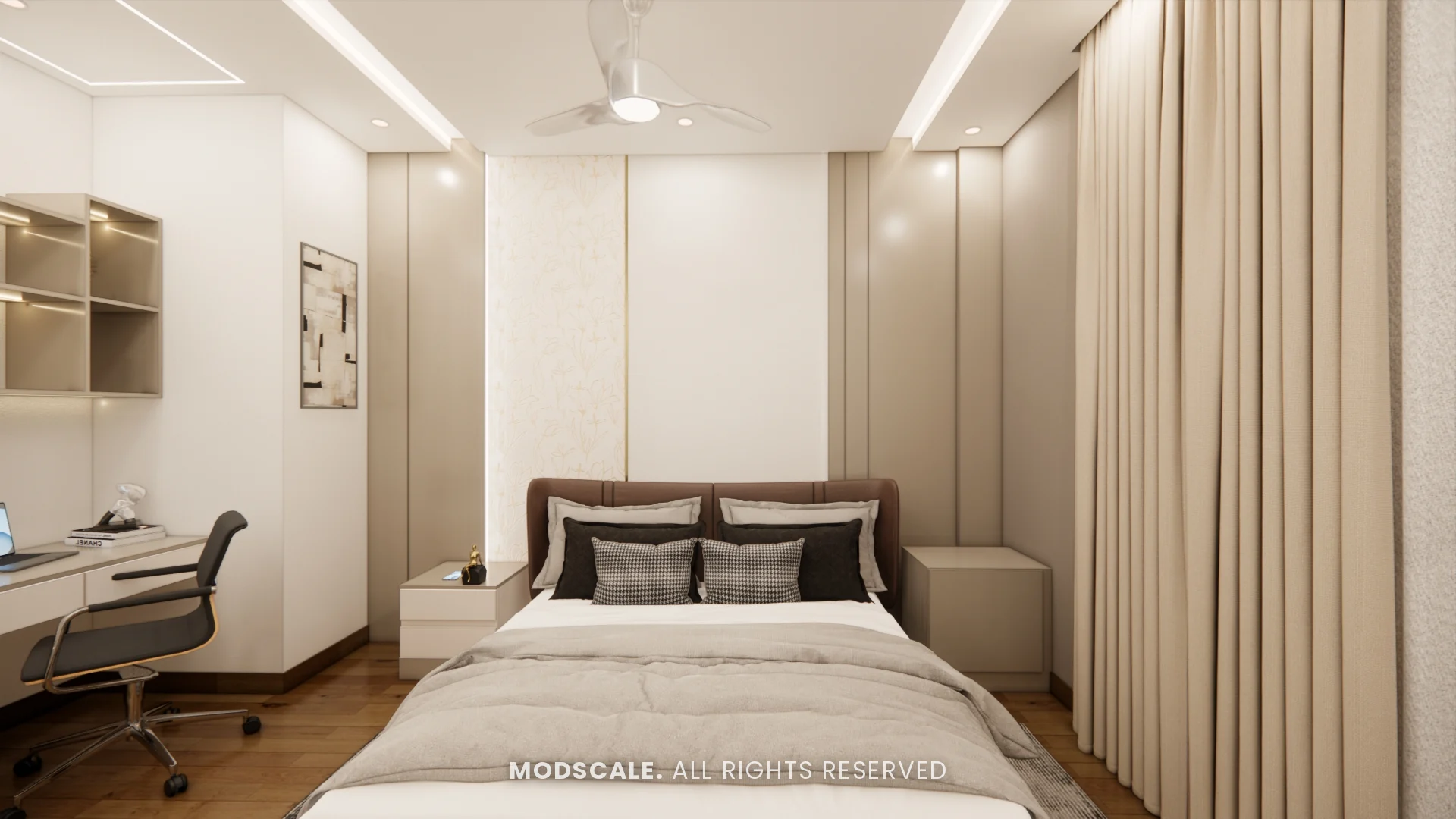
The other walls
- Wardrobe wall: let the wardrobe shutters be the design. Choose laminate or lacquer finishes that match the wall scheme. See modern wardrobe design ideas.
- TV or study wall: a slim panel or floating unit keeps wires hidden. Keep it lighter and simpler than the bed wall.
- Window wall: full-height curtains on a ceiling track make the room feel taller. See curtains vs blinds.
Lighting the walls
Wall lights or pendants by the bed, a cove or strip above a panel and a picture light over art make the walls glow in the evening. Plan the wiring before any panels go up, and pair it with the ceiling; see false ceiling design for bedroom.
Small bedroom tips
- Use light colours and vertical lines.
- Keep only one feature wall.
- Prefer wall-mounted lights and floating shelves to free floor space.
Frequently asked questions
Usually the wall behind the bed, because it is what you see when you enter and it frames the bed. Keep the other walls simpler.
Warm neutrals such as beige, greige and warm white suit most bedrooms. Use deeper colours like sage, olive or dusty blue on one accent wall.
Yes, on a dry wall. A single wallpaper panel or accent wall adds pattern affordably. Treat any damp first or the paper may lift.
Use light colours, vertical lines or panels, a large mirror and wall-mounted lights. Limit the design to one feature wall.
Yes, usually on the wall opposite the bed, mounted on a slim panel or floating unit with wiring hidden inside the wall.
Planning your interiors? Book a free design consultation or WhatsApp us on +91 88845 55998.