
The door of a pooja room sets the tone for the whole space. It should feel sacred and welcoming, let the lamp’s glow and the fragrance of incense through, and still close neatly so the mandir stays clean. Whether you have a full pooja room in a villa or a compact mandir in an apartment, here are pooja room door designs that work in Indian homes.
Pooja room door design ideas
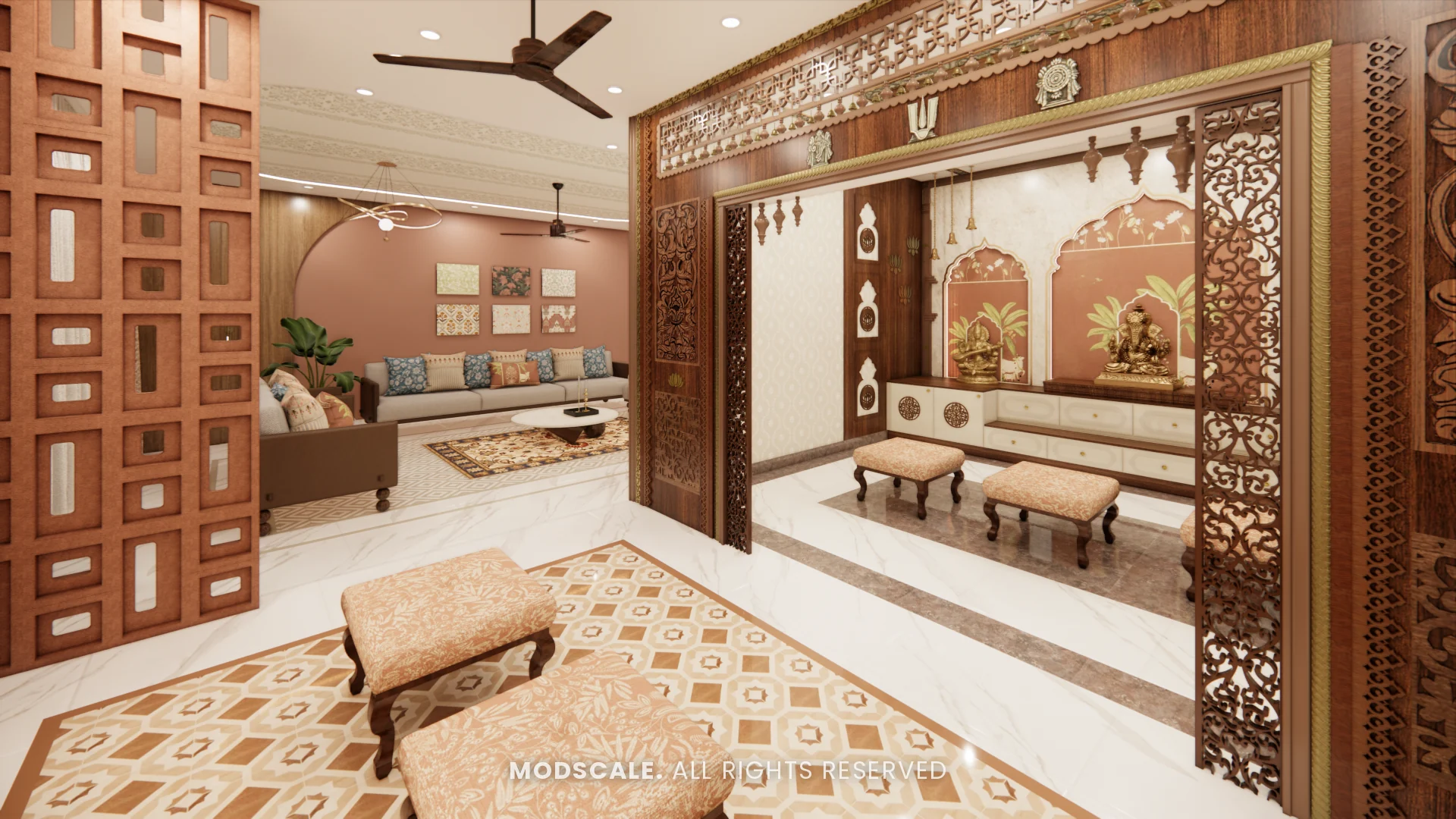
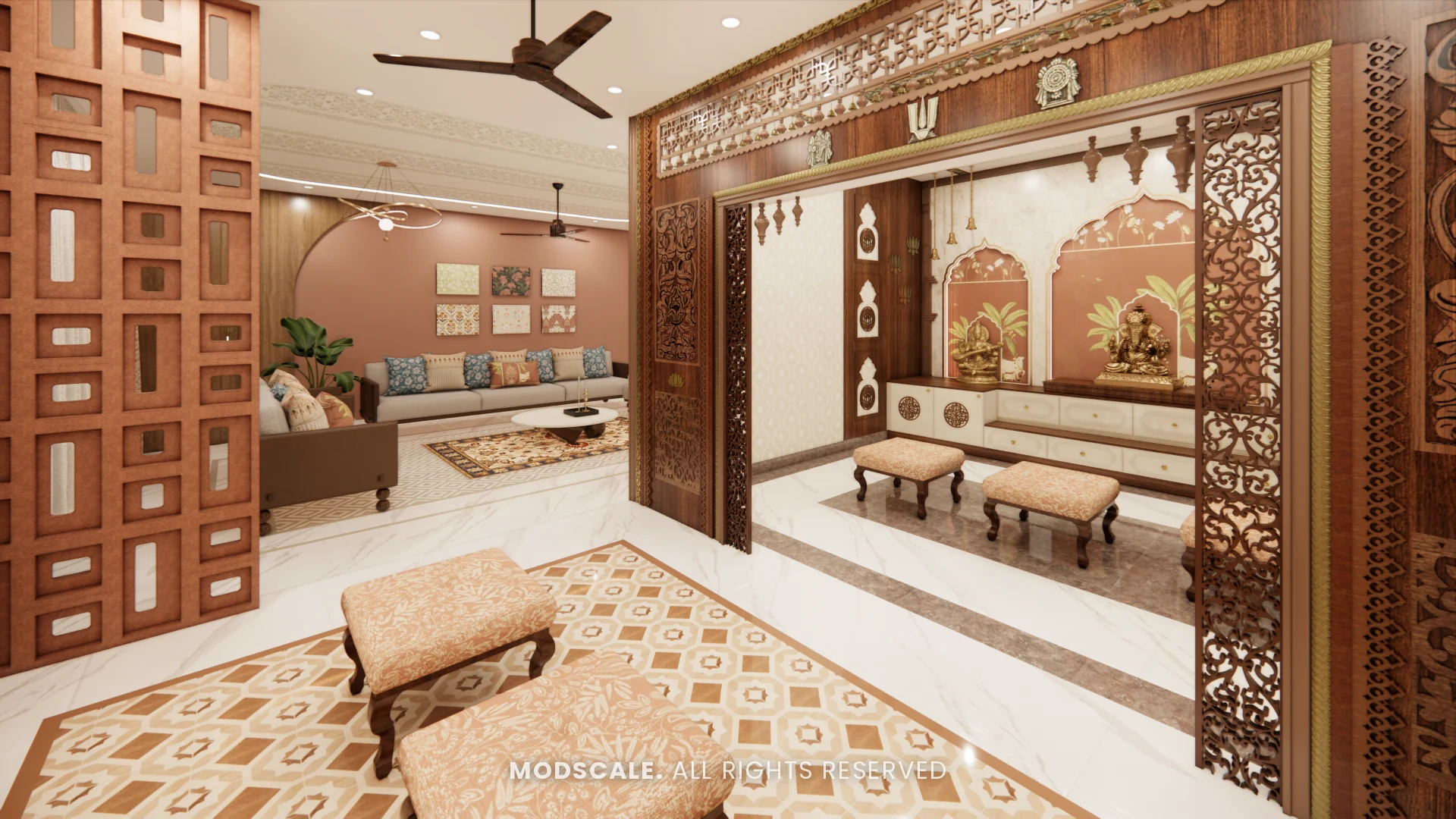
Carved wooden jali doors
Wooden doors with a carved or CNC-cut jali panel are the most popular choice. The jali lets air and light through and shows a glimpse of the deity, while the solid frame keeps the door strong. Floral, lotus, peacock and geometric patterns are common. See more patterns in jali design.
Double doors
Two leaves opening outwards give a temple-like entrance and suit dedicated pooja rooms. In apartments, a pair of narrow doors on a mandir unit gives the same feel in less space.
Frosted or fluted glass doors
Glass shutters with an etched motif, Om or lotus pattern, or fluted glass in a wooden frame keep the mandir visible but protected from dust. This style suits modern homes and small pooja units.
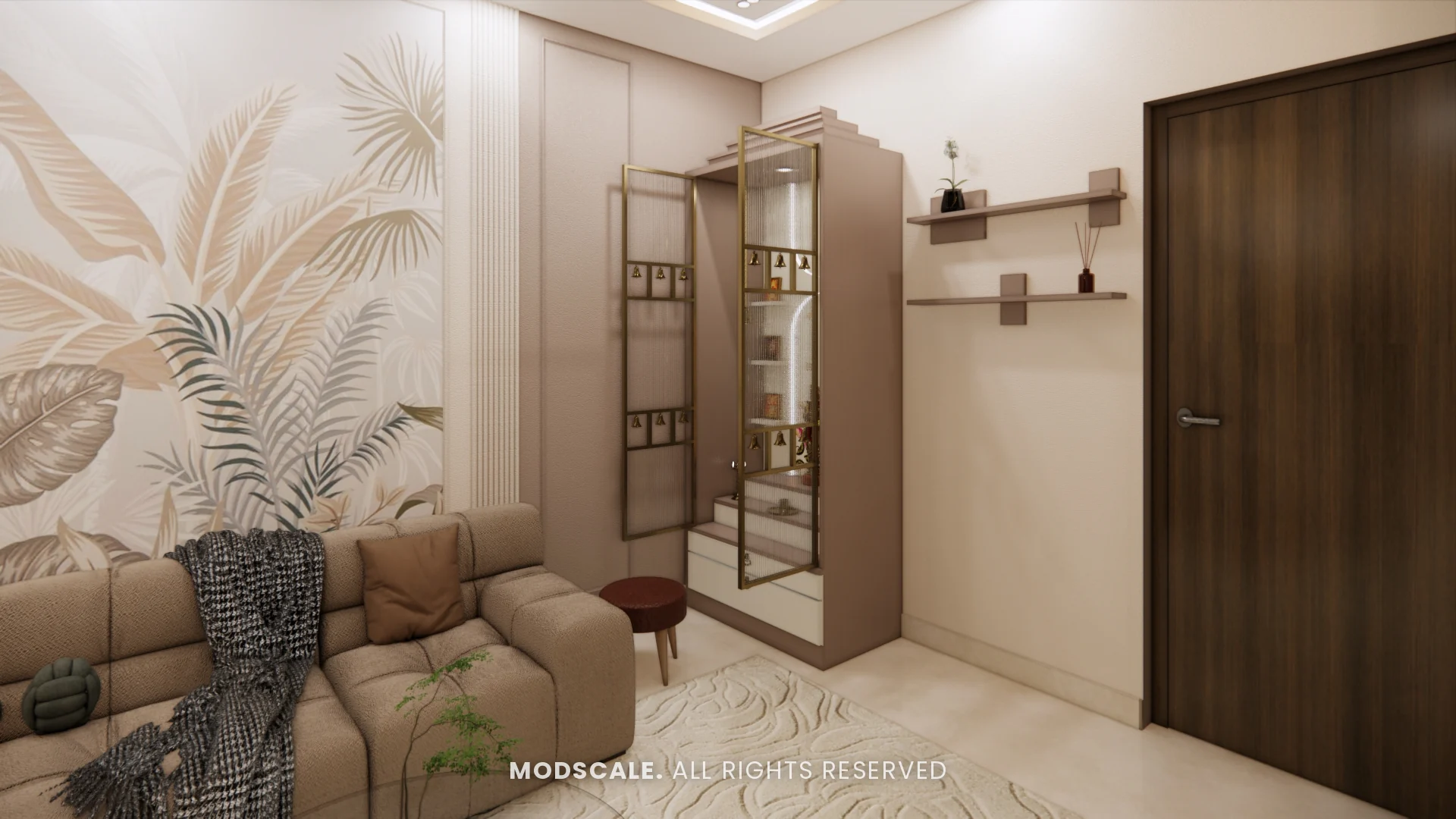
Doors with bells
Small brass bells hung along the top rail or the edges of the door add sound and a traditional touch every time it opens.
Sliding and folding doors
Where there is no room for a swinging door, a sliding jali panel or a bi-fold door works well, especially for a pooja niche in the living or dining area.
Arched doors and frames
An arched top or a temple-style gopuram frame above the door makes the pooja space stand out even when the doors are open.
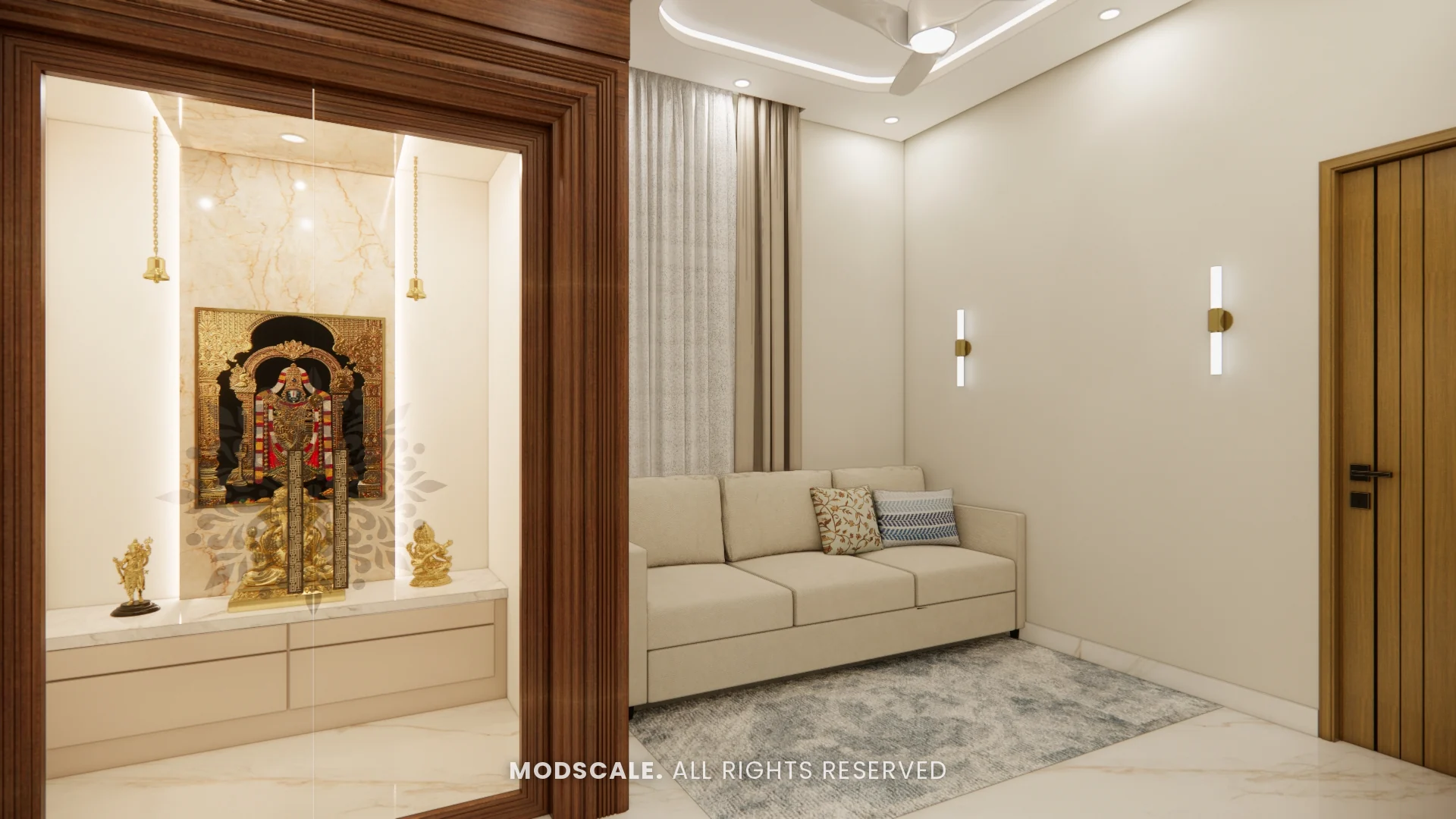
Open frame with no door
Some families prefer a carved wooden frame or arch without doors, with a curtain or the room door providing privacy. This keeps the mandir always in view.
Materials
- Solid wood (teak or similar): traditional and long-lasting; ideal for carving.
- BWP plywood or MDF with veneer, laminate or PU paint: for CNC jali and modern designs at a lower cost. MDF jali should stay away from moisture.
- Glass: frosted, etched or fluted glass in a wooden or metal frame.
- Metal: brass or brass-finish jali panels for a rich, low-maintenance look.
Sizes and practical details
- A pooja room door is usually a little narrower than a bedroom door; a mandir unit’s shutters are sized to the unit.
- Keep a raised threshold if your family prefers one, and make sure the door clears it.
- Use a soft-close hinge or a magnetic catch so the doors do not bang.
- Plan a warm backlight inside so the jali pattern glows when the doors are closed.
Vastu considerations
Many families prefer two-leaf doors that open outwards, made of wood, with the pooja space in the north-east of the home. Follow your own family tradition. For more, see Vastu tips for home.
For the complete pooja space, read pooja room design.
Frequently asked questions
A wooden door with a carved or CNC jali panel is the most popular choice, because it lets light and air through while keeping the space protected and sacred.
It is optional. A door keeps dust and pets out, but many families use an open carved frame or arch so the mandir is always visible.
Yes. Frosted, etched or fluted glass in a wooden frame keeps the mandir visible and dust-free, and suits modern homes.
Solid wood suits hand carving. For CNC jali, BWP plywood or MDF with a paint or veneer finish is common; brass-finish metal jali is low-maintenance.
Many families prefer two-leaf doors that open outwards. Follow your own family practice or consult a Vastu expert.
Planning your interiors? Book a free design consultation or WhatsApp us on +91 88845 55998.