
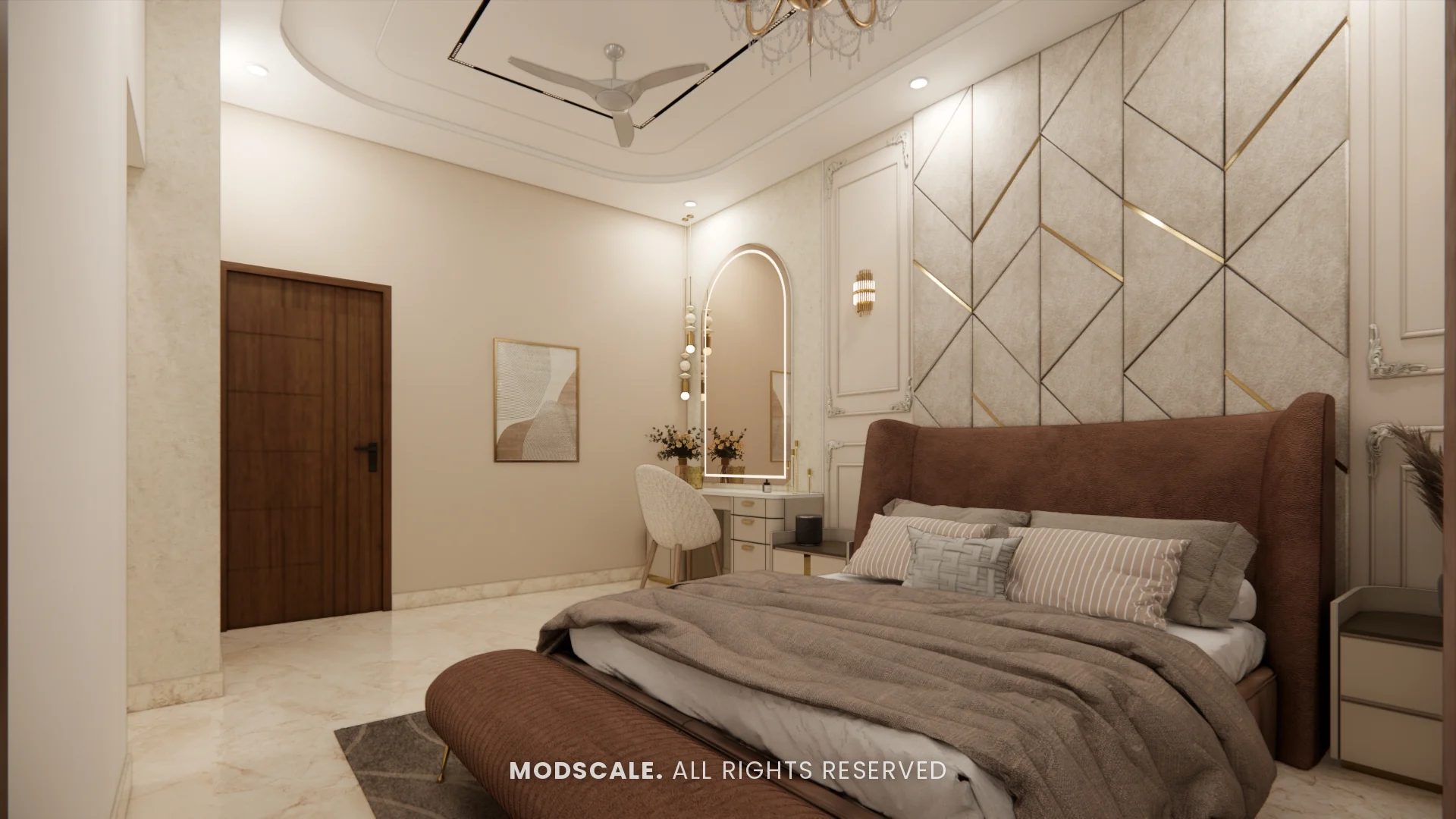
Wall moulding is one of the most affordable ways to make a plain wall look designed. Thin strips fixed to the wall in frames, panels or arches add shadow lines and depth, and once painted they look like part of the architecture. Unlike panelling, mouldings do not cover the whole wall, so they cost less and suit rooms where you want a lighter touch. Here are wall moulding designs that work in Indian homes.
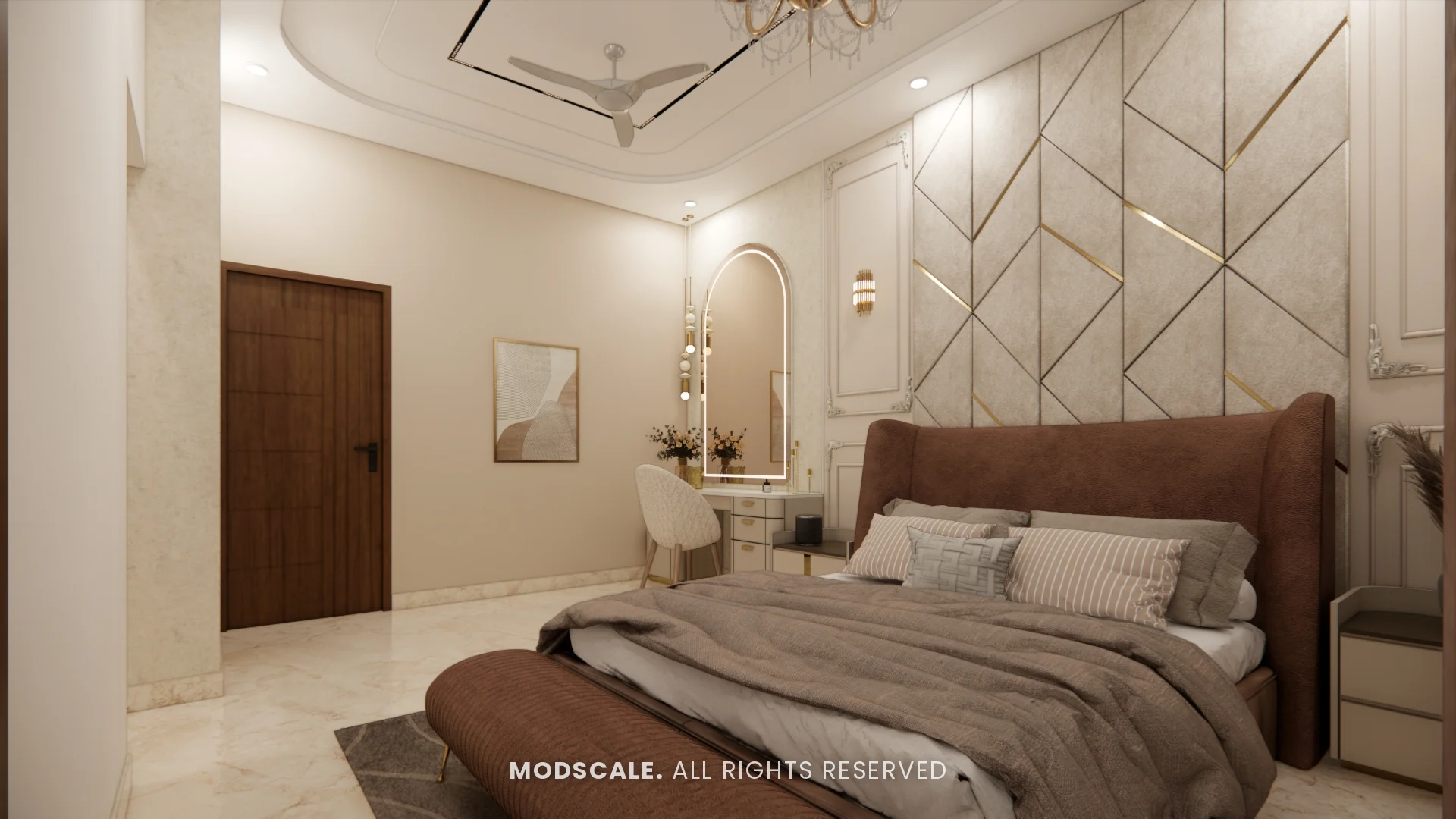
Wall moulding vs wall panelling
Moulding means narrow profiles that create frames or lines on a painted wall. Panelling covers the wall with boards, fluted sheets or upholstered panels. Mouldings are quicker, lighter and cheaper; panelling adds more texture and can hide uneven walls and wiring. For panel ideas, see wall panelling design for living rooms.
Popular wall moulding designs
Box or frame moulding
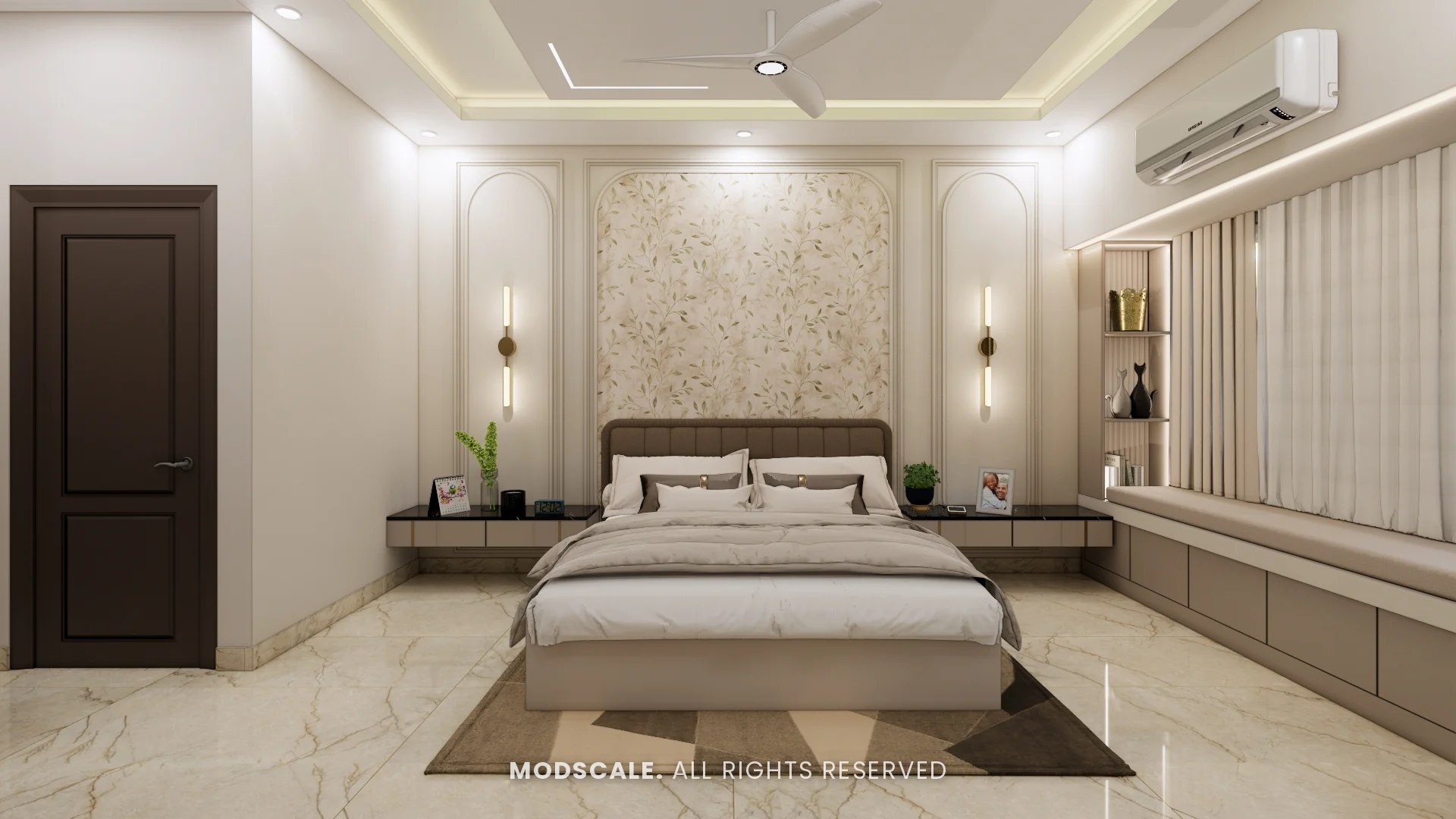
Rectangles of moulding repeated across a wall, often in a 2-over-1 rhythm. It is the classic look behind sofas, beds and in dining rooms. Keep equal gaps between frames and align them with switches and furniture.
Wainscoting (dado height)
Mouldings on the lower third of the wall with a horizontal rail on top. The upper wall can be painted a different shade or papered. It is practical in passages and dining areas, where chairs and hands mark the walls.
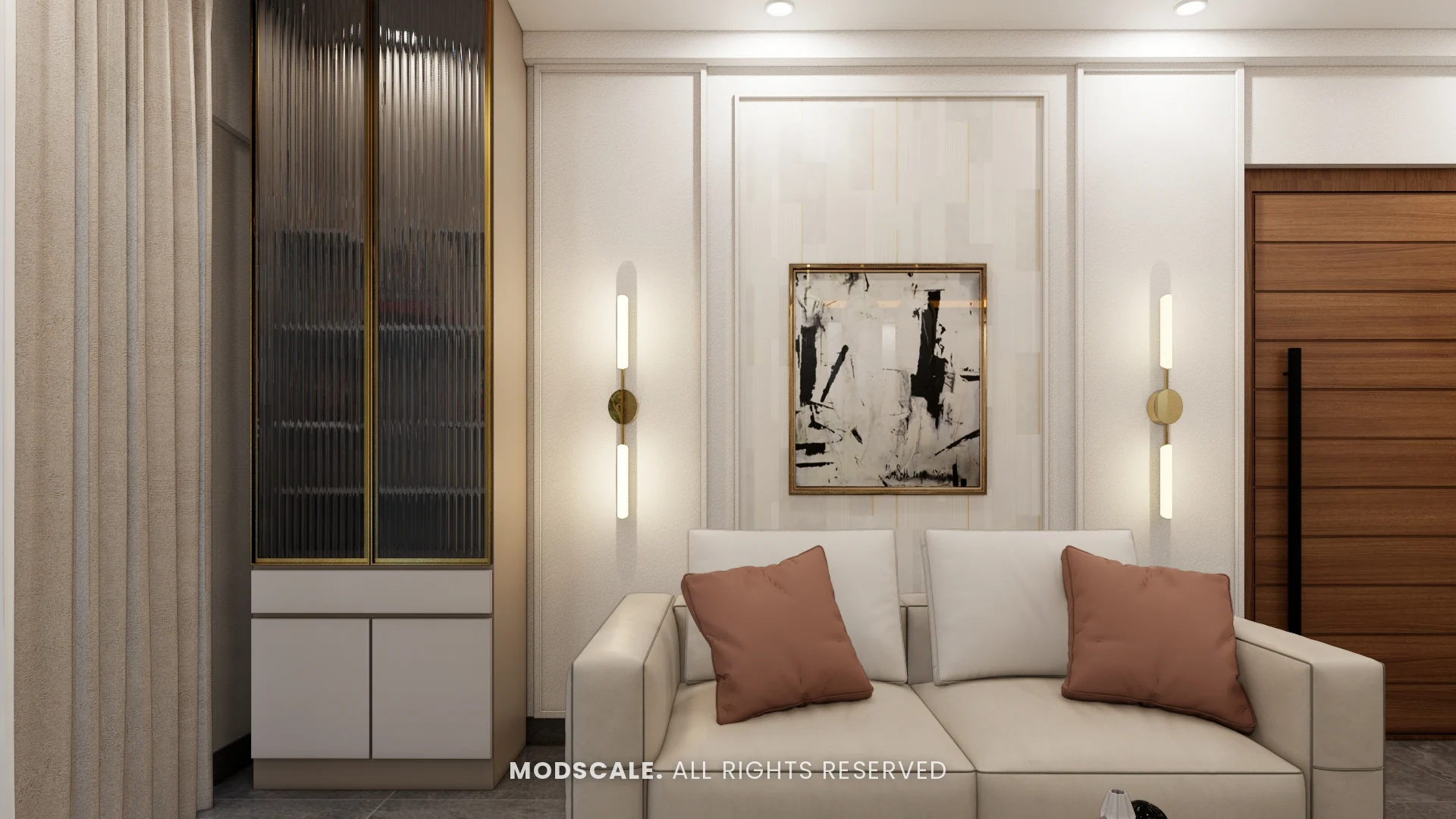
Arch moulding
A tall arch outline behind a bed, a console or a pooja unit. Painting the inside of the arch a deeper colour makes it a focal point without any carpentry.
Picture-frame moulding around art
Mouldings sized to frame a mirror, artwork or wallpaper panel turn a single piece into a feature wall.
Minimal lines
Two or three slim horizontal or vertical strips, sometimes in a contrasting colour or metal finish. This suits contemporary and Japandi rooms better than traditional frames.
Ceiling-to-wall cornice
A cornice where the wall meets the ceiling finishes a room with mouldings. It suits neo-classical and modern Art Deco interiors; see our modern Art Deco style page.
Materials
- PU or polystyrene profiles: light, inexpensive, easy to cut and paint. The most common choice for apartments.
- MDF or wooden strips: sharper edges and more depth; use moisture-resistant boards in humid areas.
- POP or gypsum: for cornices and curved detail, made on site.
- Metal strips: slim brass or black profiles for a modern accent.
Design tips
- Plan mouldings on paper with exact wall measurements; uneven frames look wrong.
- Keep the same colour for mouldings and wall for a subtle, classic look, or contrast them for a bolder effect.
- Satin or semi-gloss paint shows the shadow lines of mouldings better than flat paint.
- Fix switches, AC lines and TV wiring before the mouldings go up.
- In small rooms, use larger frames rather than many small ones.
Where to use wall moulding
Behind the bed (see bed back wall design), behind the sofa (see sofa back wall design), in the dining area, along entrance passages and around a TV wall. Check paint finishes in interior wall paint finishes.
Frequently asked questions
Moulding uses narrow strips to create frames or lines on a painted wall. Panelling covers the wall with boards or panels. Moulding is lighter and cheaper; panelling adds more texture.
PU or polystyrene mouldings are the most common for apartments because they are light, inexpensive and easy to paint. MDF and wood give sharper, deeper profiles.
Yes. Minimal lines, large simple frames or arches painted in one colour look modern; ornate frames and cornices suit classic interiors.
Yes. Mouldings are fixed to finished walls, then filled, sanded and repainted, so they work well as an upgrade without major work.
Satin or semi-gloss paint shows the shadow lines of mouldings well and is easier to clean than flat matt paint.
Planning your interiors? Book a free design consultation or WhatsApp us on +91 88845 55998.