
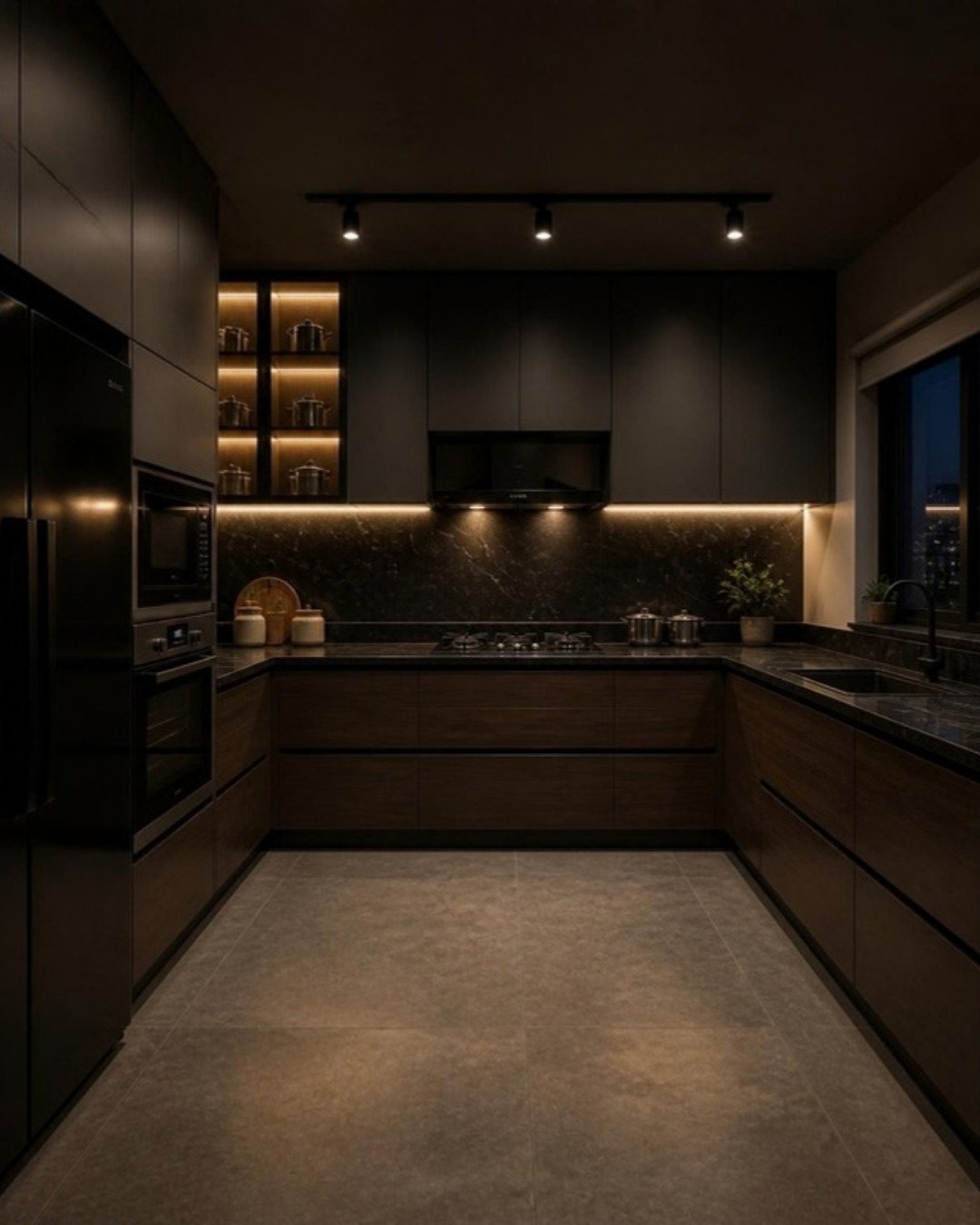
The countertop takes more abuse than any other surface in an Indian kitchen: hot vessels, turmeric and oil, acidic ingredients such as lemon and tamarind, and constant wiping. A luxury countertop must look beautiful and survive daily cooking. Here is how the main options compare.
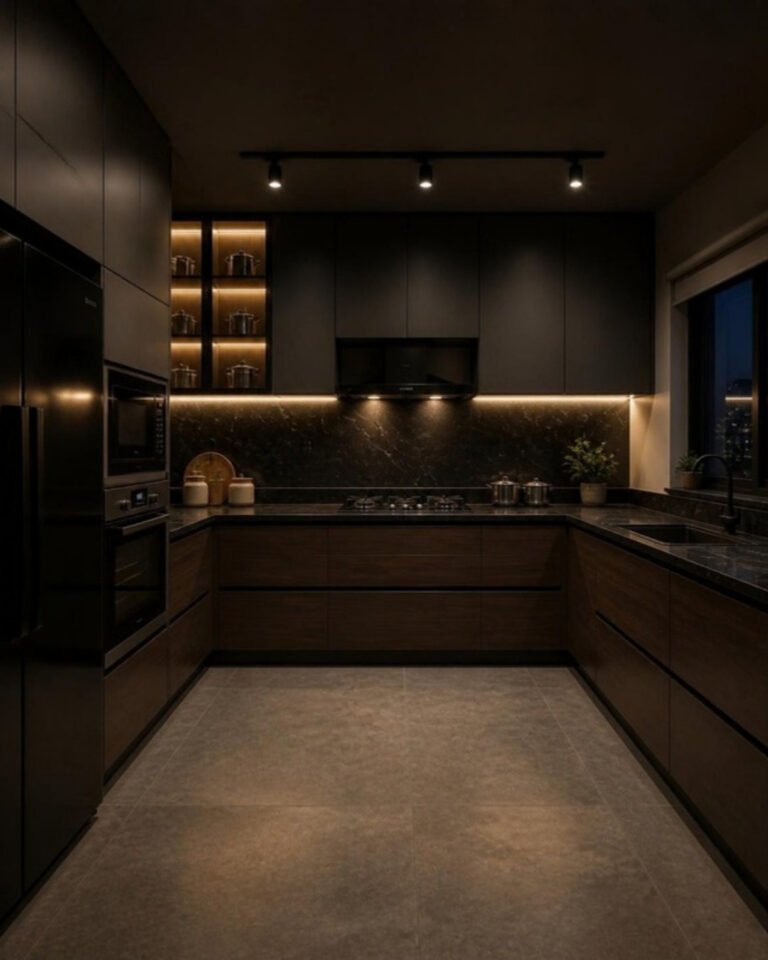
Kitchen countertop materials compared at a glance
| Material | Heat | Stains | Scratches | Upkeep | Best for |
|---|---|---|---|---|---|
| Granite | Very good | Good if sealed | Very good | Low | Daily Indian cooking |
| Engineered quartz | Use a trivet | Very good | Good | Very low | Uniform modern look |
| Marble | Good | Poor: etches with acid | Fair | High | Islands and low-use counters |
| Sintered stone | Very good | Very good | Very good | Very low | Premium kitchens, thin slabs |
| Solid surface | Poor: use a trivet | Good | Fair, repairable | Low | Seamless sinks and curves |
Quick answer: for a kitchen that cooks Indian food every day, granite or sintered stone is the safest choice; quartz suits owners who want a uniform look and use trivets; marble is best kept to an island.
Granite
A natural stone, long the default in Indian kitchens.
- Strengths: very hard, heat-resistant, durable and widely available; darker granites hide stains well.
- Limits: natural pattern varies; lighter granites may need sealing; the look can feel traditional.
- Best for: heavy daily cooking where durability comes first.
Engineered quartz
Crushed quartz bound with resin, made in consistent colours and patterns, including marble looks.
- Strengths: non-porous and stain-resistant, consistent appearance, low maintenance.
- Limits: the resin can be damaged by direct heat, so hot vessels need a trivet; can discolour in strong sunlight.
- Best for: contemporary kitchens that want a clean, uniform look.
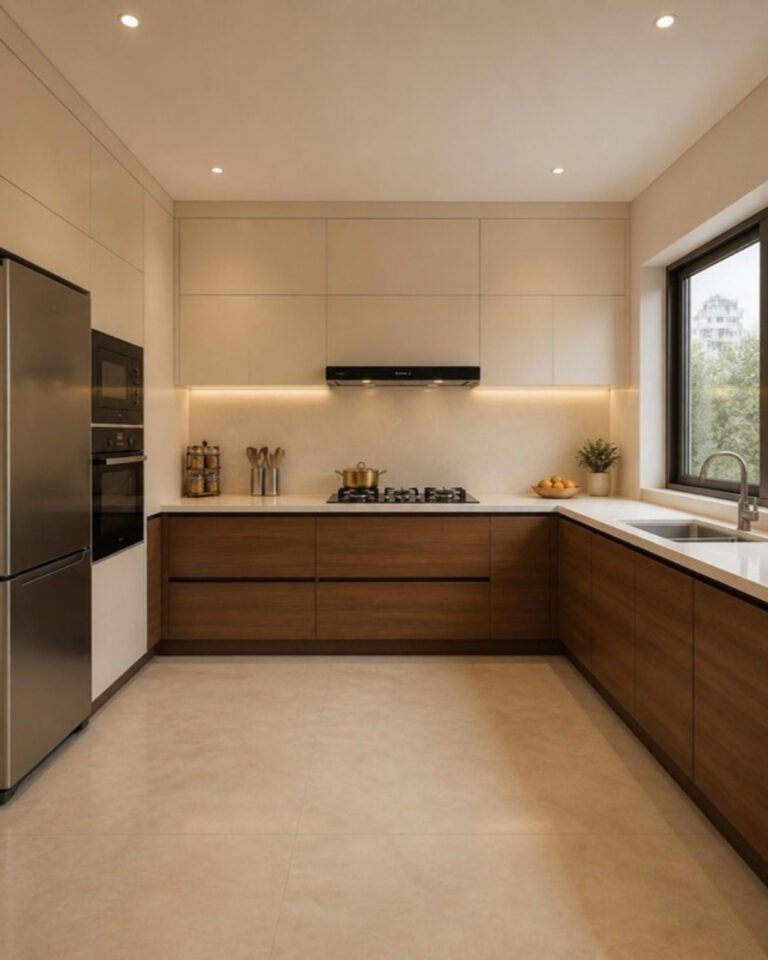
Marble
A natural stone with unmatched beauty and veining.
- Strengths: luxurious look, cool to the touch, every slab unique.
- Limits: porous and softer than granite; etches with acidic foods and stains with turmeric and oil unless very carefully sealed and maintained.
- Best for: islands, breakfast counters or a show kitchen, with heavy cooking done elsewhere.
Sintered stone and large porcelain slabs
Made by fusing minerals at very high heat into large, thin slabs.
- Strengths: highly resistant to heat, stains and scratches; available in stone, concrete and marble looks.
- Limits: needs skilled fabrication and installation; edges can chip if knocked.
- Best for: luxury kitchens that want a marble look with much better resistance to Indian cooking.
Solid surface
An acrylic-based material that can be joined almost invisibly and moulded into sinks.
- Strengths: seamless joints, repairable, smooth and warm to the touch.
- Limits: less resistant to heat and scratches than stone.
- Best for: seamless designs and integrated sinks with careful use.
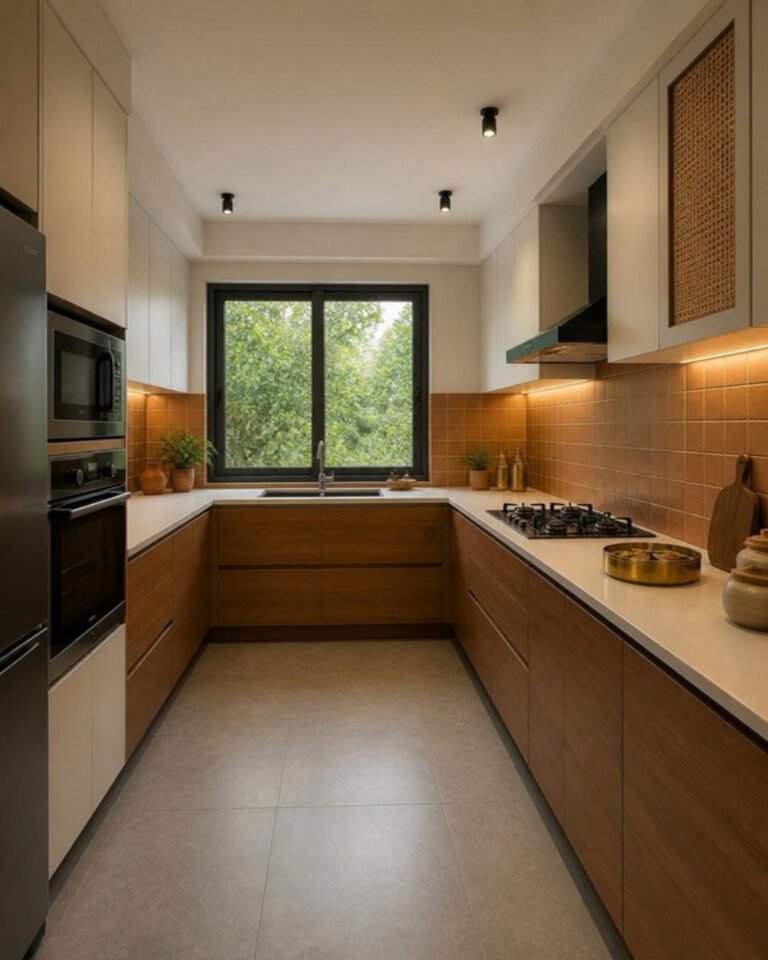
How to choose
- If you cook heavily every day, prioritise heat and stain resistance: granite, sintered stone or porcelain.
- If you want a marble look without the maintenance, consider sintered stone or a marble-look quartz with care around heat.
- Choose the countertop with the shutters and backsplash, under the lighting it will live with.
- Large-format slabs mean fewer joints; ask where the joints will fall.
For the rest of the kitchen, read luxury modular kitchen ideas or see our modular kitchen service. For the whole home, read our guide to luxury home interiors in Bangalore.
Thickness, edges and joints
The material is only part of the decision. How the slab is cut and finished changes both the look and the durability.
- Thickness. Granite and quartz are commonly installed in slabs of roughly 15 to 20 mm, sometimes with a built-up front edge to look thicker. Sintered stone and porcelain slabs are thinner and need full, even support beneath.
- Edge profile. A slightly rounded or chamfered edge chips less than a sharp square one, which matters where heavy vessels are moved about.
- Joints. Ask where the joints will fall before the slab is cut. A joint at the sink or the hob cut-out is the weakest place for it.
- Sink cut-out. An under-mounted sink looks clean and is easy to wipe into, but the cut edge must be polished and sealed properly.
Choosing the colour
Dark counters hide stains but show dust and water marks; light counters brighten the kitchen but ask for more careful wiping. Mid-tone, lightly patterned surfaces are the most forgiving in a kitchen that sees daily cooking. Match the counter to the shutters and backsplash using the pairings in modular kitchen colour combinations.
Everyday care
- Wipe turmeric, oil and lemon spills promptly, whatever the material.
- Use a trivet under hot vessels on quartz and solid surface.
- Use a chopping board; knives dull on stone and can mark softer surfaces.
- Reseal natural stone when water stops beading on it.
- Avoid harsh acids and abrasive powders.
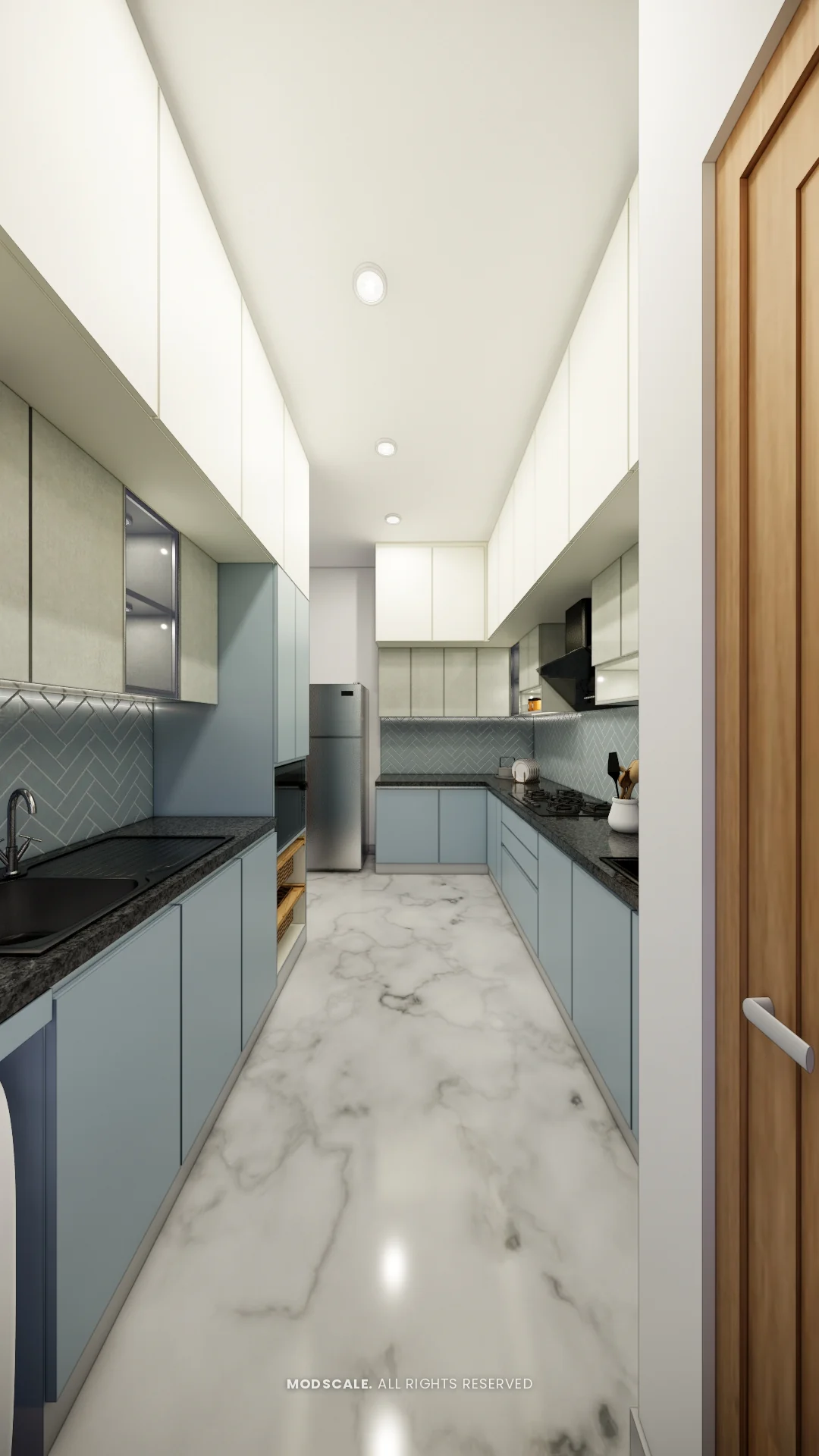
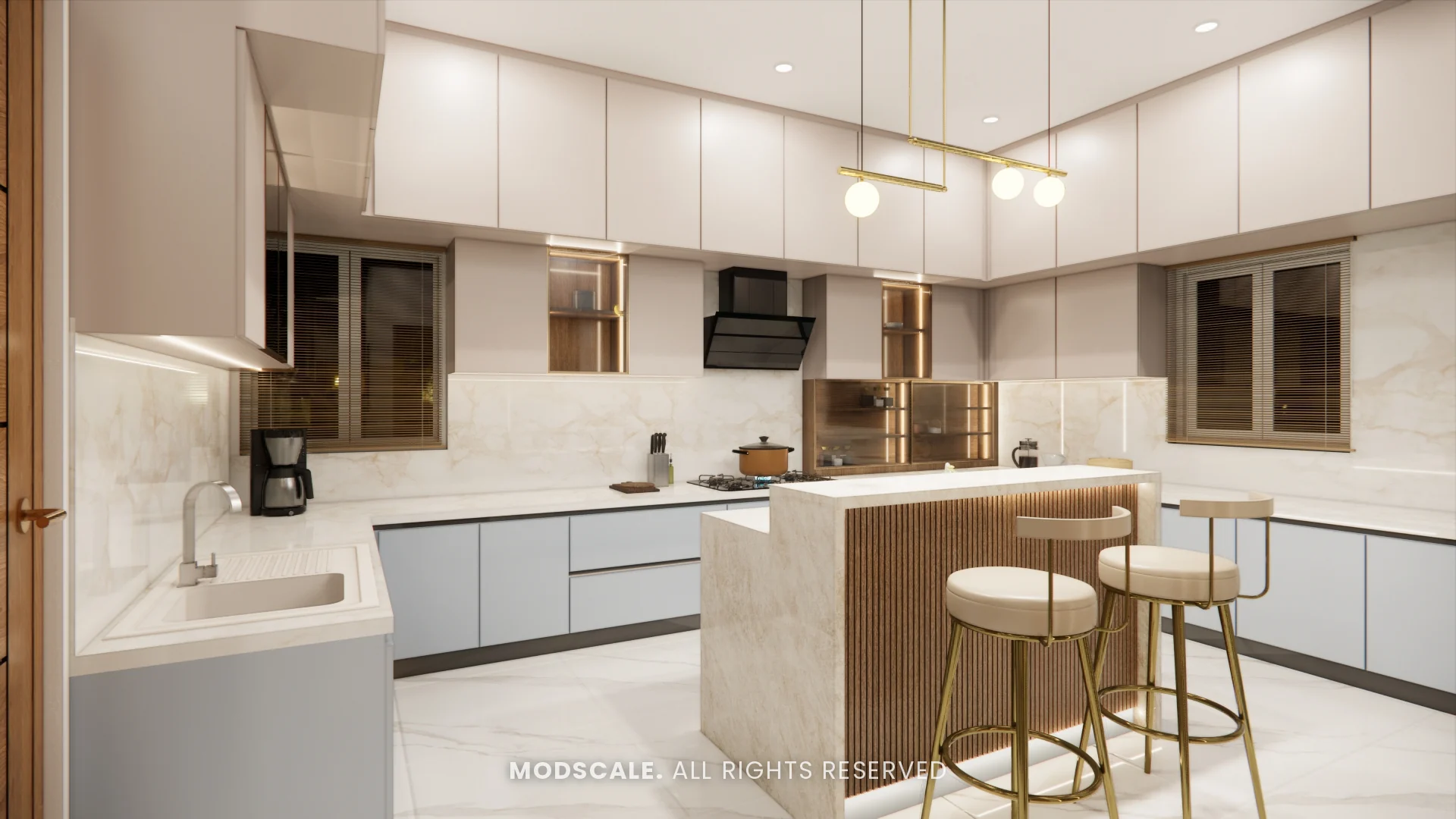
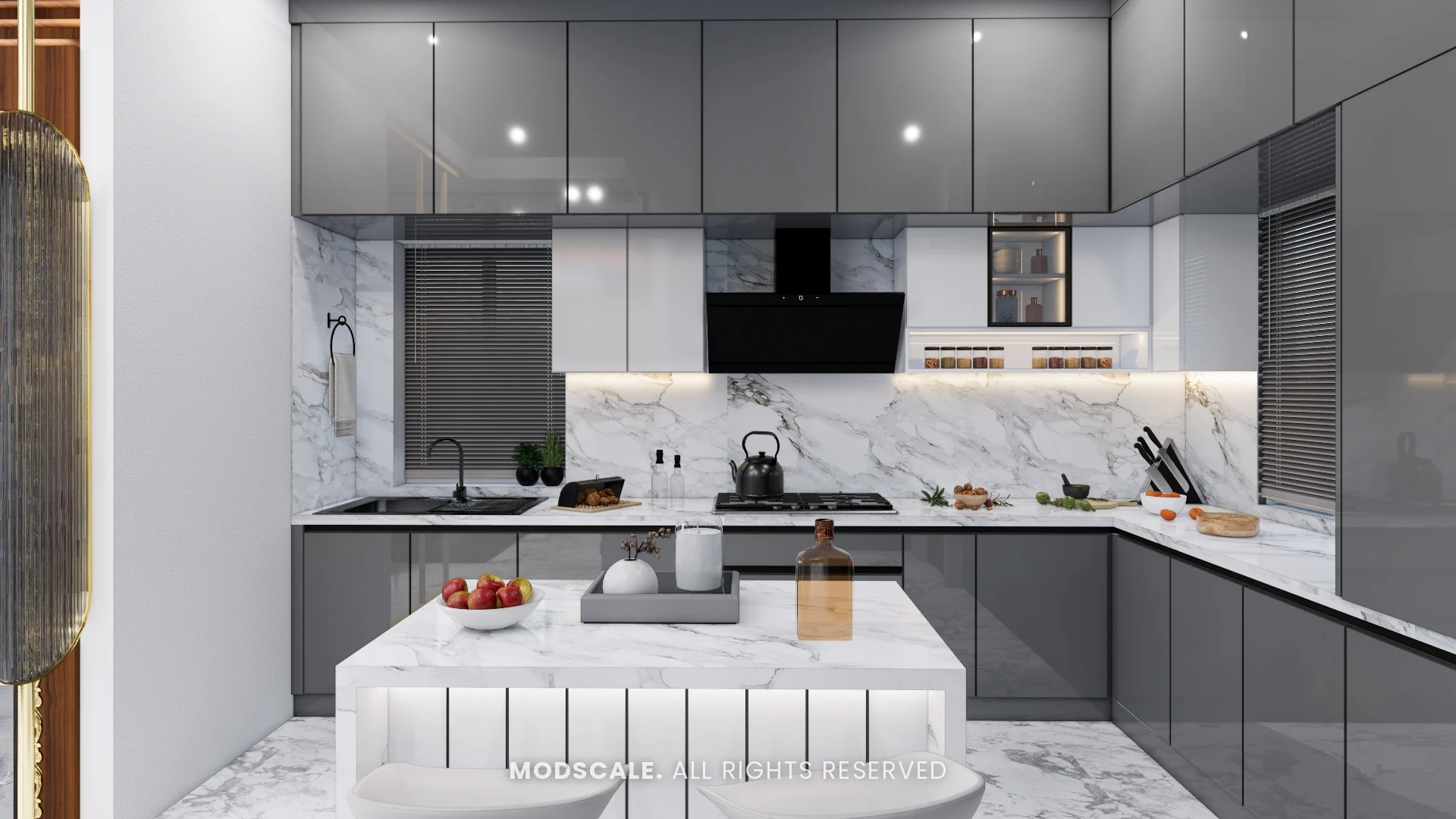
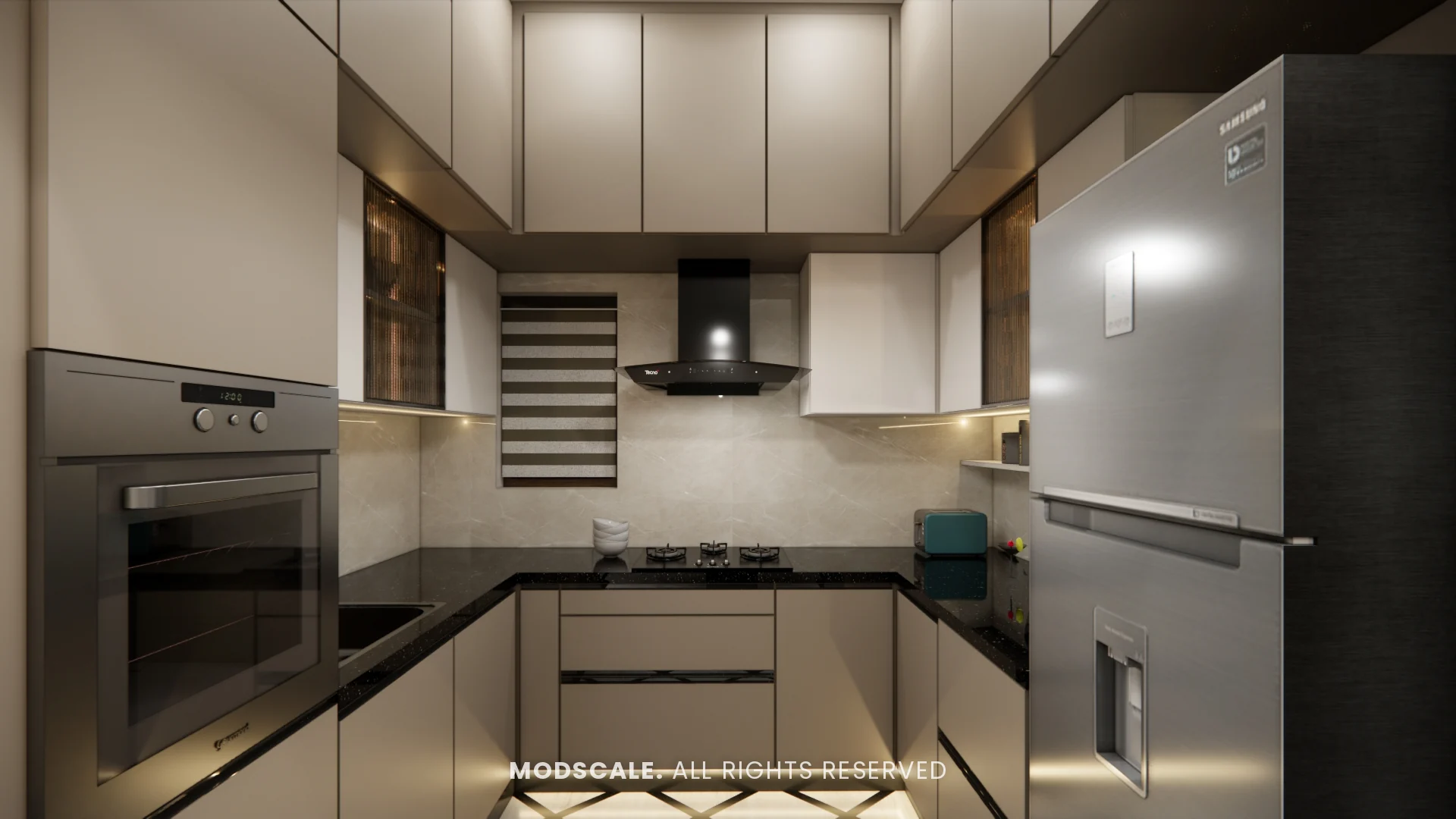
Countertops in kitchens we have designed
What about cost?
Prices vary by slab, thickness, edge detail and the number of cut-outs, so a figure per square foot means little without those details. Ask for the countertop to be itemised separately from the cabinets, as explained in how modular kitchens are priced.
Related design guides: kitchen countertop price in Bangalore and kitchen platform design.
Frequently asked questions
For heavy daily cooking, prioritise heat and stain resistance: granite, sintered stone or large porcelain slabs. Quartz is stain-resistant but needs a trivet under hot vessels.
Granite is harder against heat and suits heavy cooking; quartz is non-porous, consistent in appearance and low on maintenance, but its resin can be damaged by direct heat.
Marble is porous and softer than granite, and it etches with acidic foods and stains with turmeric and oil. It is better kept for islands, breakfast counters or a show kitchen.
Quartz is more uniform and needs no sealing; granite takes heat better. For heavy daily cooking, granite is the more forgiving choice.
Planning a luxury home in Bengaluru? Talk to our design team.
Book a Design ConsultationGet Your Home Interior EstimateExplore ModScale Projects
Pingback: Kitchen Chimney and Hob Buying Guide | ModScale