
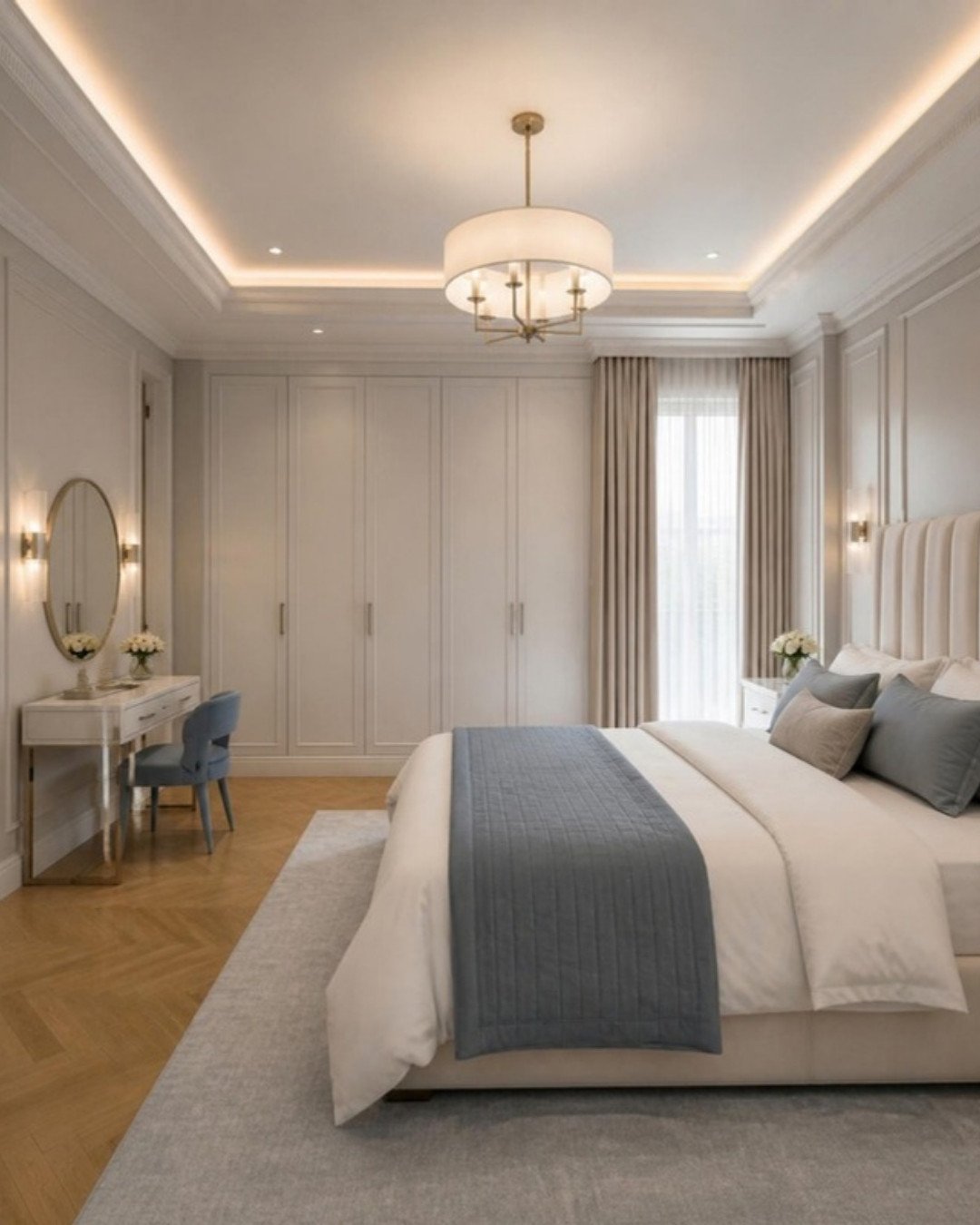
The door type is the first decision in any wardrobe, and it shapes everything after it: how much floor space the room keeps, how easily you reach your clothes, and what the wardrobe costs. Here is an honest comparison.
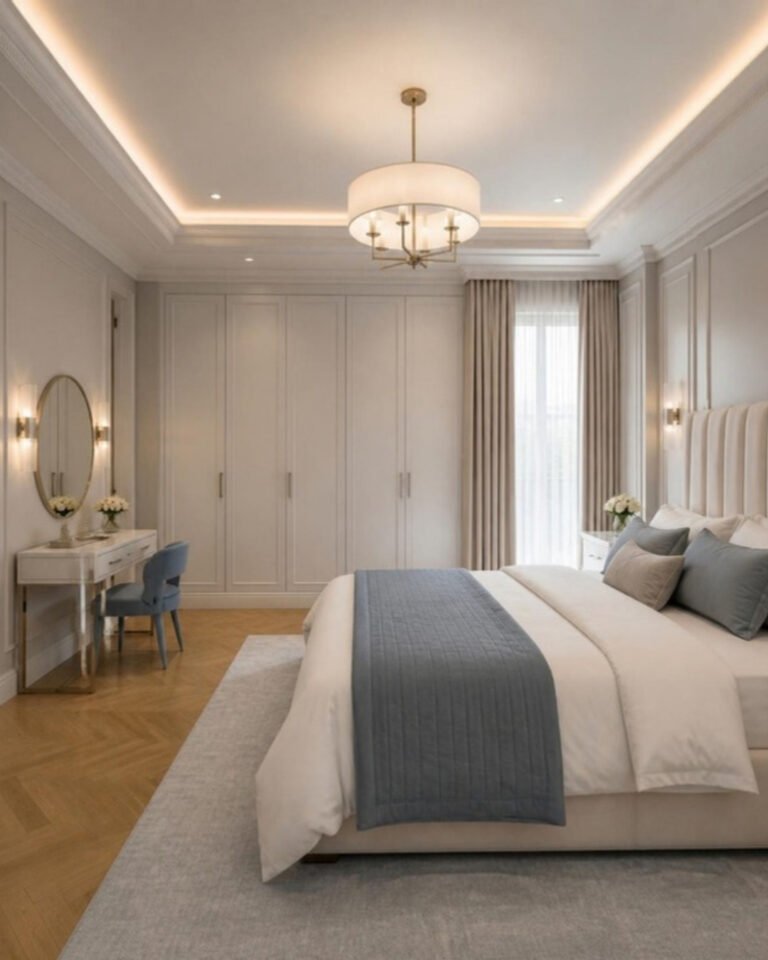
Sliding vs hinged wardrobe: quick comparison
| Sliding wardrobe | Hinged (openable) wardrobe | |
|---|---|---|
| Space needed in front | None beyond the wardrobe | About the width of one door |
| Access | About half the wardrobe at a time | Everything at once |
| Depth | A little deeper overall (track) | Standard |
| Cost | Higher, depends on the track system | Generally lower |
| Maintenance | Clean the track, keep panels aligned | Occasional hinge adjustment |
| Looks | Fewer, larger panels; suits mirrors and glass | More shutter and handle options |
| Best for | Compact bedrooms, bed close to wardrobe | Master bedrooms with space, children’s rooms |
Space in front of the wardrobe
Sliding doors move within the wardrobe’s own width, so they need no clearance in front. That is their biggest advantage in compact bedrooms where the bed sits close to the wardrobe. Hinged doors swing out, so you need clear space in front roughly equal to the door’s width. If the bed or a dressing table is in that space, the doors will not open fully.
Access to what is inside
With hinged doors, you can open the whole wardrobe at once and see everything. With sliding doors, one panel always covers part of the wardrobe, so you can only reach about half at a time. Plan the inside accordingly: avoid putting a drawer stack exactly where two sliding panels overlap.
Depth
Sliding tracks need extra depth at the front of the wardrobe, so a sliding unit is usually a little deeper overall than a hinged one with the same usable space inside. In a tight room, check this before deciding.
Cost and hardware
Hinged wardrobes generally cost less, because hinges are simpler than sliding systems. Sliding wardrobes depend heavily on the quality of the track and rollers; a cheap system is the most common reason sliding doors become stiff or noisy. Whichever you choose, the hardware is not the place to cut corners.
Maintenance
Sliding tracks collect dust and need occasional cleaning, and large panels must stay aligned. Hinged doors may need small hinge adjustments over time, which is quick to do.
Looks
Sliding wardrobes give fewer, larger panels and a sleek, wall-like front, which suits mirrors and large glass sections. Hinged wardrobes offer more variety in shutter design and handles, and suit classic or traditional rooms.
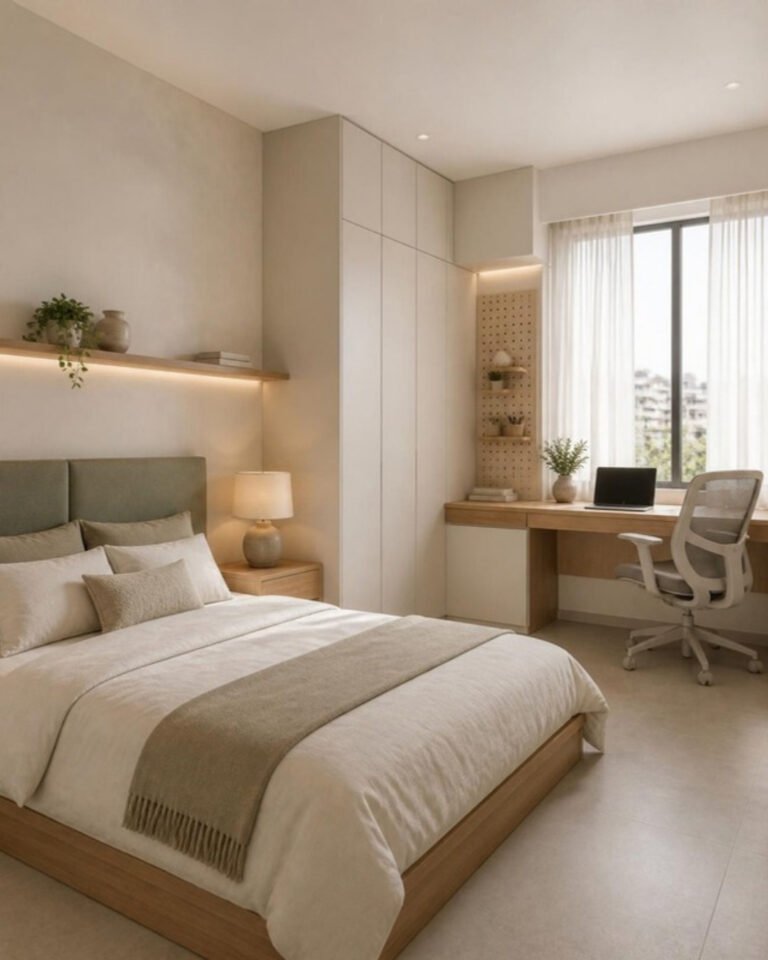
A simple rule for each room
- Compact bedroom, bed close to the wardrobe: sliding.
- Master bedroom with space to spare: either; hinged if you want to see everything at once.
- Children’s room: hinged is simpler and sturdier for small hands.
- Wardrobe with a built-in mirror: sliding makes the mirror panel easy to use.
Once the door is decided, see modern wardrobe design ideas for finishes, or our storage planning guide for the inside. Planning wardrobes for your home? See our wardrobe design service in Bangalore.
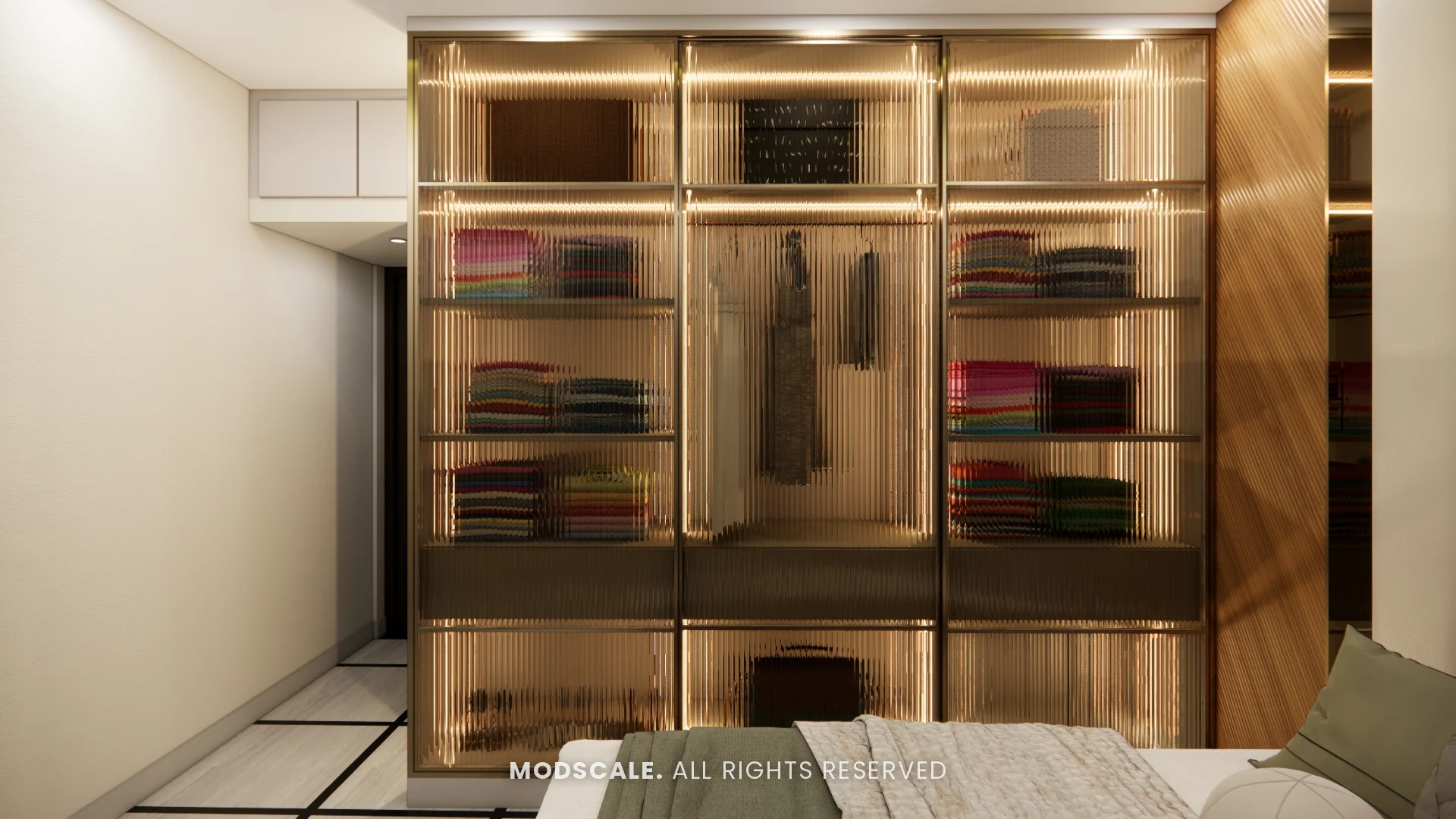
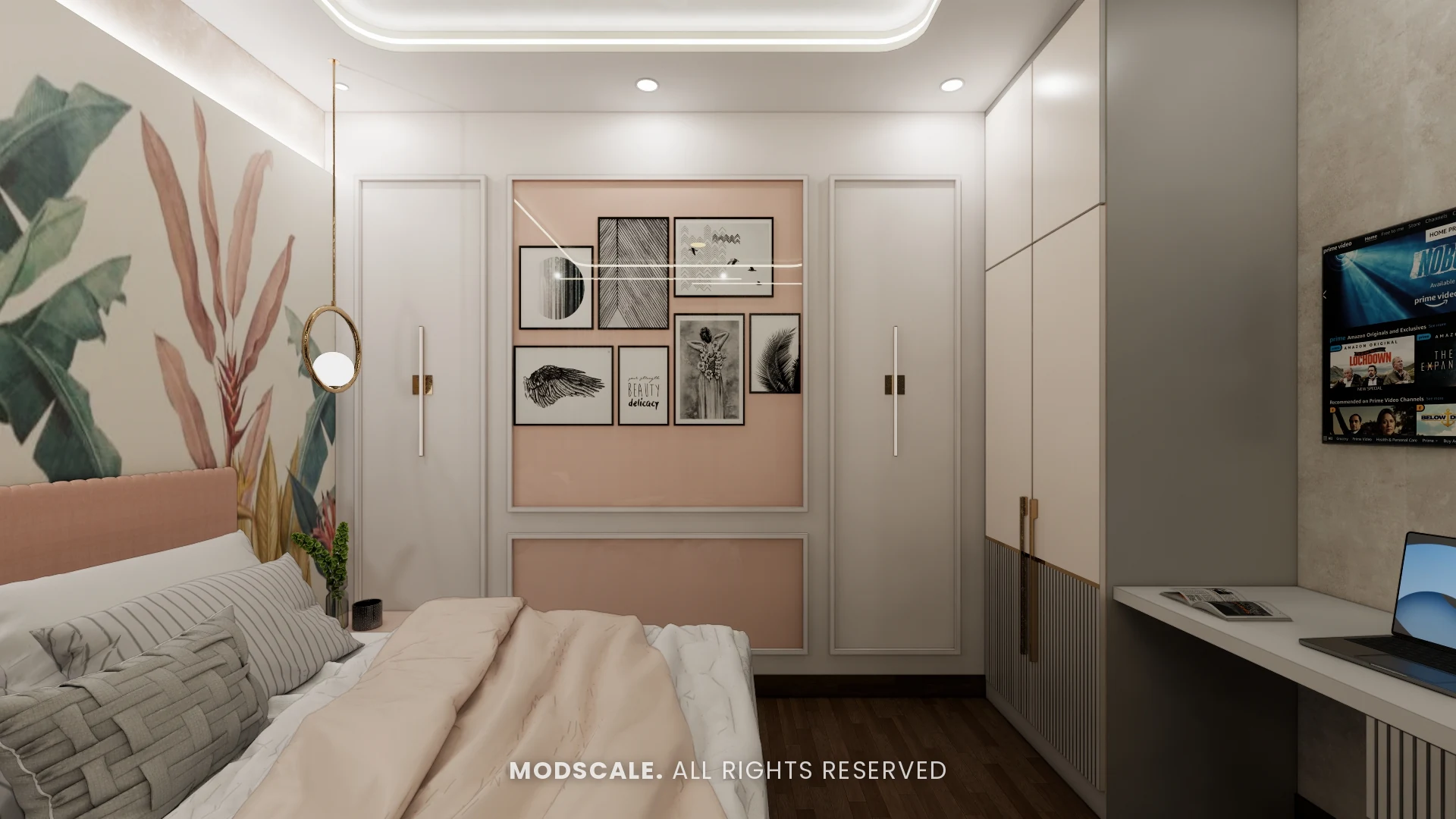
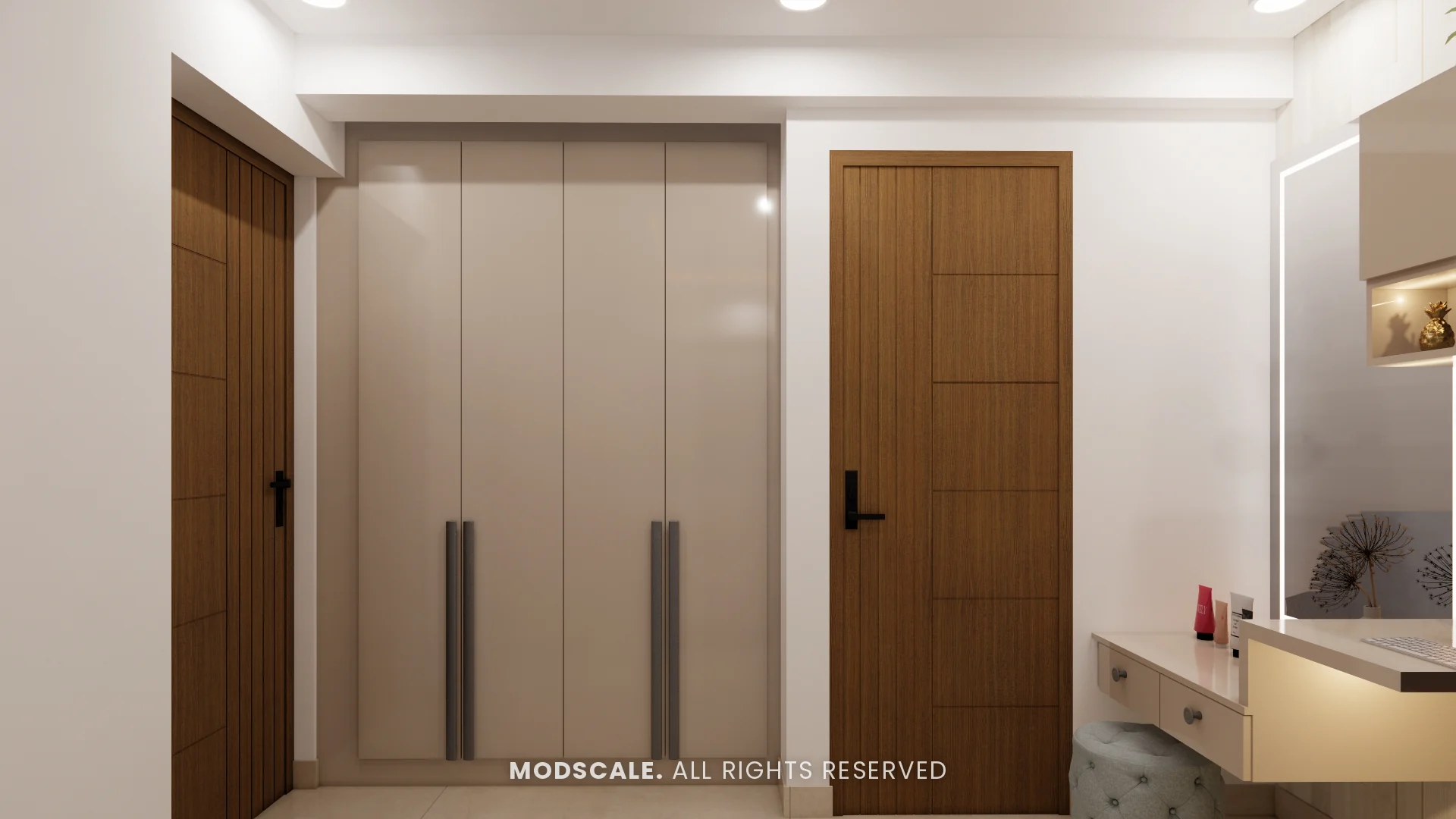
Sliding and hinged wardrobes we have designed
Two sliding and two hinged wardrobes from homes we designed in Bangalore, so you can compare the look side by side.
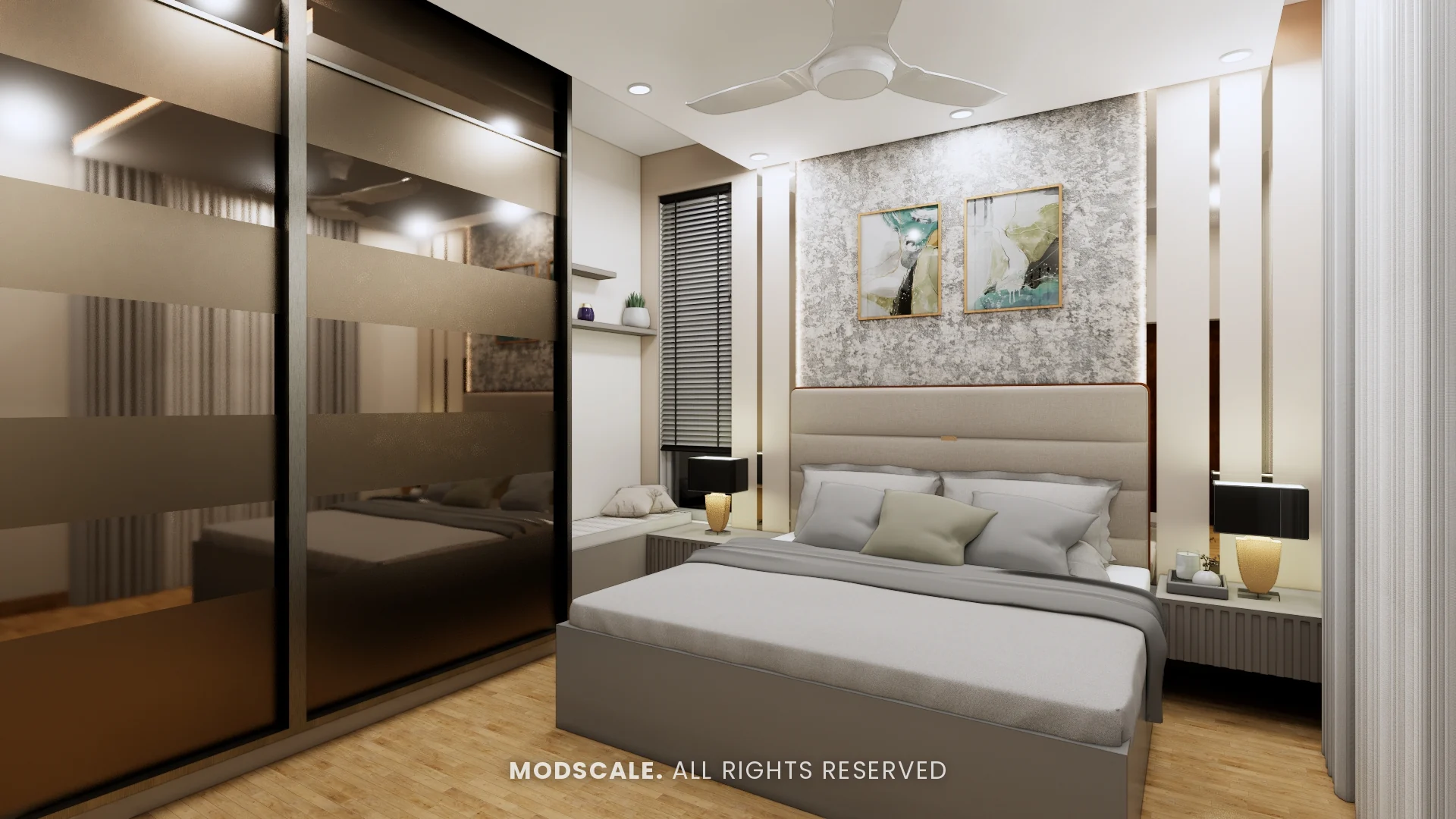
Types of sliding systems
Not all sliding wardrobes work the same way, and the system affects both cost and feel.
- Bottom-rolling systems carry the door’s weight on rollers in a floor track, with a guide at the top. They are the most common and suit most wardrobe sizes.
- Top-hung systems suspend the door from an upper track, leaving a cleaner base. They depend on a strong, straight top panel.
- Soft-close dampers slow the door at the end of its travel and are worth specifying on any sliding wardrobe.
Two-door and three-door arrangements behave differently. With three doors, check which sections can be open at the same time.
Shutter materials and weight
Large sliding panels are heavy, and mirror or glass adds more. The rollers must be rated for the door weight. Hinged shutters are smaller and lighter, but a tall hinged door needs enough hinges and a stable board so it does not warp. See HDHMR vs plywood for how the boards behave in tall shutters.
Hybrid and other options
- Hinged below, lofts above: the usual arrangement, with loft shutters aligned to the doors below.
- Sliding with a mirror panel: removes the need for a separate dressing mirror; layouts are in wardrobe with dressing table.
- Bi-fold shutters: need about half the swing space of a hinged door, with more hardware to maintain.
- Open wardrobe sections: for a walk-in or dressing area where doors are unnecessary.
Before you decide, measure
Measure the gap between the wardrobe face and the bed or wall opposite. If a hinged door cannot open fully with a person standing in front of it, choose sliding. Then check the overall depth available, since a sliding wardrobe needs a little more. For finishes and styles, continue to modern wardrobe design ideas.
See also: Sliding Wardrobe Design: 12 Ideas for Bedrooms, Space-Saving Furniture Ideas for Small Flats.
Frequently asked questions
It depends on the room. Sliding doors need no clearance in front and suit compact bedrooms; hinged doors open the whole wardrobe at once and generally cost less.
Yes. Sliding tracks take extra depth at the front, so a sliding wardrobe is usually a little deeper overall than a hinged one with the same usable space inside.
Hinged shutters are simpler and sturdier for small hands.
Usually, yes. The sliding track and rollers cost more than hinges, and a good system is what keeps the doors smooth over the years.
Roughly the width of one door in clear space in front, so the door can swing fully open with someone standing there.
Talk to ModScale
ModScale designs, produces and installs home interiors from our studio in HSR Layout, Bengaluru. Send us your floor plan or get in touch, call +91 88845 55998, or visit the studio to see materials and finishes side by side.
Beyond wardrobes, our guide to the types of sliding doors for Indian homes covers balconies, kitchens and partitions.