
Most families we work with want their home to follow Vastu, and most are buying an apartment whose walls, kitchen and bathrooms are already fixed. The useful question is not “is this flat Vastu-perfect” but “what can the interior do within this plan”. These Vastu tips for home go room by room through the traditional guidance and show what an interior designer can actually adjust. Vastu is a matter of belief and tradition; treat this as a planning guide and consult a Vastu practitioner you trust for anything specific to your home.
Start with the directions
Stand at the centre of the home with a compass (a phone compass is fine, away from steel and appliances) and mark north on the floor plan. Everything below refers to which part of the home a room or object sits in, and which way a person faces when using it.
Main entrance and foyer
- North, east and north-east entrances are traditionally preferred.
- Keep the entrance well lit, uncluttered and easy to open fully.
- Store footwear in a closed unit to one side, not in a pile facing the door.
- Avoid a mirror directly facing the main door.
The door’s direction cannot be changed in a flat, but all of the rest is interior work. See our foyer and shoe rack ideas and main door designs for apartments.
Living room
- North, east or north-east is the preferred zone for the living room.
- Place heavier furniture, such as the main sofa, toward the south or west walls, leaving the north and east lighter and more open.
- Seat the head of the family facing north or east where the layout allows.
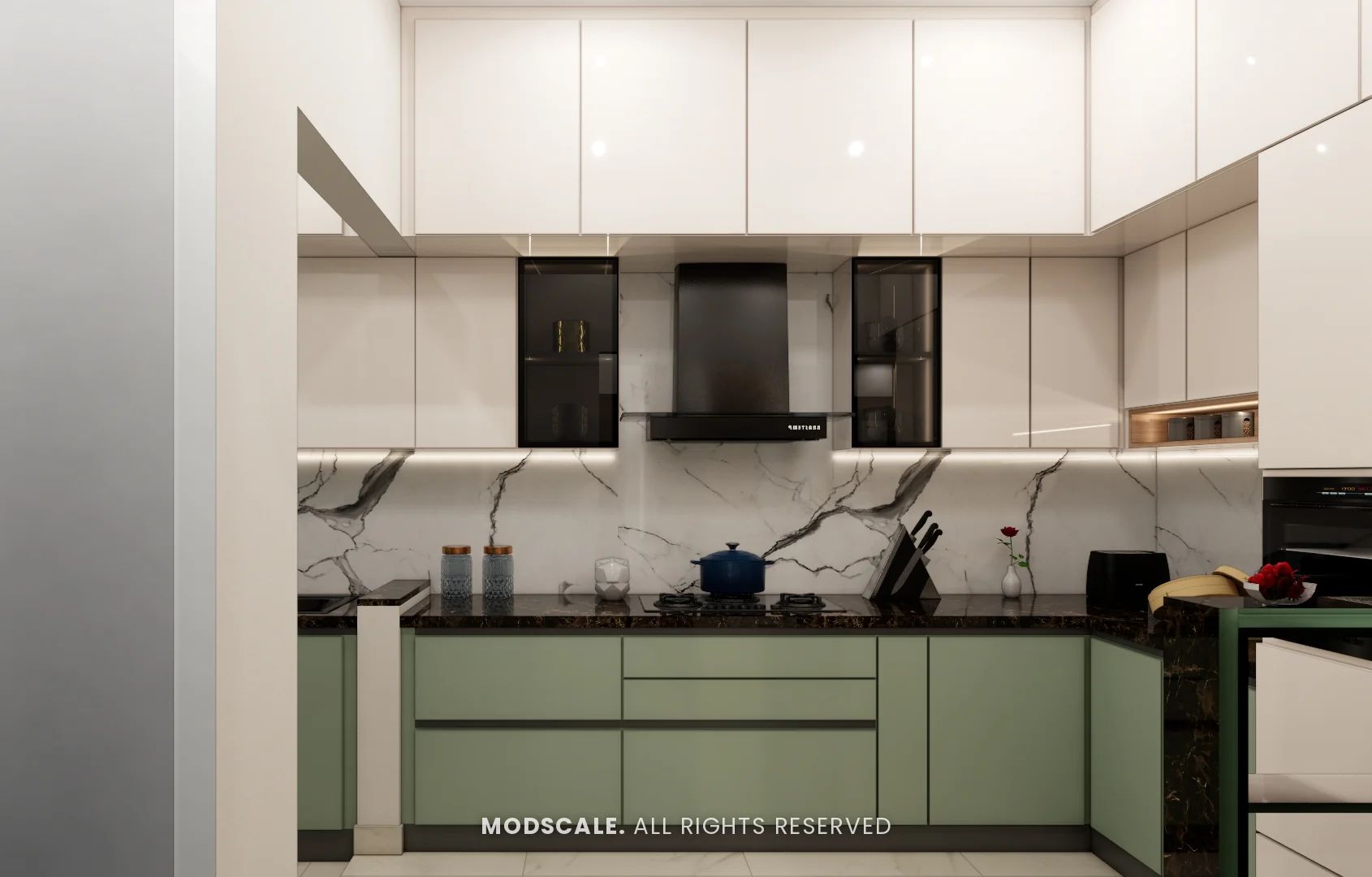
Kitchen
- The south-east is the traditional place for the kitchen; north-west is the usual alternative.
- Position the hob so the cook faces east.
- Keep the sink and the hob apart rather than side by side, since water and fire are treated as opposing elements. This is sound kitchen planning in any case.
The detail, including what to do when the kitchen is in the “wrong” corner, is in our kitchen Vastu guide for apartments.
Pooja room
- The north-east is the preferred zone, with the person praying facing east or north.
- Avoid placing the mandir against a wall shared with a toilet, or directly under a staircase.
- Where there is no pooja room, a wall-mounted unit or a niche in the living or dining area in the north-east part of that room is the common solution.
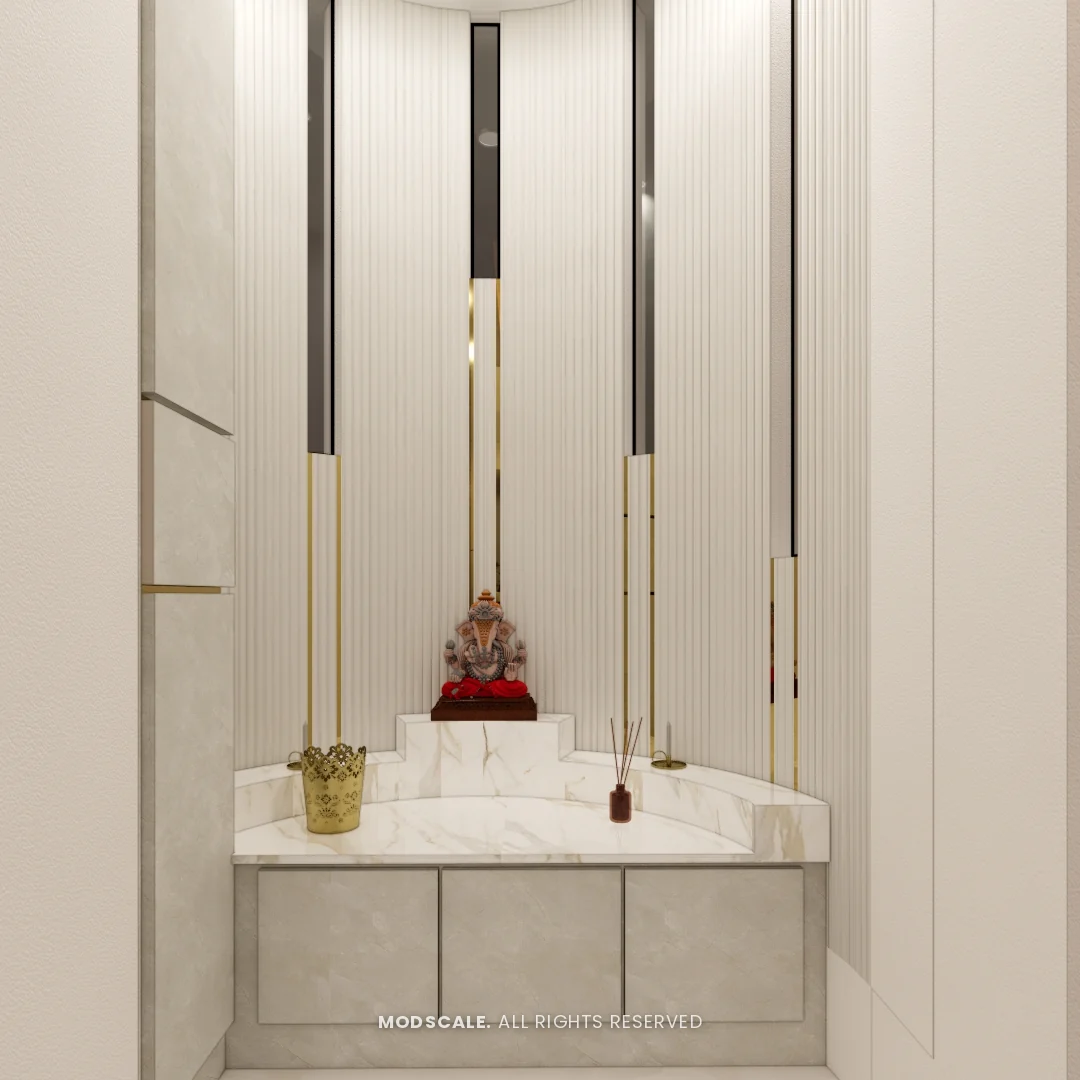
See designs and sizes in our pooja room design guide.
Bedrooms
- The master bedroom is traditionally placed in the south-west.
- Sleep with the head toward the south or east; avoid the head toward the north.
- Avoid a mirror that reflects the bed. A dresser mirror inside a wardrobe shutter solves this neatly.
- Place wardrobes on the south or west walls.
More on bed and wardrobe placement is in bedroom Vastu for apartments.
Children’s room and study
- Set the study table so the child faces east or north.
- Keep the wall in front of the desk calm, with shelves to the side rather than looming overhead.
Layouts for compact rooms are in our study table design guide.
Bathrooms
- North-west and west are the preferred zones; the north-east is traditionally avoided.
- Keep bathroom doors closed and the room dry and ventilated.
What an interior can and cannot change
- Can change: where the bed, sofa, study table and mandir sit and which way they face; hob and sink positions along the existing counter walls; mirror positions; wardrobe walls; colours and lighting.
- Cannot easily change in an apartment: the main door, which corner the kitchen and bathrooms are in, plumbing shafts and structural walls.
If Vastu matters to you, tell your designer at the first meeting, before the furniture layout is drawn. Changing a bed wall after the electrical points are fixed means redoing them. See electrical planning before interiors.
Frequently asked questions
North, east and north-east facing entrances are traditionally preferred. In an apartment the door cannot be moved, so the focus shifts to keeping the entrance bright, clean and uncluttered.
In the north-east of the home where possible, with the person facing east or north while praying. If there is no separate room, a pooja unit or niche in the north-east part of the living or dining area is commonly used.
Traditional guidance is to sleep with the head toward the south or east and to avoid the head pointing north.
Interiors can change furniture placement, facing directions, hob and sink positions, mirrors and the pooja location. They cannot move the main door or the position of the kitchen and bathrooms.
Planning your interiors? Book a free design consultation or WhatsApp us on +91 88845 55998.
Related: Living room Vastu colours