
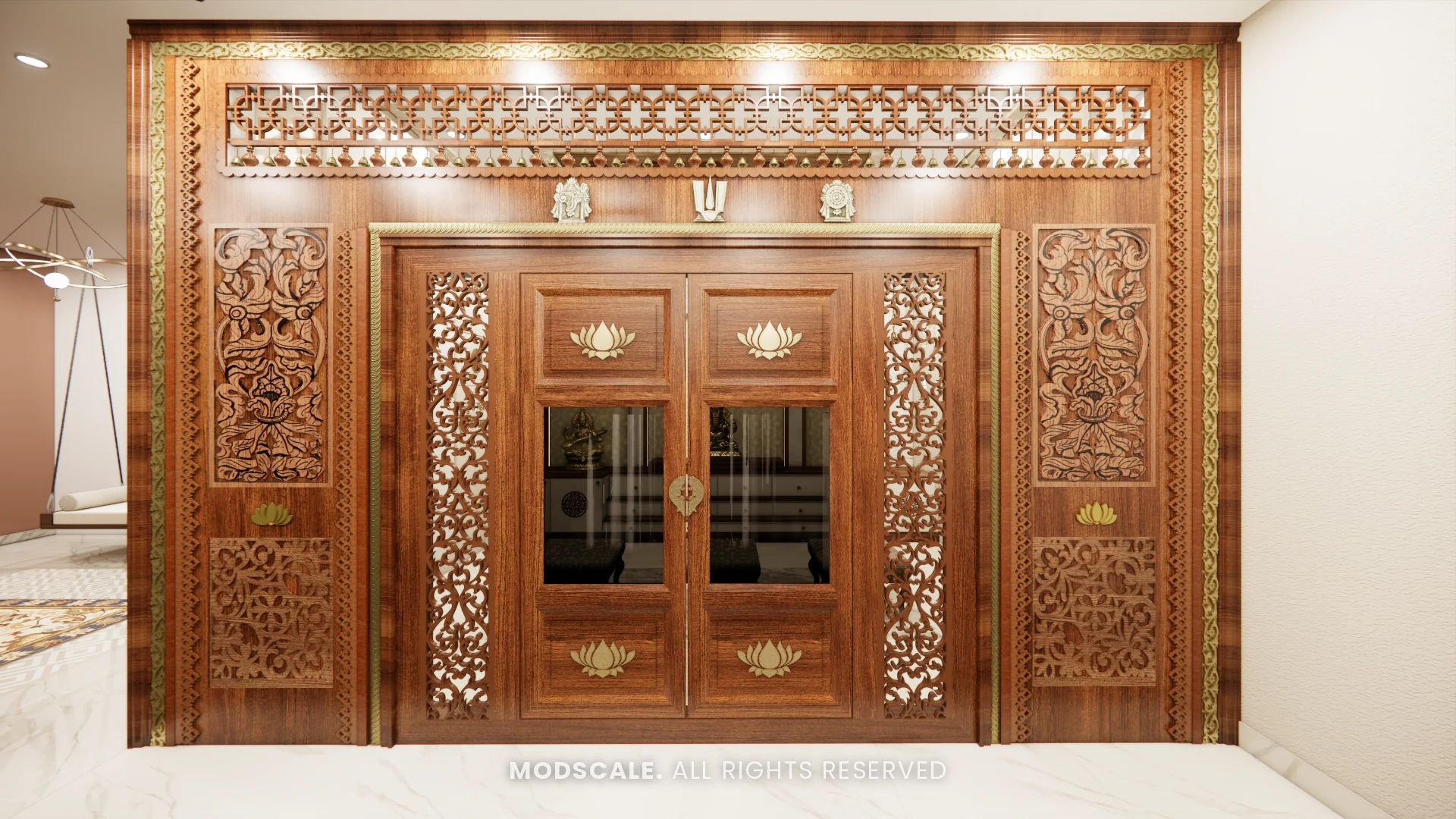
A jali is a perforated screen with a repeating pattern, a feature of Indian architecture for centuries. In modern homes, CNC-cut jali brings the same play of light and shadow to pooja doors, room partitions, foyers and ceilings. It separates spaces without blocking light or air, which suits compact apartments well. Here are jali design ideas and how to choose the right material.
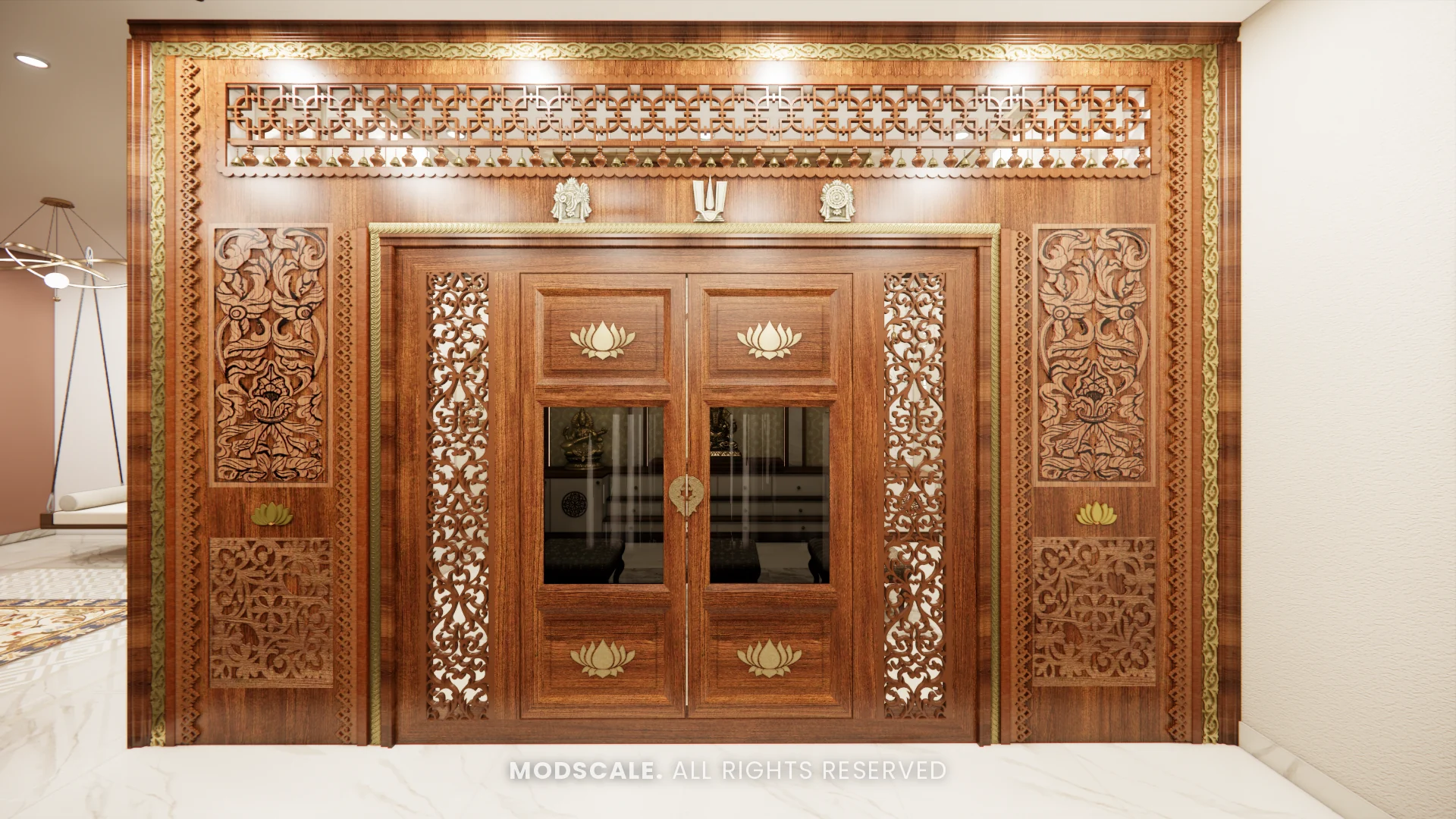
Where to use jali in your home
Pooja room doors and mandir shutters
The most popular use. A jali door lets the lamp’s glow and the fragrance of incense through while keeping the mandir protected. See pooja room door design.
Living and dining partitions
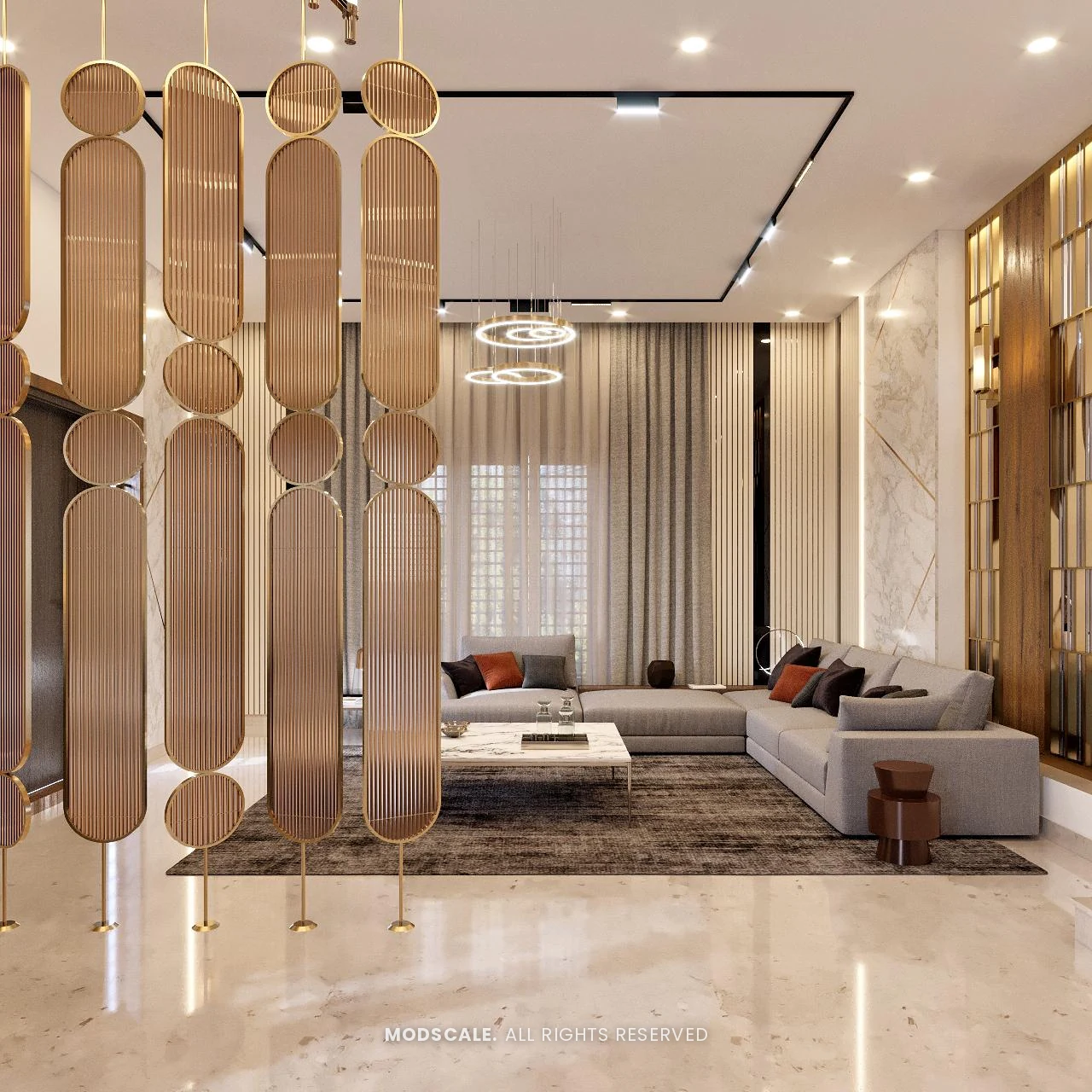
A floor-to-ceiling jali screen divides the living and dining areas, or screens the entrance from the living room, without making either feel smaller. See partition design between living and dining.
Foyer and entrance
A jali panel beside the main door gives privacy from the doorway and makes a striking first impression with a backlight.
Wardrobe and crockery shutters
Jali inserts in crockery units, shoe cabinets or wardrobe shutters add pattern and let air circulate, which helps prevent musty smells.
Ceilings and light panels
A jali panel in the false ceiling with lights above casts patterned shadows across the room. Use it in a dining area or foyer.
Balcony and window screens
Metal or WPC jali screens give privacy on balconies without blocking breeze.
Popular jali patterns
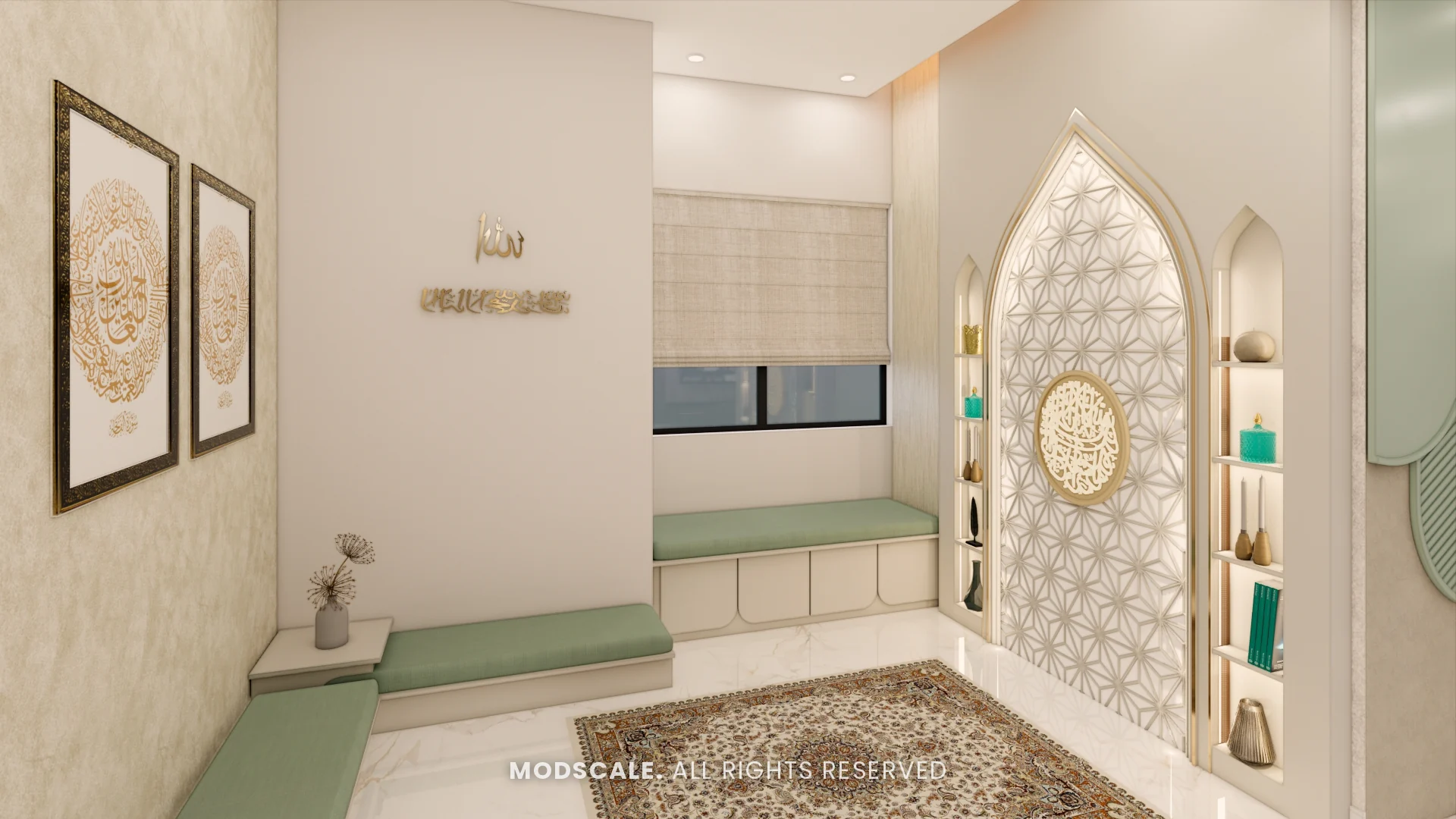
- Geometric: squares, hexagons, stars and interlocking shapes for modern homes.
- Floral and lotus: classic for pooja spaces.
- Mughal and arch motifs: for traditional and Indo-contemporary interiors.
- Abstract and organic: leaves, waves and freeform patterns for a contemporary feel.
Materials
- MDF: the most common CNC jali material; cuts cleanly and takes PU paint well. Keep it away from water.
- BWP plywood: stronger and more moisture-resistant, though edges need careful finishing.
- Solid wood: for hand-carved or premium jali doors.
- Metal (MS, aluminium, brass finish): durable, slim and suitable for partitions and outdoor screens.
- WPC and acrylic: water-resistant options for balconies and wet areas.
Design tips
- Choose a pattern scale that suits the panel size: small, dense patterns look busy on large screens.
- Backlight jali in warm white to bring out the pattern at night.
- Fine patterns collect dust; choose a slightly open pattern if cleaning is a concern.
- Frame the jali in solid wood or metal so it stays flat over time.
For the full pooja space, see pooja room design, and for wall treatments, wall panelling design.
Frequently asked questions
CNC jali is a screen cut by a computer-controlled router from MDF, plywood, wood or metal. It allows precise, repeatable patterns at a lower cost than hand carving.
MDF is the most common for indoor CNC jali painted in PU. BWP plywood and solid wood are stronger, and metal suits partitions and outdoor screens.
Yes. A jali door lets light, air and fragrance through while protecting the mandir, which is why it is the most popular pooja door style.
Yes. A jali screen separates the two spaces visually while keeping light and air flowing, so neither area feels smaller.
Dust it regularly with a soft brush or a vacuum attachment. Avoid soaking MDF jali in water; wipe painted surfaces with a slightly damp cloth.
Planning your interiors? Book a free design consultation or WhatsApp us on +91 88845 55998.