
A wall panelling design for the living room does what paint cannot: it adds depth, hides wiring and uneven plaster, and gives the room a clear focal point. It is also easy to overdo. This guide explains the main panel types, where each belongs, how to light and maintain them, and what makes one panelled wall cost several times more than another.
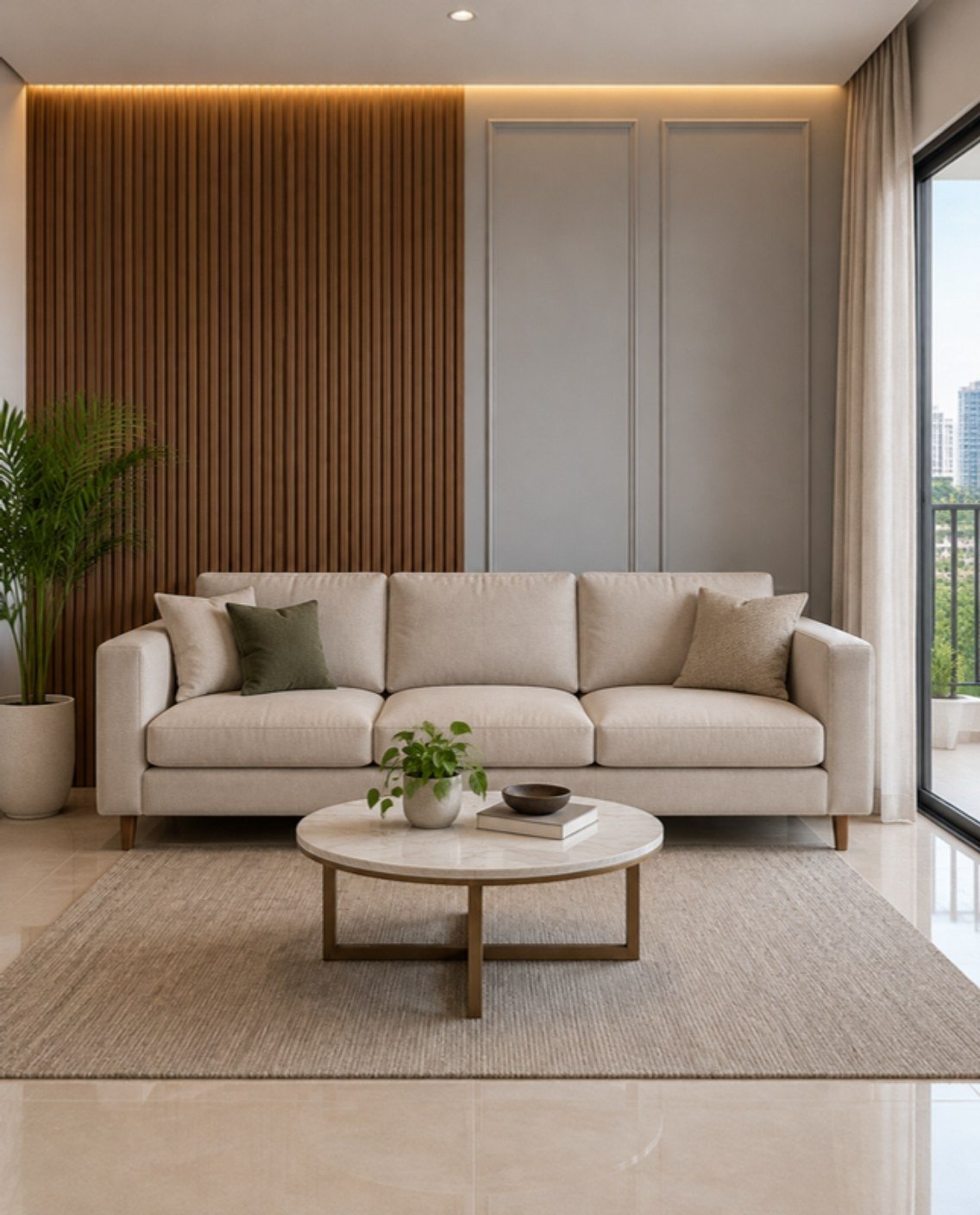
Which wall to panel
Panel one wall, occasionally two. The usual candidates are:
- The TV wall, where panelling hides cables and frames the screen. See our TV unit design ideas.
- The sofa wall, which is the first thing seen from the entrance in many flats.
- The foyer or passage wall leading into the living room; ideas in foyer and shoe rack design.
Avoid panelling a wall broken up by doors, windows and switchboards; the pattern will look chopped.
Types of wall panelling
Fluted or slatted panels
Vertical grooves or slats in MDF, HDHMR, solid wood, WPC or charcoal-core panels. They add texture and make a ceiling look higher. Dust settles in the grooves, so a wider flute is easier to clean than a very fine one.
Moulding (wainscoting) panels
Rectangular frames formed with wood, MDF or polymer mouldings and painted with the wall. This gives a classic or modern-classic look for comparatively little material, though it needs neat workmanship and a smooth painted finish.
Veneer and laminate panels
Flat panels of plywood or engineered board finished in natural veneer or laminate, often with grooves or metal inlay strips between them. Veneer gives real wood grain; laminate is tougher and cheaper. Compare them in veneer vs laminate.
PVC and WPC panels
Ready-made, moisture-resistant panels fixed with adhesive or clips. Quick to install and useful on walls with a history of dampness, though the look is less refined than wood.
Upholstered or fabric panels
Padded panels in fabric or leatherette. Soft and good for acoustics, better suited to a bedroom headboard wall or a home theatre than a busy living room, because they hold dust and stains.
Stone, tile and textured finishes
Stone cladding, large-format tiles or textured plaster give a solid, cool-toned feature wall. They are heavy and permanent; confirm the wall can carry the cladding.
Mirror and metal accents
Tinted mirror or slim metal strips set between panels add light and a touch of luxury. Use sparingly.
Choosing a style
- Contemporary: fluted panels or flat veneer with thin metal inlays.
- Modern classic: painted mouldings in a single muted colour.
- Minimal or Japandi: light wood slats with plenty of plain wall around them.
- Luxury: veneer or stone with concealed lighting.
The panelling should belong to the rest of the home; our guide to choosing an interior design style and these living room design ideas will help you keep it consistent.
Lighting the panelled wall
Texture needs light at an angle to show. A concealed LED strip in the ceiling cove or at the top of the panel, or a row of wall-washer downlights, makes flutes and mouldings stand out; flat frontal light flattens them. Lighting has to be planned with the false ceiling and wiring, before the panels go up: see false ceiling guide and lighting design for Indian homes.
Check the wall first
- Dampness. Panelling over a damp wall traps moisture and leads to mould and swelling. Find and fix the source first, and use moisture-resistant boards or WPC if the wall is an external one.
- Services. Mark concealed pipes and conduits before fixing; finalise switch and socket positions so they fall neatly within the panel layout.
- Thickness. Panelling brings the wall forward by an inch or more, which affects door frames, skirting and switch plates.
What drives the cost
We do not quote a per-square-foot figure here, because the range is wide and a number without a specification misleads. The factors are:
- Material: PVC and painted MDF mouldings are at the lower end; laminate in the middle; veneer, solid wood, stone and upholstery at the upper end.
- Substrate and framing: whether panels are fixed directly or on a plywood or frame backing.
- Finish: polish on veneer and PU paint add labour and time.
- Detailing: inlays, grooves, mirrors, lighting profiles and concealed doors.
- Area and wastage: a patterned layout on a small wall wastes more material.
Ask for an itemised quotation that names the board, finish and brand. For the wider picture, read what drives interior cost.
Maintenance
- Dust flutes and mouldings with a soft brush or vacuum attachment.
- Wipe laminate and PVC with a damp cloth; use only a dry or slightly damp cloth on veneer.
- Keep veneer and fabric out of strong direct sun where possible, as both fade.
Common mistakes
- Panelling every wall, which makes the room smaller and darker.
- Mixing three or four panel types in one room.
- Forgetting switchboards until the panels are made.
- Very dark panelling in a room with little daylight.
- Covering damp instead of curing it.
Frequently asked questions
For most homes, fluted panels or painted mouldings on a single feature wall. Veneer suits a premium finish; PVC or WPC suits a wall prone to moisture.
Panelling is more durable and hides services, at a higher cost. Wallpaper and texture paint are cheaper and easier to change.
One light or vertical-patterned wall does not. Dark panelling on several walls will.
Can panelling be done on a damp wall?
Not until the dampness is treated. Otherwise the panels will deteriorate and mould may grow behind them.
Planning your interiors? Book a free design consultation or WhatsApp us on +91 88845 55998.