
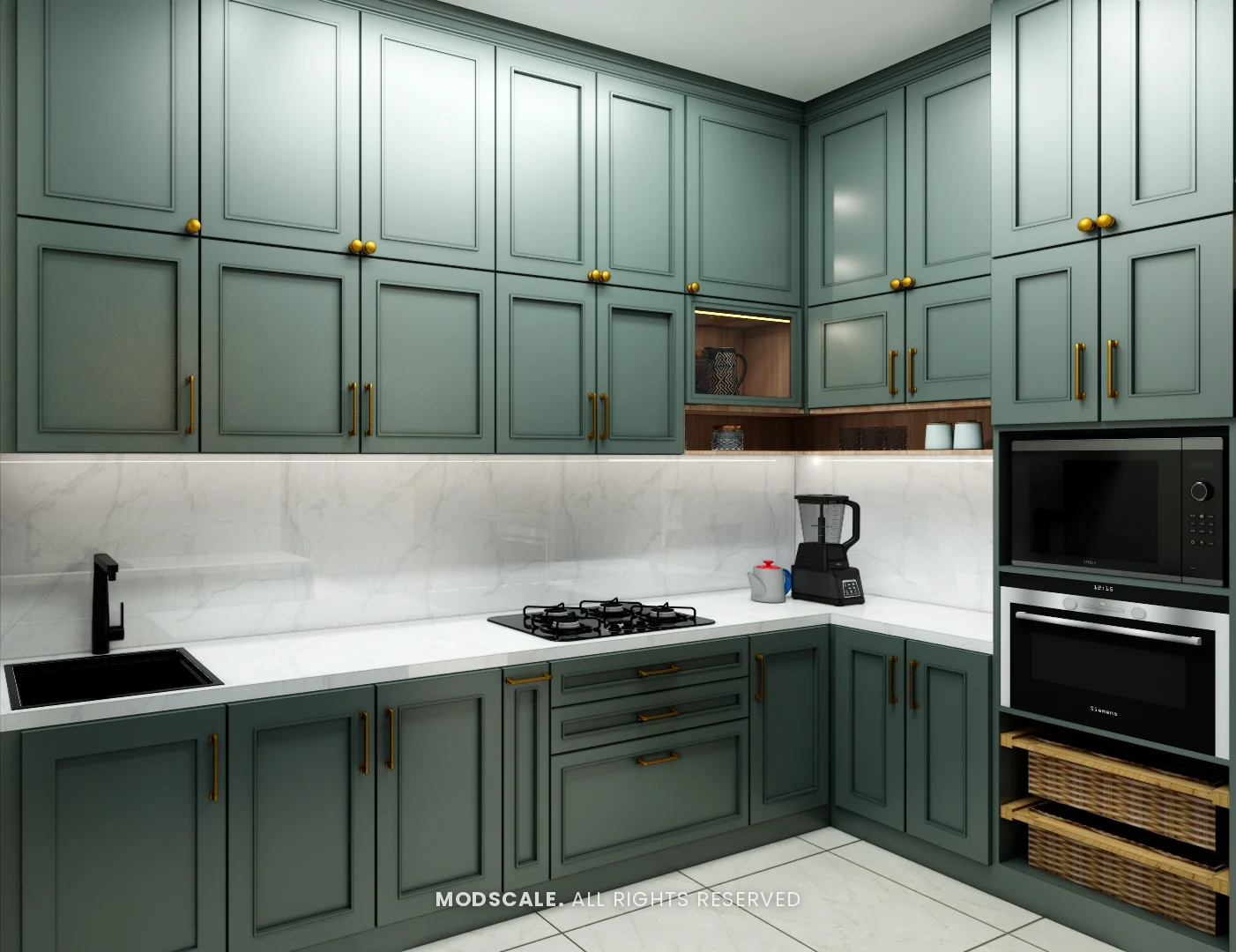
The main 2026 kitchen trends in Indian homes are coloured base units (sage, blue, green, terracotta) with lighter wall units, matte and soft-touch finishes in place of high gloss, handleless or profile-handle shutters, tall units for the oven and appliances, stone-look counters and backsplashes, fluted glass, and layered lighting. Choose finishes that clean easily after tadka and frying; that matters more than any trend.
In this guide
- 1. Coloured base units with lighter wall units
- 2. Matte and soft-touch finishes
- 3. Handleless and profile-handle shutters
- 4. Tall units for appliances and pantry
- 5. Stone everywhere: counters, backsplash and islands
- 6. Fluted glass and open niches
- 7. Warm materials and natural textures
- 8. Layered lighting
- Which trends suit Indian cooking best
- Frequently asked questions
Kitchen trend lists from 2026 (for example HomeLane’s kitchen trend round-ups and other Indian design publishers) point in the same direction as the designs we are preparing for clients: warmer colour, calmer finishes and more built-in storage. Below is each trend, how it looks in a real Indian kitchen, and our view on how well it holds up.
1. Coloured base units with lighter wall units
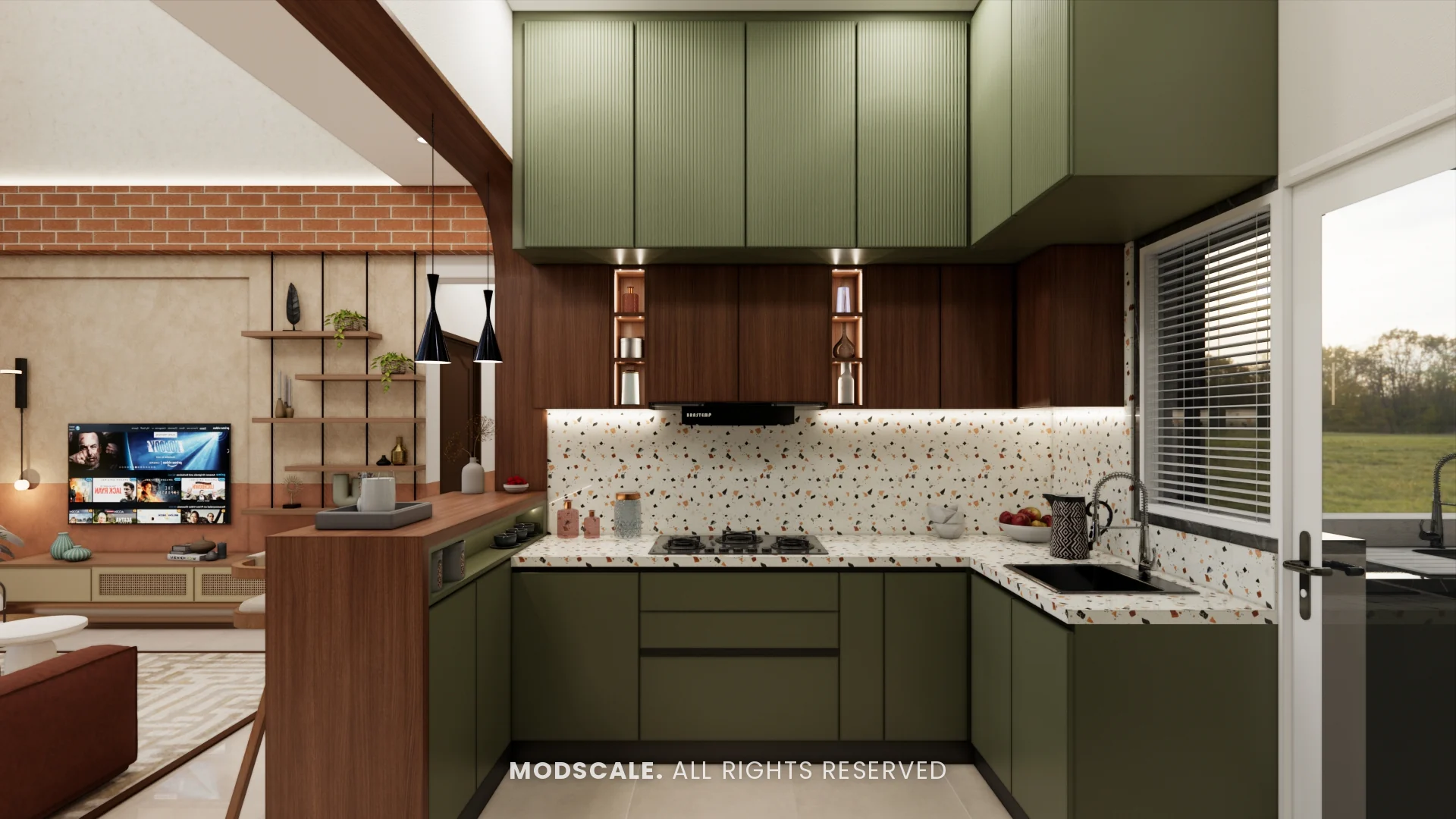
Two-tone kitchens are the most visible change. Base units go darker or more saturated (sage, eucalyptus green, powder blue, navy, taupe), with white or cream wall units above to keep the kitchen bright.
- Works well in Indian kitchens because base units hide wear better than light colours.
- Keep the loft in the lighter colour so the kitchen does not feel low.
- Repeat the base colour once elsewhere (a crockery unit or utility) so it looks intentional.
See our modular kitchen colour combinations for pairings.
2. Matte and soft-touch finishes
High-gloss acrylic shows fingerprints and fine scratches. In 2026, more clients are choosing matte laminates and soft-touch (suede-feel) finishes, especially for base units.
| Finish | Look | Upkeep |
|---|---|---|
| High gloss | Reflective, bright | Shows fingerprints and scratches |
| Matte laminate | Calm, flat colour | Hides marks; wipe oil promptly |
| Soft-touch / anti-fingerprint | Velvety, premium | Resists prints; costs more |
Our glossy vs matte laminate guide compares them in detail.
3. Handleless and profile-handle shutters
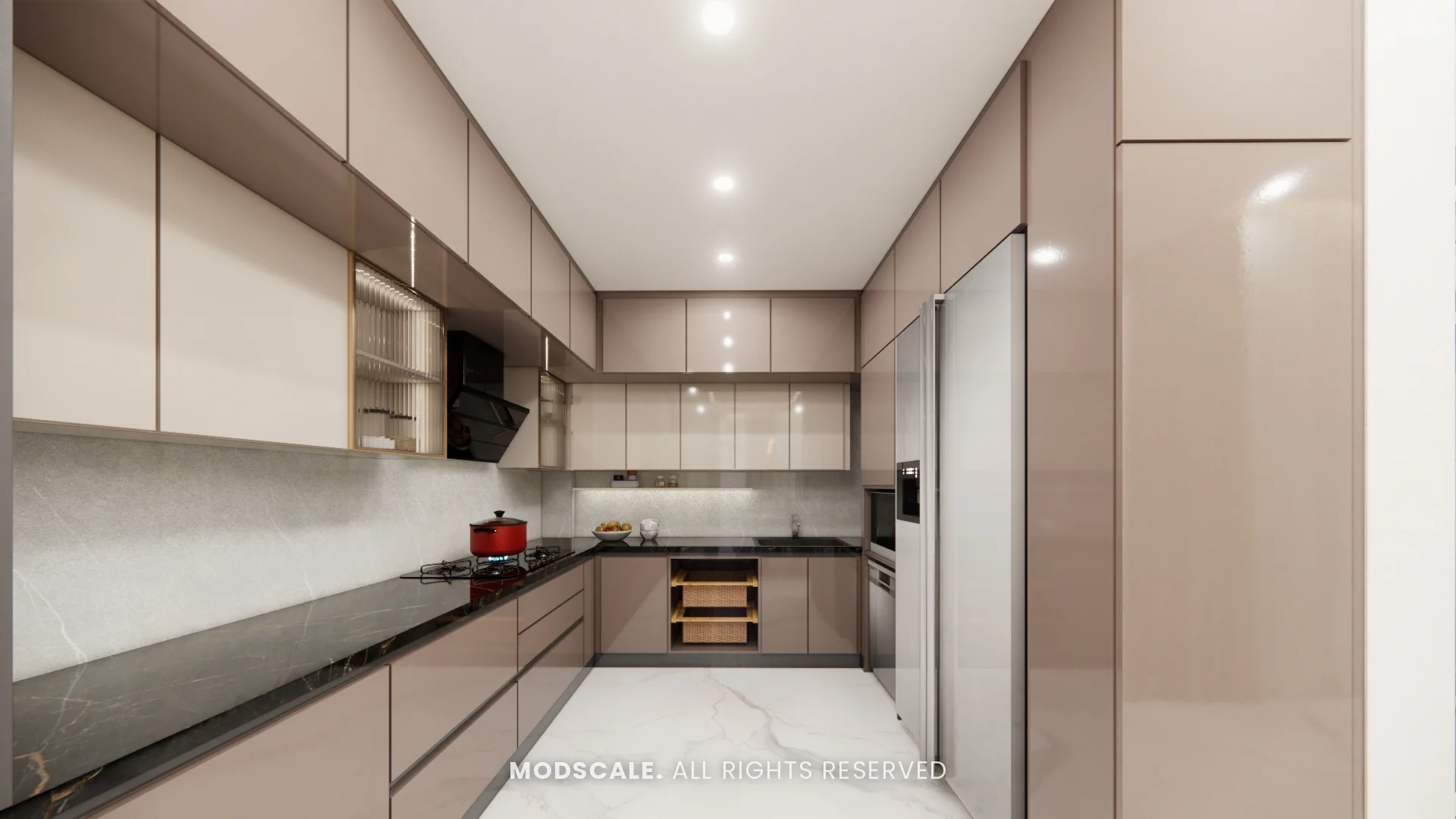
Clean fronts with a continuous aluminium profile (G-profile or J-profile) or push-to-open hardware are now common in modern kitchens. Profiles are easier to grip with oily hands than push-to-open, which suits heavy daily cooking. More options are in our kitchen handle design guide.
4. Tall units for appliances and pantry
Built-in ovens, microwaves and pantry pull-outs are moving into a floor-to-loft tall unit. This frees counter space for cooking and keeps appliances at a comfortable height.
- Plan sockets and ventilation for each appliance before the unit is made.
- Keep the oven at or slightly below eye level for safe use.
- A pantry tall unit with internal drawers holds far more than corner shelves.
5. Stone everywhere: counters, backsplash and islands
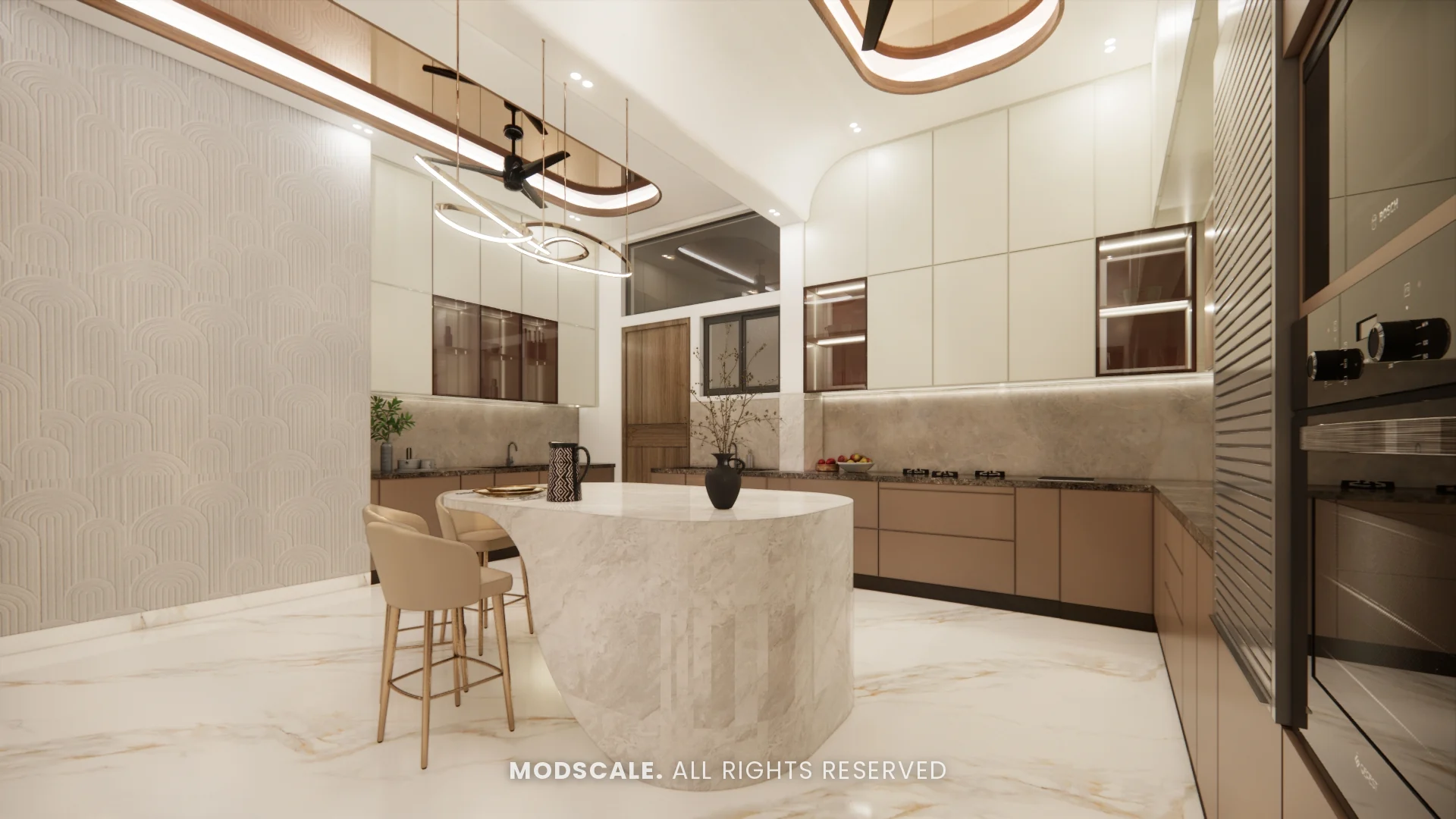
Quartz and stone-look surfaces now run up the wall as a full backsplash, and islands get stone or fluted stone fronts. A continuous slab behind the hob is easy to wipe and has fewer grout lines to stain. Compare counter materials in our granite vs quartz guide.
6. Fluted glass and open niches
Fluted or tinted glass on a few wall cabinets, often with internal lighting, breaks up a long run of solid shutters. Small open niches by the hob hold oil and spices. Keep open shelving limited: in Indian kitchens it collects grease quickly.
7. Warm materials and natural textures
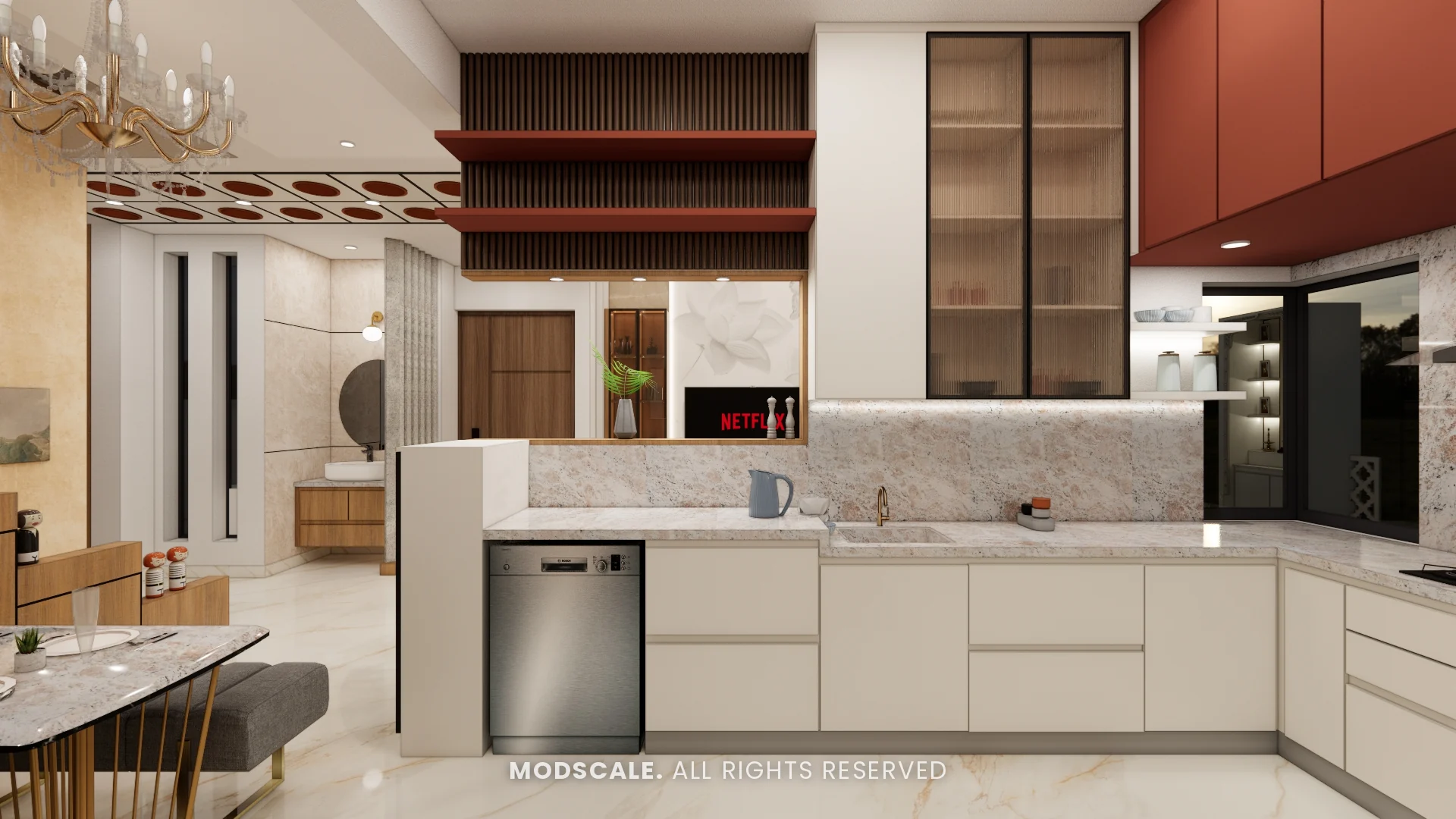
Terracotta, wood-look laminates, cane and textured tiles bring warmth back after years of all-white kitchens. Use them on lofts, open shelves or a breakfast counter rather than near the hob.
8. Layered lighting
- Task: under-cabinet LED strips over the counter.
- Ambient: recessed or panel lights in the ceiling.
- Accent: lights inside glass cabinets and pendants over an island or breakfast counter.
Which trends suit Indian cooking best
| Trend | Fit for daily Indian cooking |
|---|---|
| Darker coloured base units | Very good: hide wear |
| Matte finishes | Very good: hide marks |
| Profile handles | Very good: easy to grip |
| Push-to-open everywhere | Fair: oily hands, needs care |
| Full stone backsplash | Very good: easy to clean |
| Lots of open shelving | Poor near the hob: collects grease |
| Wood-look near the hob | Fair: choose wipeable finishes |
ModScale builds kitchen carcasses in BWP plywood, which handles moisture near the sink far better than MDF or particle board. Read plywood grades explained.
Frequently asked questions
What is the biggest kitchen design trend in 2026?
Two-tone kitchens with coloured base units and lighter wall units, usually in matte or soft-touch finishes.
Is high gloss going out of style?
Gloss is still used, but matte and anti-fingerprint finishes are increasingly chosen for base units because they hide marks better.
Are handleless kitchens practical for Indian cooking?
Profile handles (G or J profile) are practical and easy to grip. Push-to-open works but needs more care with oily hands.
Which kitchen colours are popular in 2026?
Sage and eucalyptus green, powder blue, navy, taupe and terracotta for base units, with white or cream wall units.
Is open shelving a good idea in an Indian kitchen?
Keep it limited and away from the hob. Open shelves collect grease and dust quickly with daily tadka and frying.
Which kitchen trends will last?
Tall units, stone backsplashes, layered lighting and matte finishes are practical and likely to last. Strong colours are easy to update later on the shutters alone.