
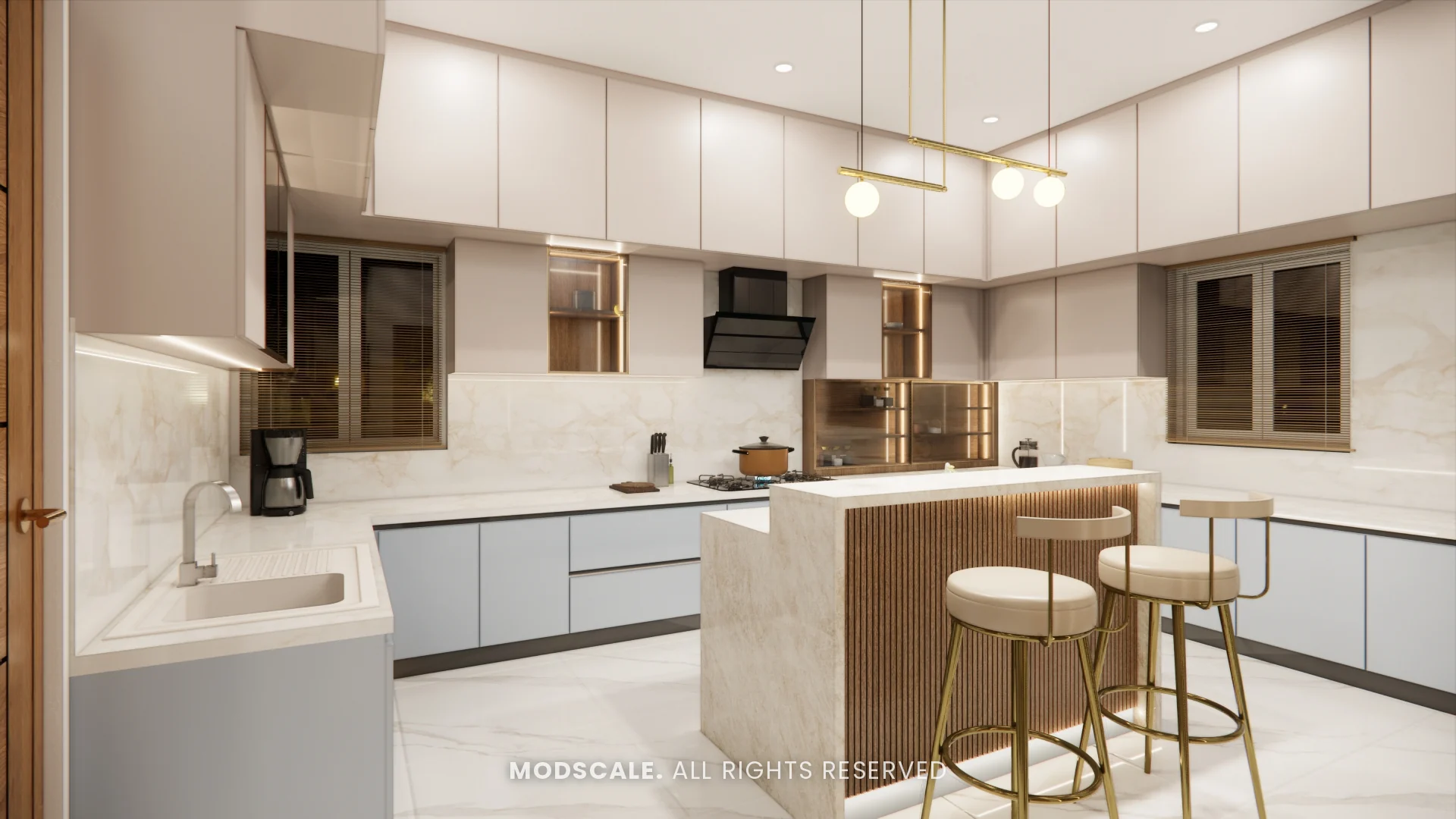
Light a kitchen in layers: ceiling downlights or panels for overall light, under-cabinet LED strips to light the counter without shadows, and feature lights such as lit glass shutters, open-shelf strips or pendants over an island. Use neutral white (around 4000K) on work surfaces so food colours look true, and put each layer on its own switch.
A single tube light in the centre leaves you working in your own shadow. Under-cabinet lights fix that, and a few feature lights make the kitchen look finished.
Kitchen lighting layers
| Layer | Lights | Purpose |
|---|---|---|
| Ambient | Downlights, slim panels | Overall brightness |
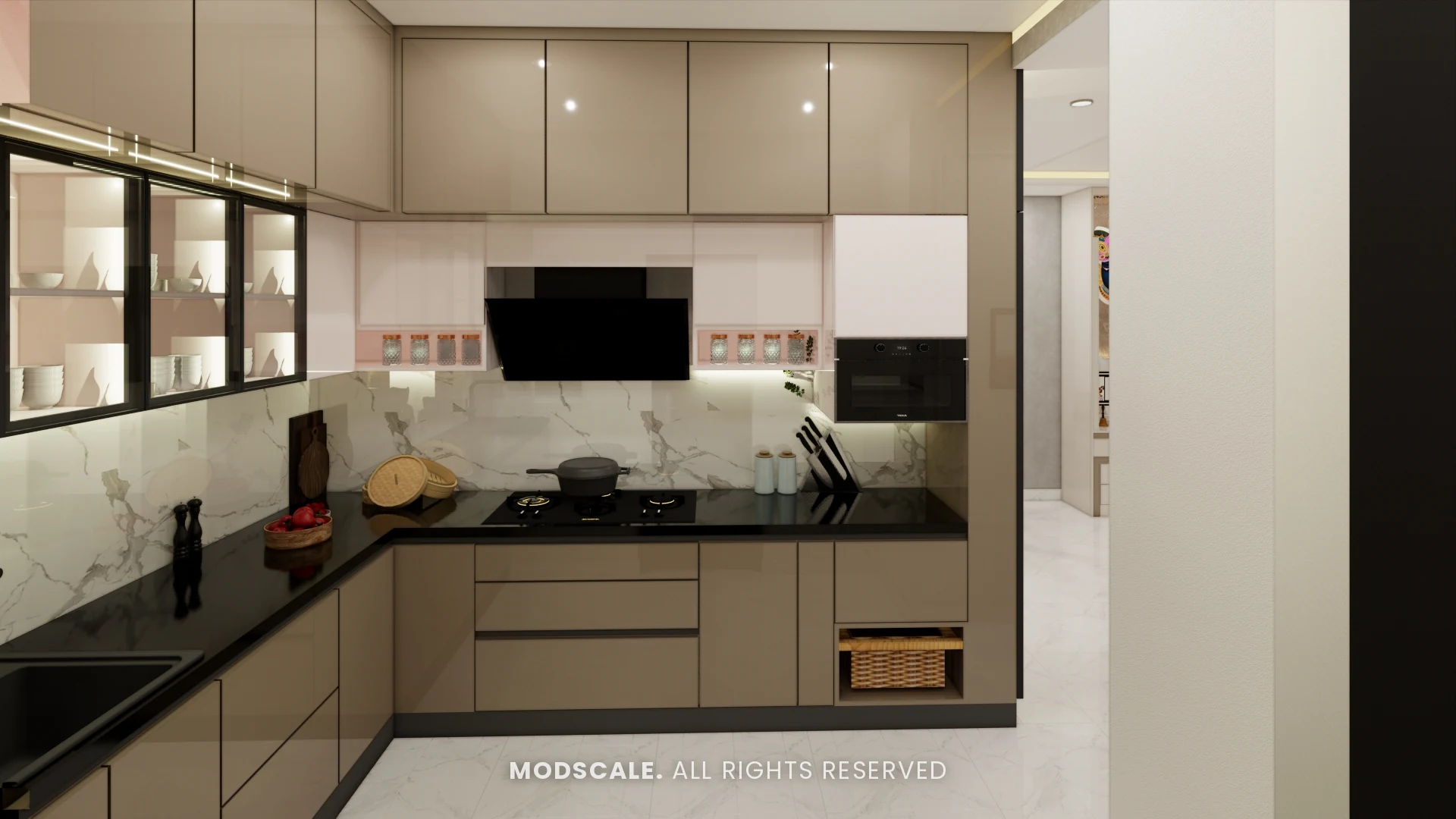
| Task | Under-cabinet LED strips, hood lights | Shadow-free counter |
| Feature | Lit glass shutters, shelf strips, pendants | Display and mood |
Placement tips
- Fix under-cabinet strips towards the front of the wall unit so light falls on the counter, not the wall.
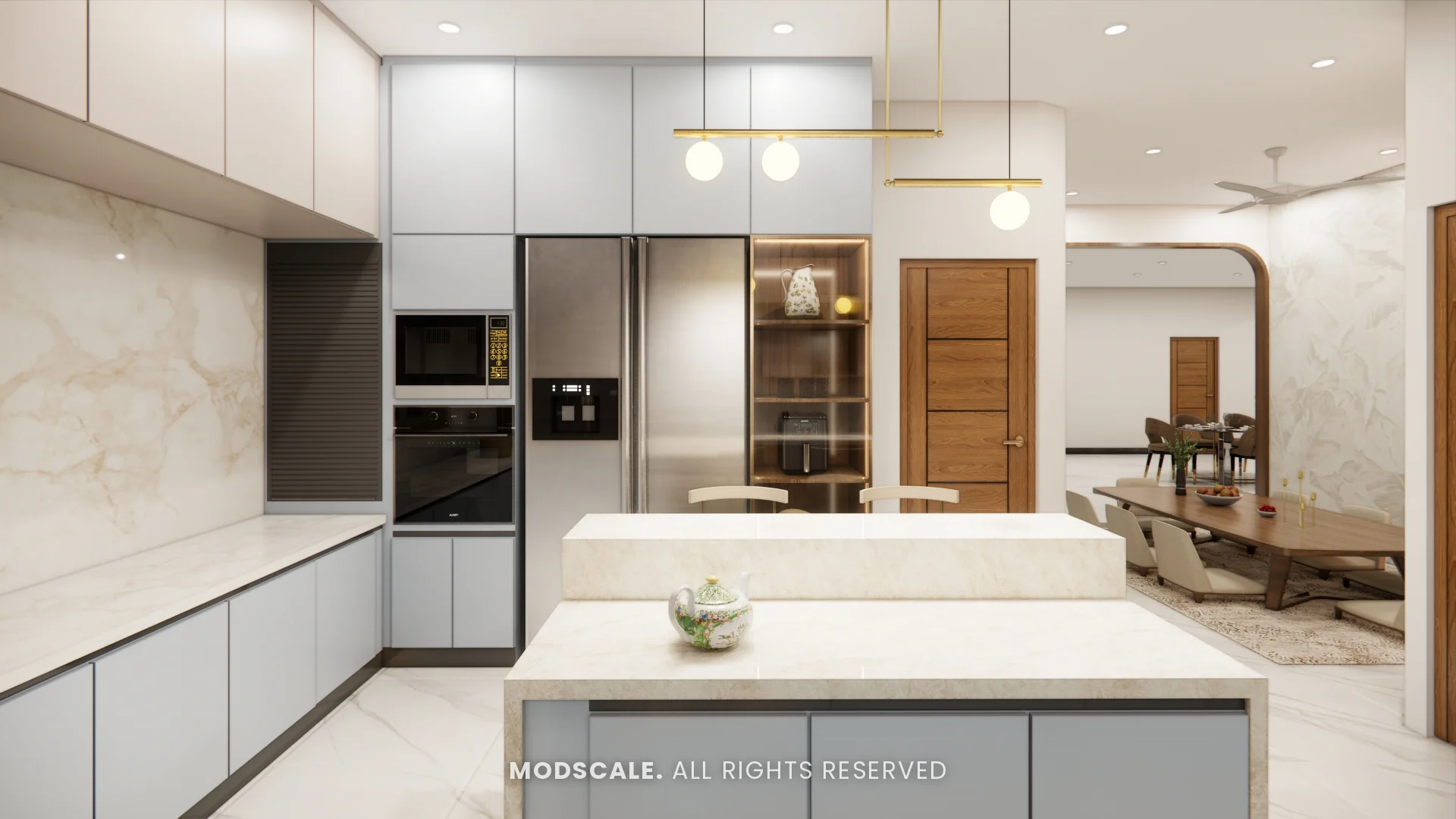
- Hang island pendants about 30–34 in above the counter.
- Use moisture-rated fittings near the sink and hob.
Ask for an aluminium profile with a diffuser for LED strips. Bare strips show dots of light on glossy counters.
Colour temperature
Neutral white (about 4000K) suits work areas; warm white (2700–3000K) suits an open kitchen that flows into the dining room. More in our lighting design guide and kitchen false ceiling designs.
Frequently asked questions
What lighting is best for a kitchen?
Ceiling downlights for general light, under-cabinet strips for the counter and a few feature lights.
Are under-cabinet lights necessary?
They are the most useful kitchen light because they remove shadows on the counter.
What colour light is best for a kitchen?
Neutral white, around 4000K, for work areas.
How high should pendants be above an island?
About 30 to 34 inches above the counter.
Can glass wall units be lit?
Yes, with LED strips inside; they make a good display feature.