
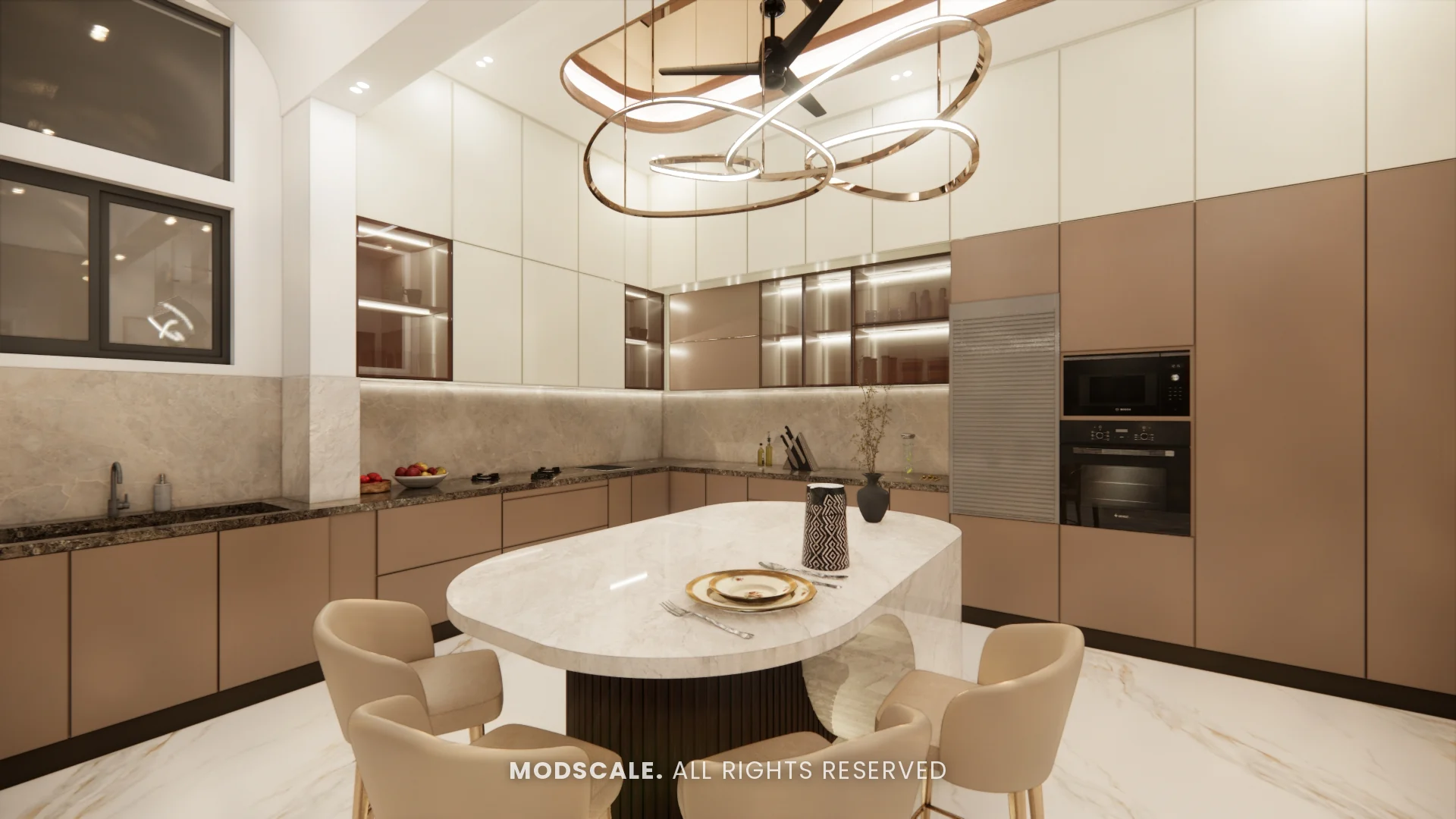
For most Indian kitchens, granite is the practical choice for the cooking platform: it handles hot vessels, tadka and heavy use, and Indian granite costs about ₹150 to ₹500 per sq ft for the material. Quartz is better where you want a light, uniform or marble-look surface that resists turmeric and oil stains; standard quartz costs about ₹250 to ₹1,200 per sq ft. Fabrication and fitting add about ₹150 to ₹400 per sq ft.
In this guide
The countertop is the hardest-working surface in an Indian kitchen. It takes pressure cookers straight off the flame, turmeric and oil spills, and daily scrubbing. Granite and quartz are the two stones most Bangalore homeowners choose between, and both are good. The right one depends on how you cook and the look you want.
Granite vs quartz at a glance
| Point | Granite | Quartz |
|---|---|---|
| What it is | Natural stone, cut from quarries | Engineered: crushed quartz bound with resin |
| Heat | Excellent; hot cookware is fine | Moderate; resin can discolour under very hot vessels |
| Stains | Slightly porous; needs sealing | Non-porous; resists oil, turmeric and coffee |
| Maintenance | Seal every 1 to 2 years | Soap and water |
| Looks | Natural patterns, earthy and dark tones | Uniform colours, pure whites, marble looks |
| Price (material, per sq ft) | Indian about ₹150–500; imported about ₹400–1,500+ | Standard about ₹250–1,200; premium marble-look higher |
Price ranges and comparison points from NoBroker’s quartz vs granite guide (June 2026); material only, before fabrication, fitting and GST. AECORD’s 2026 guide gives higher installed figures for granite, about ₹800 to 2,500 per sq ft, which include fabrication and finishing; see our countertop price guide.
Heat and Indian cooking
This is granite’s biggest advantage. A kadai or pressure cooker can go straight from the burner onto granite without harm. Quartz is tough but its resin binder does not like intense, direct heat, so you will want trivets beside the hob. If your household does a lot of high-heat cooking, granite around the hob is the safer choice.
Stains, hygiene and upkeep
Quartz is non-porous, so turmeric, oil and tea wipe off and nothing soaks in. Granite has tiny pores; a good sealant applied every year or two keeps it stain-resistant, and darker granites hide marks well anyway. Light-coloured granite without sealing is the combination most likely to stain.
Looks and colours
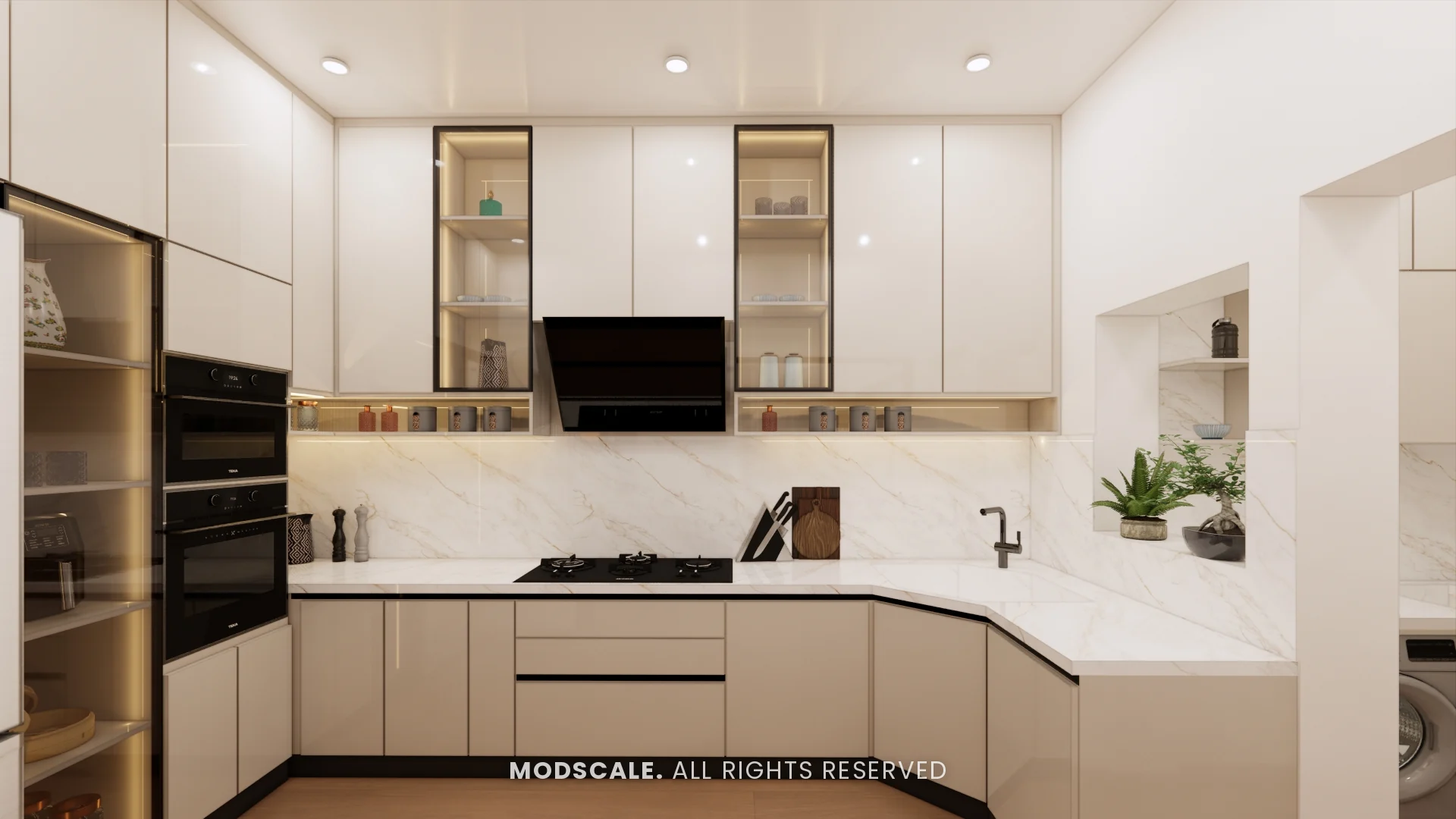
Granite offers natural movement in blacks, greys, browns and some whites; no two slabs are identical, so choose your actual slab at the yard. Quartz comes in consistent colours, including the bright whites and Calacatta-style marble looks that suit modern and light kitchens. If you want a white kitchen counter that stays white, quartz is the easier choice.
Thickness, edges and joints
Both are usually 15 to 20 mm thick, with the front edge often built up to 30 to 40 mm. Long or L-shaped platforms need a joint; a good fabricator places it away from the sink and hob and matches the pattern. Cut-outs for the sink and hob should be planned with the actual appliances in hand. See our kitchen platform size guide.
Which should you choose?
- Heavy Indian cooking, practical budget: granite, especially a darker Indian granite.
- Light, modern kitchen, low upkeep: quartz, with trivets beside the hob.
- Both: granite on the cooking platform and quartz on an island or breakfast counter is a popular mix.
For other options, including marble and solid surface, see kitchen countertop materials.
Frequently asked questions
Which is better for an Indian kitchen, granite or quartz?
Granite is usually better on the cooking platform because it handles high heat. Quartz is better where you want a light, stain-resistant surface, such as an island.
What is the price of granite per sq ft in India?
Published 2026 figures put Indian granite at about ₹150 to ₹500 per sq ft for the material, with imported granite higher, plus about ₹150 to ₹400 for fabrication and fitting.
What is the price of quartz per sq ft in India?
Standard quartz is about ₹250 to ₹1,200 per sq ft for the material, and premium marble-look quartz more, before fabrication and fitting.
Does quartz stain with turmeric?
Quartz is non-porous, so turmeric usually wipes off if cleaned promptly. Avoid harsh chemicals and very hot vessels on it.
How thick should a kitchen countertop be?
Usually 15 to 20 mm, with the front edge often built up to 30 to 40 mm.