
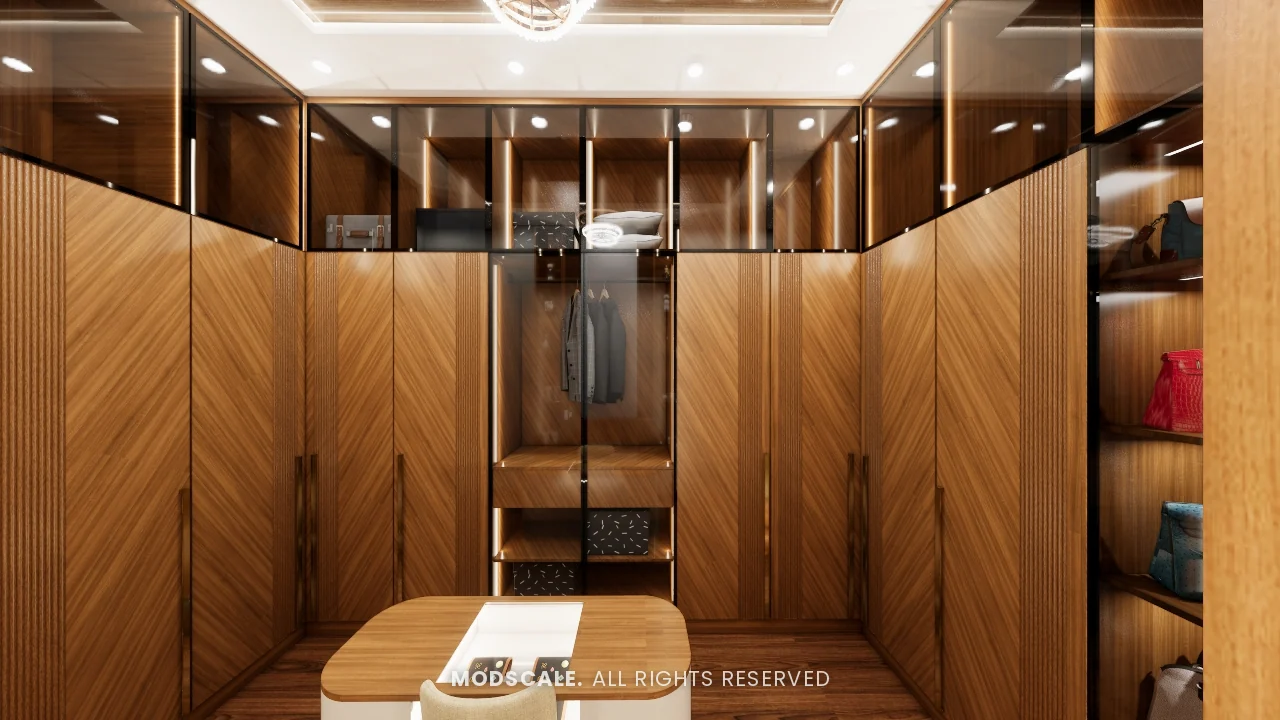
The outside of a wardrobe is what visitors see, but the inside is what you live with every day. A good wardrobe internal design fits the way your family dresses: sarees and kurtas, office shirts, school uniforms, winter wear, bags and the locker. Plan the inside first, and the shutters follow. Here is how.
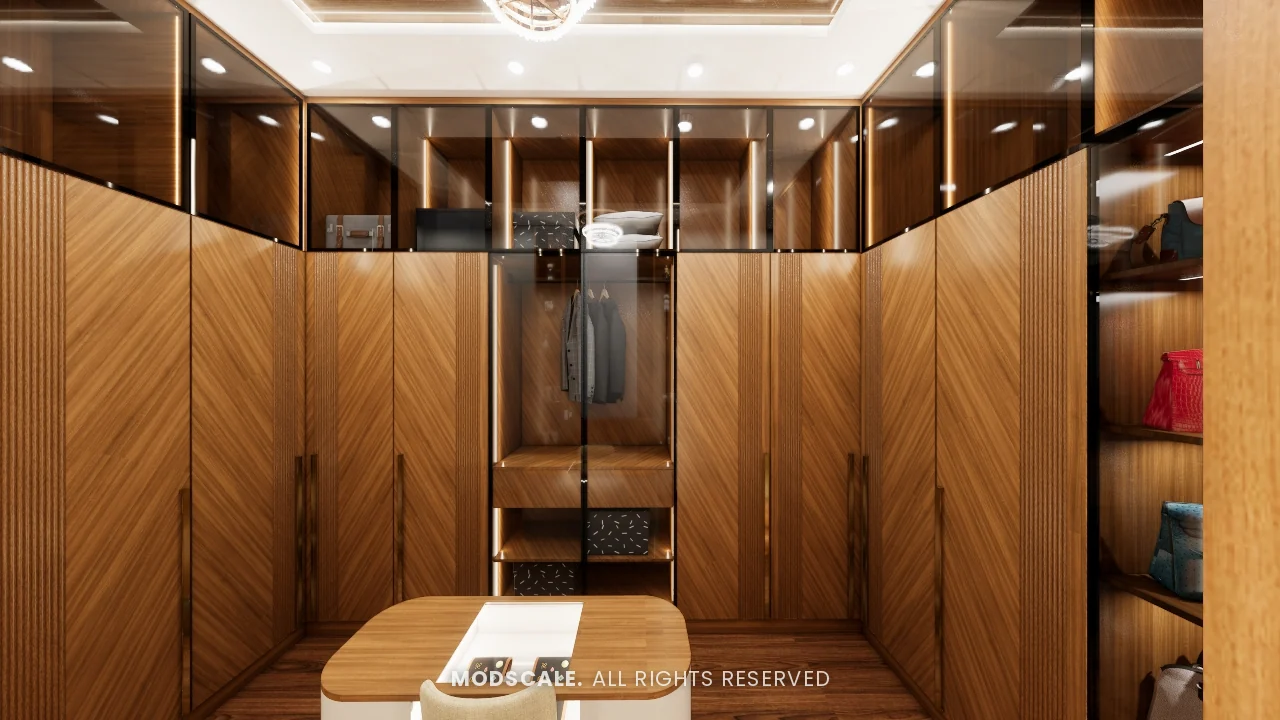
Start with what you own
Before drawing anything, count roughly what goes in: long dresses and sarees, shirts and trousers, folded clothes, innerwear, accessories, bags, suitcases and occasional items. Split the wardrobe between the two people who share it, with a section each.
The main zones
Long hanging
About 4.5 to 5 feet of clear height for dresses, long kurtas, coats and sarees on hangers. One section per person is usually enough.
Short (double) hanging
Two rods one above the other, each about 3 feet high, for shirts, tops and folded trousers on hangers. This doubles hanging capacity in the same width.
Shelves
Shelves spaced about 10 to 12 inches apart for folded T-shirts, jeans and sweaters. Too much space between shelves leads to tall, toppling piles.
Drawers
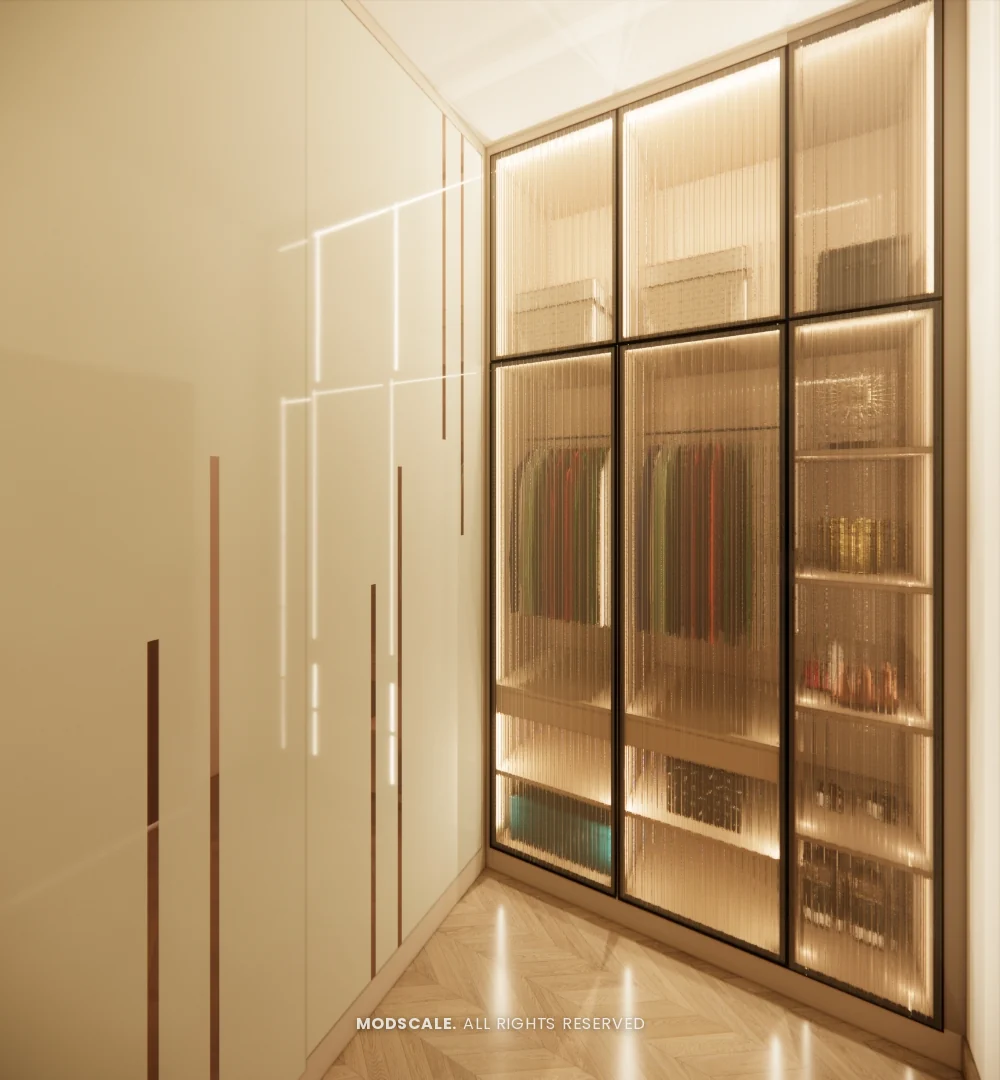
Drawers at waist height for innerwear, socks, accessories and jewellery. Use soft-close channels and add a divided insert or velvet tray for watches and jewellery.
Locker
A small locker inside one section, ideally hidden behind a drawer front or shutter, for documents and valuables.
Loft
The space above the wardrobe, up to the ceiling, for suitcases, quilts and seasonal items. Use lift-up or simple hinged shutters. See wardrobe loft design.
Useful accessories
- Pull-out trouser and saree racks.
- Tie, belt and scarf organisers on the side panel.
- A pull-down hanging rod for tall wardrobes.
- Profile or sensor lights that switch on when a shutter opens.
- A pull-out mirror or a mirror on the inside of a shutter.
- A laundry basket pull-out at the bottom.
Sizes that work
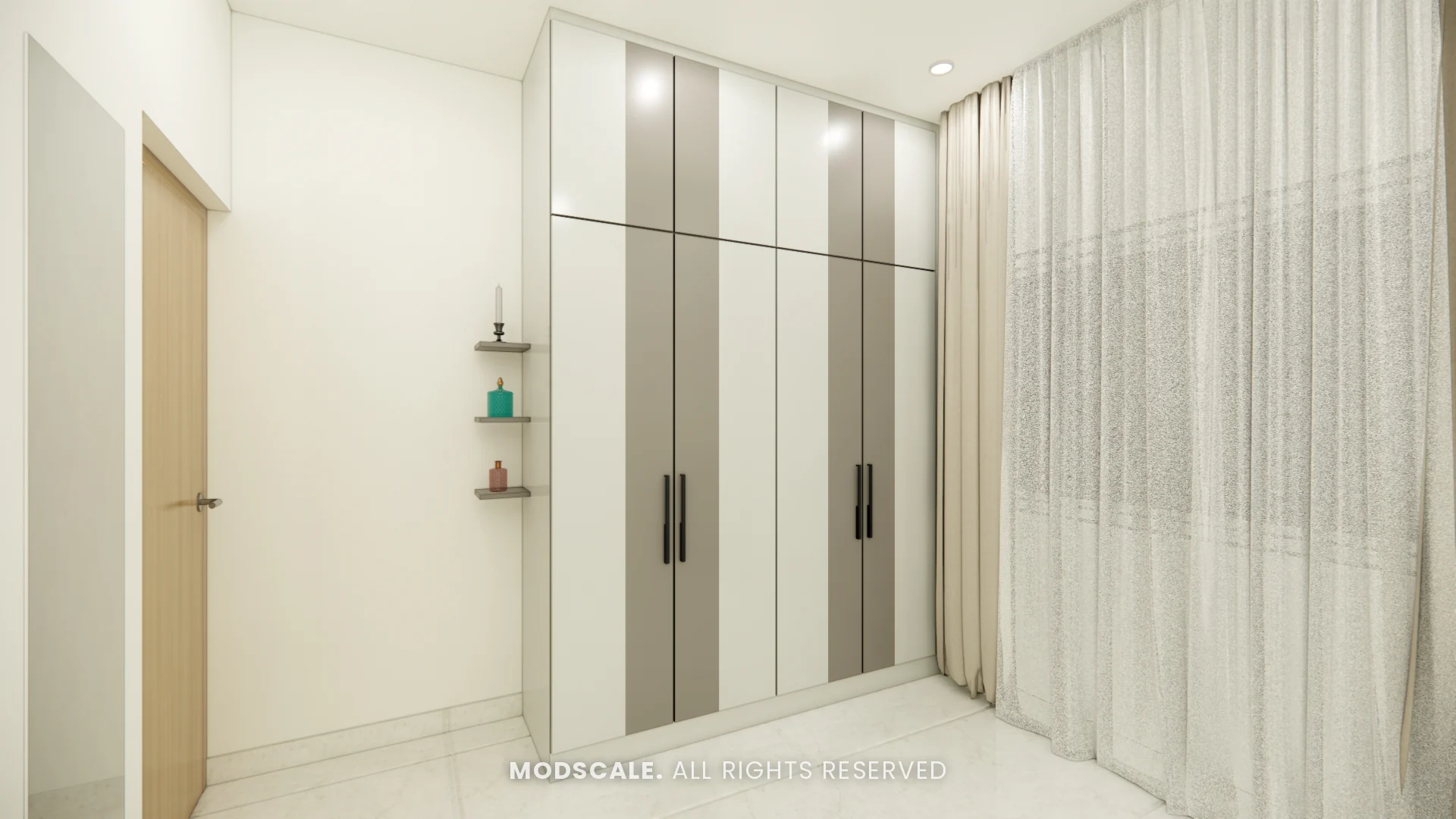
- Depth: about 22 to 24 inches lets hangers sit without touching the shutter.
- Section width: 1.5 to 3 feet per section; very wide shelves sag unless supported.
- Keep the most-used items between knee and eye height.
Materials
Use BWP or good-grade plywood for the carcass, especially on outer walls that may get damp, and laminate on all inner surfaces for easy cleaning. Ventilated back panels or a gap behind the wardrobe help avoid musty smells in the monsoon. See monsoon care for wooden furniture.
For shutter styles see modern wardrobe design ideas and sliding vs hinged wardrobes; for planning a whole home, wardrobe storage planning for a 3BHK.
Frequently asked questions
Around 22 to 24 inches works for most wardrobes, so hangers fit without touching the shutters.
Plan one long-hanging section of about 4.5 to 5 feet per person, plus double-hanging sections for shirts and tops.
About 10 to 12 inches between shelves suits folded clothes. Larger gaps lead to tall piles that topple.
Inside one section, ideally at waist height and hidden behind a drawer front or shutter.
Use BWP plywood, leave ventilation or a gap behind the wardrobe on outer walls, avoid storing damp clothes and use moisture absorbers in the monsoon.
Planning your interiors? Book a free design consultation or WhatsApp us on +91 88845 55998.