
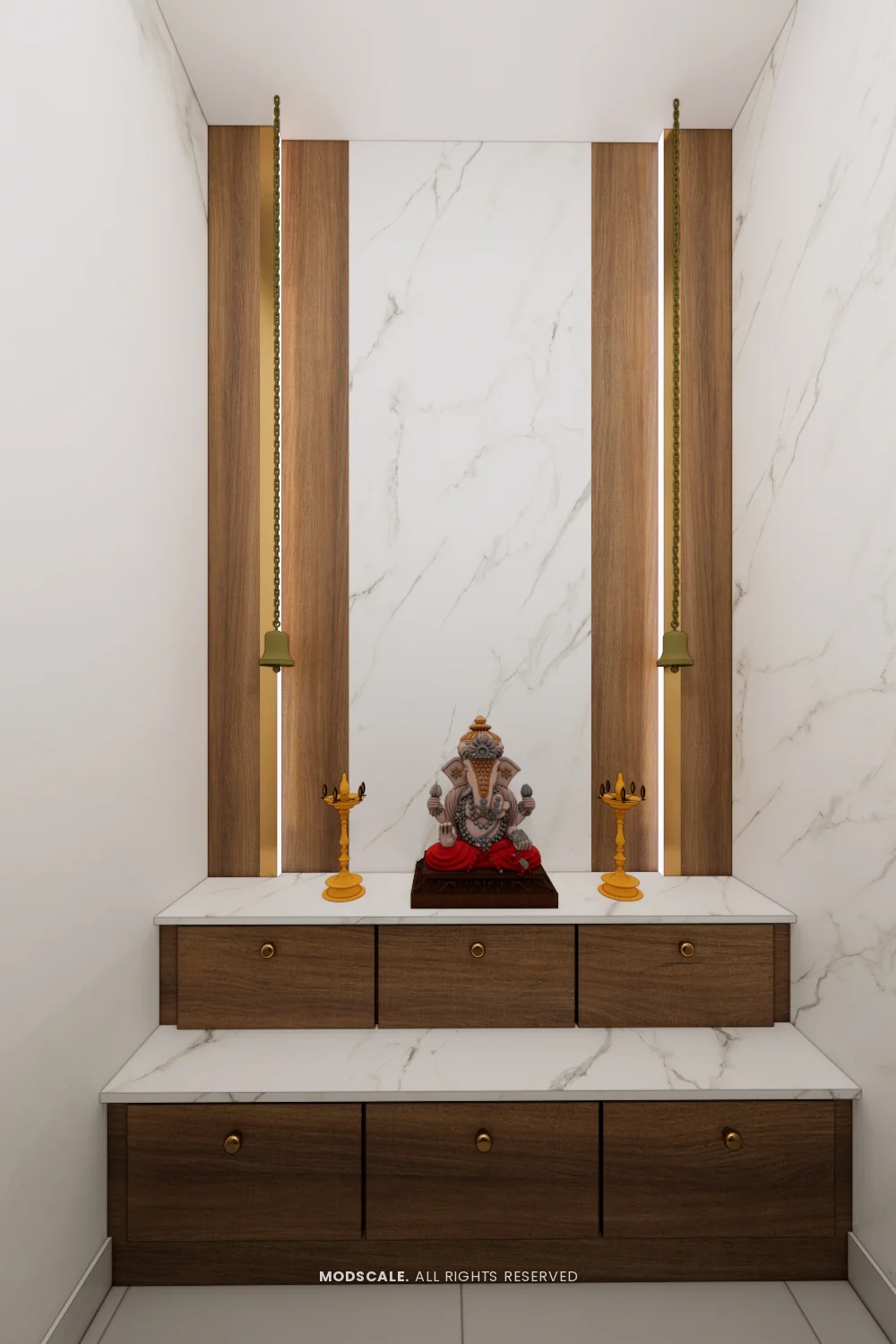
Most apartments do not have space for a separate pooja room, but every family wants a calm, beautiful place for prayer. A well-designed small pooja unit can be just as graceful as a full room. Here are small pooja room and mandir designs that fit Indian apartments, with practical tips on lighting, storage and placement.
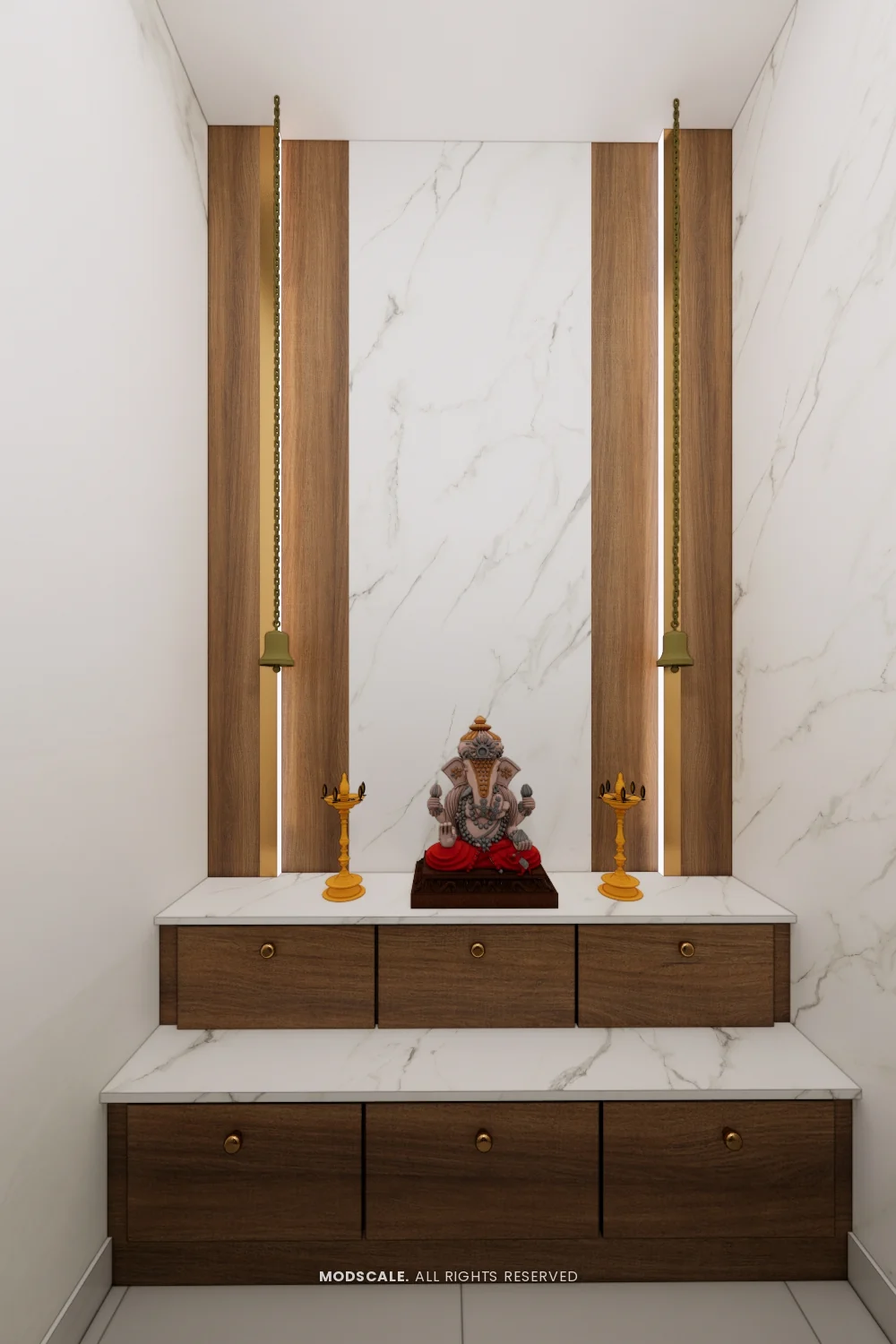
Small pooja room design ideas
Wall-mounted mandir
A floating unit with a backlit panel, a shelf for the deities and a drawer below for pooja items. It takes almost no floor space and suits the hall or dining area.
Floor-standing pooja unit
A cabinet-height base with storage, a marble or stone-finish platform and a carved or jali back panel. A good choice beside the dining table or in a corner of the hall.
Corner mandir
An L-shaped or angled unit fits neatly into an unused corner.
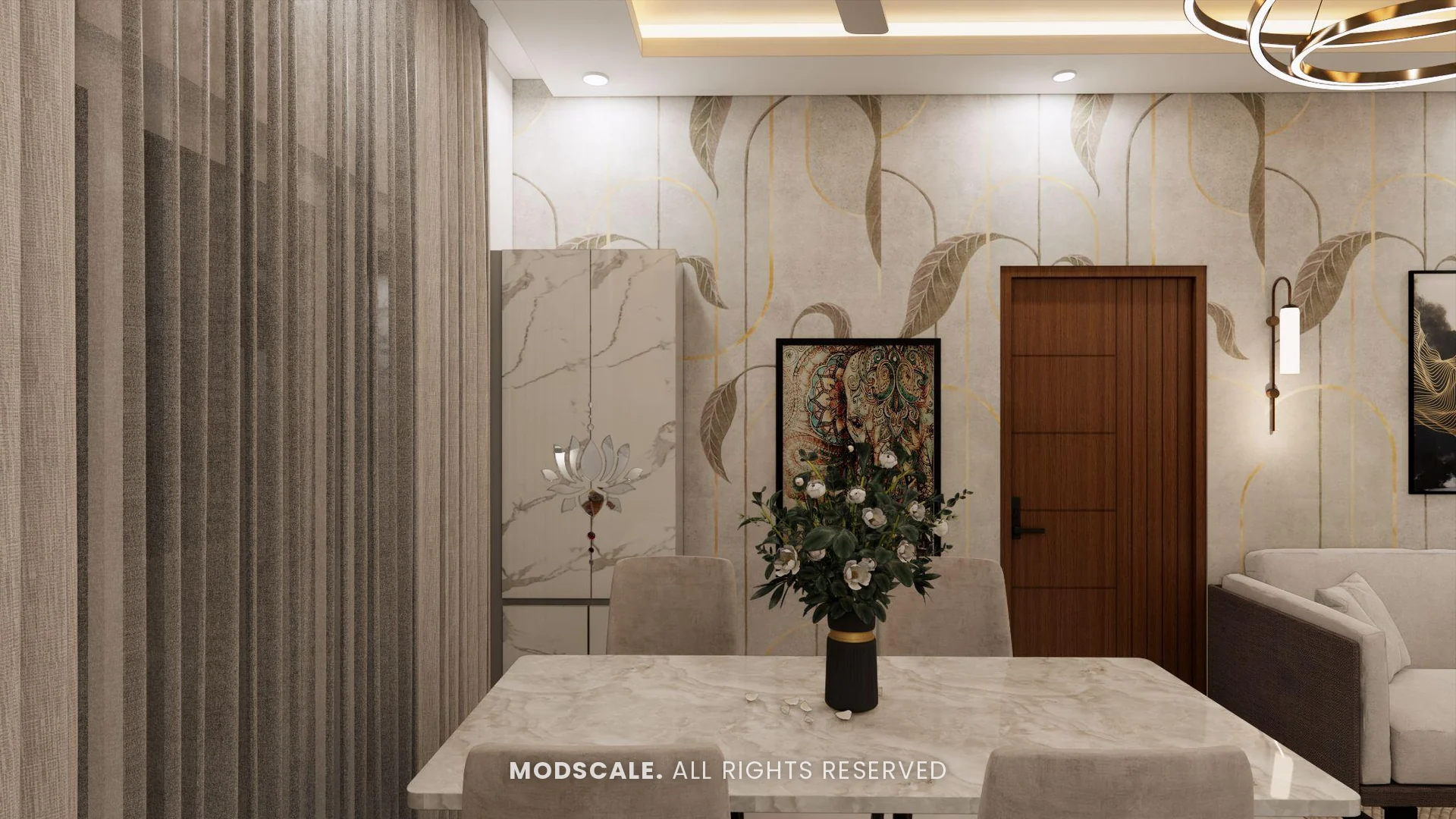
Niche in the wall
A recessed niche with a stone base and a warm backlight creates a serene shrine with no protruding furniture.
Pooja unit with shutters
Jali, glass or louvered shutters close the mandir when needed. See pooja room door design.
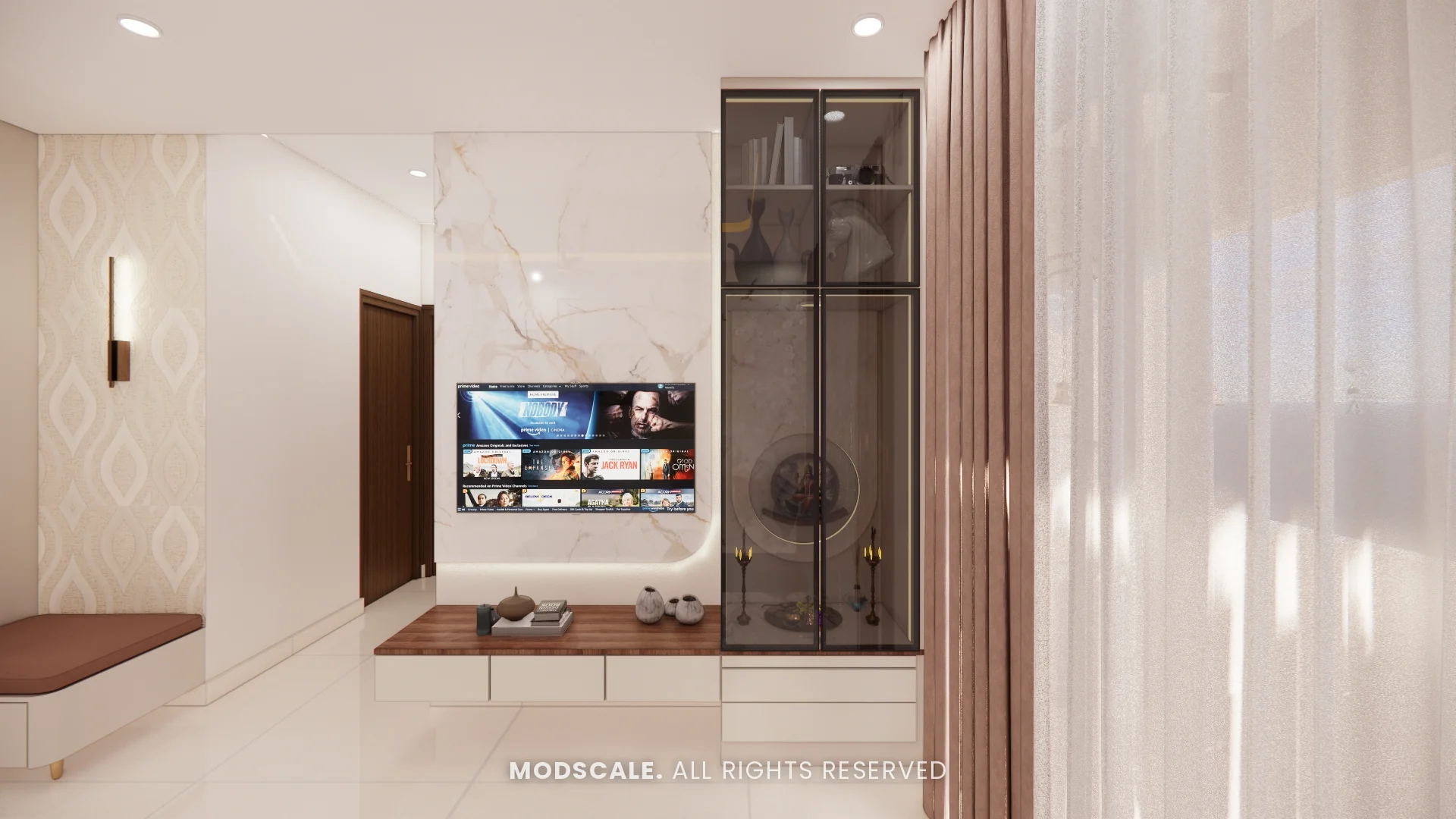
Pooja unit within the TV wall or crockery unit
In compact homes, a mandir behind tinted glass or a jali can sit within a larger wall unit, with its own lighting and space for lamps.
Design tips
- Use a marble, granite or quartz platform where lamps and incense are placed; it is heat-resistant and easy to clean.
- Add a warm backlight behind a jali or Om motif panel.
- Include a drawer for matches, incense and pooja books, and a pull-out for the bell and plates.
- Keep ventilation in mind if you light lamps or incense daily.
- Avoid placing the mandir on a wall shared with a bathroom, which many families prefer not to do.
Many families prefer the north-east corner for the mandir; see Vastu tips for home. For larger spaces, read pooja room design, and for patterns, jali design.
Frequently asked questions
Many families prefer the north-east of the home, in a calm spot in the hall or dining area, away from bathroom walls.
Wall-mounted units are often about 2 to 3 feet wide. Floor units are usually around 3 feet wide and cabinet height at the base. Size it to your deities and the space.
Marble, granite or quartz are heat-resistant and easy to clean, which suits lamps and incense.
Yes, in compact homes, as long as it has its own space, lighting and ideally a jali or glass shutter to separate it.
A warm backlight behind a jali or motif panel, plus a small downlight or strip on the deities, creates a serene glow.
Planning your interiors? Book a free design consultation or WhatsApp us on +91 88845 55998.