
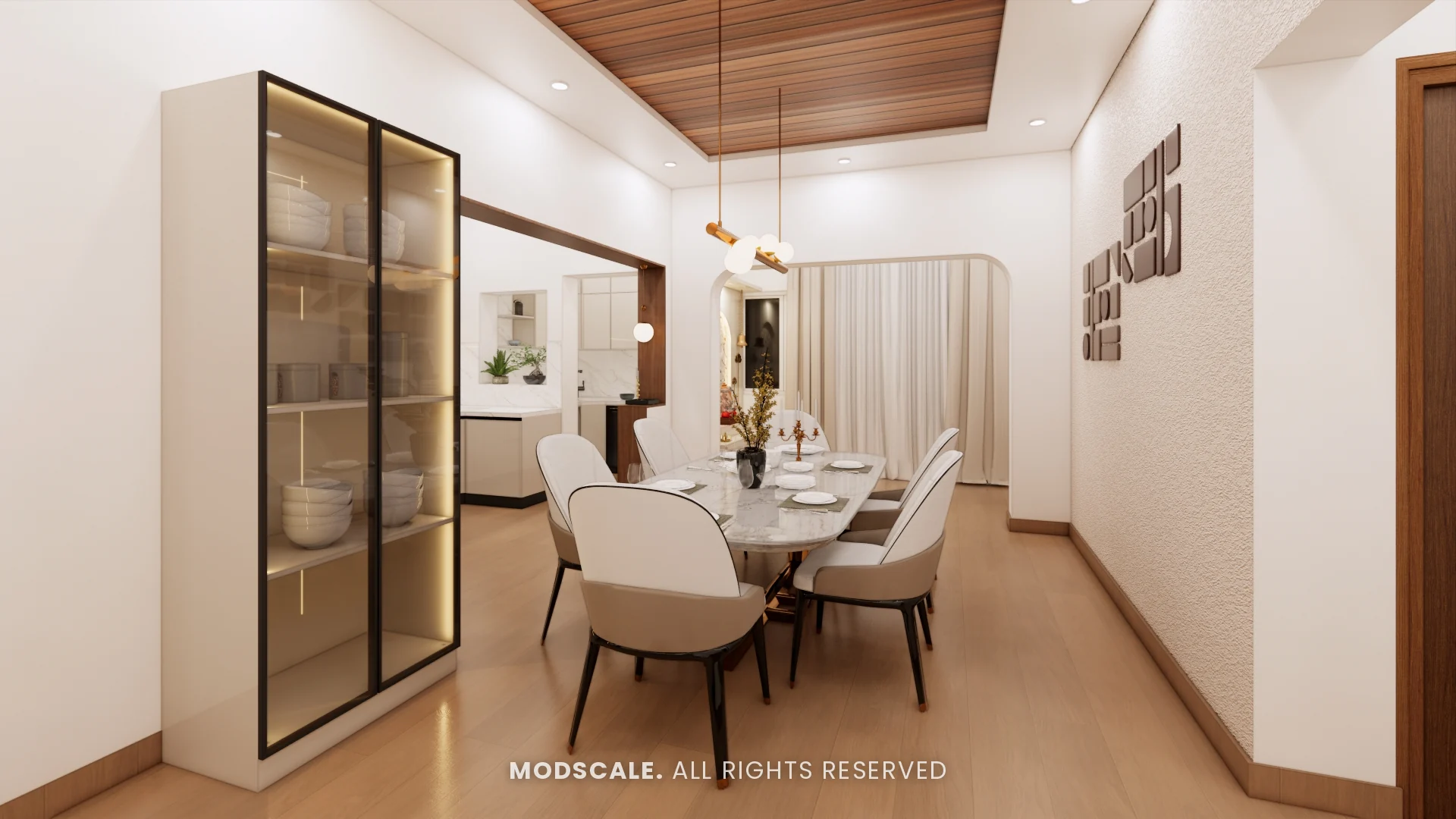
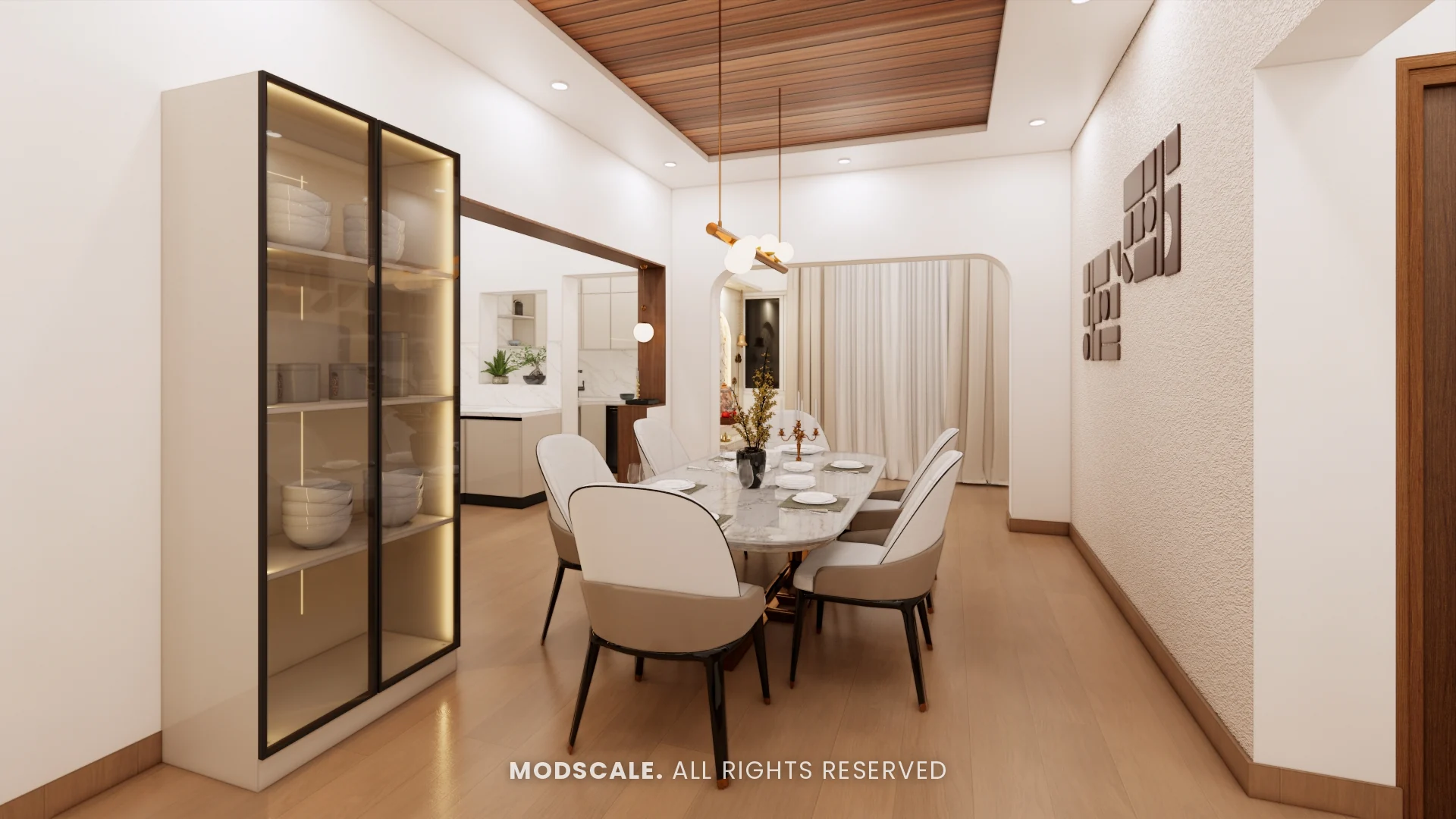
A wooden ceiling brings warmth that paint and gypsum alone cannot. In Indian homes it is rarely a full timber ceiling; more often it is a wooden slat panel over the dining table, a strip in a passage, a frame around a cove or a feature at the entrance, combined with a regular false ceiling. Here are the main designs and how to use them well.
Popular wooden ceiling designs
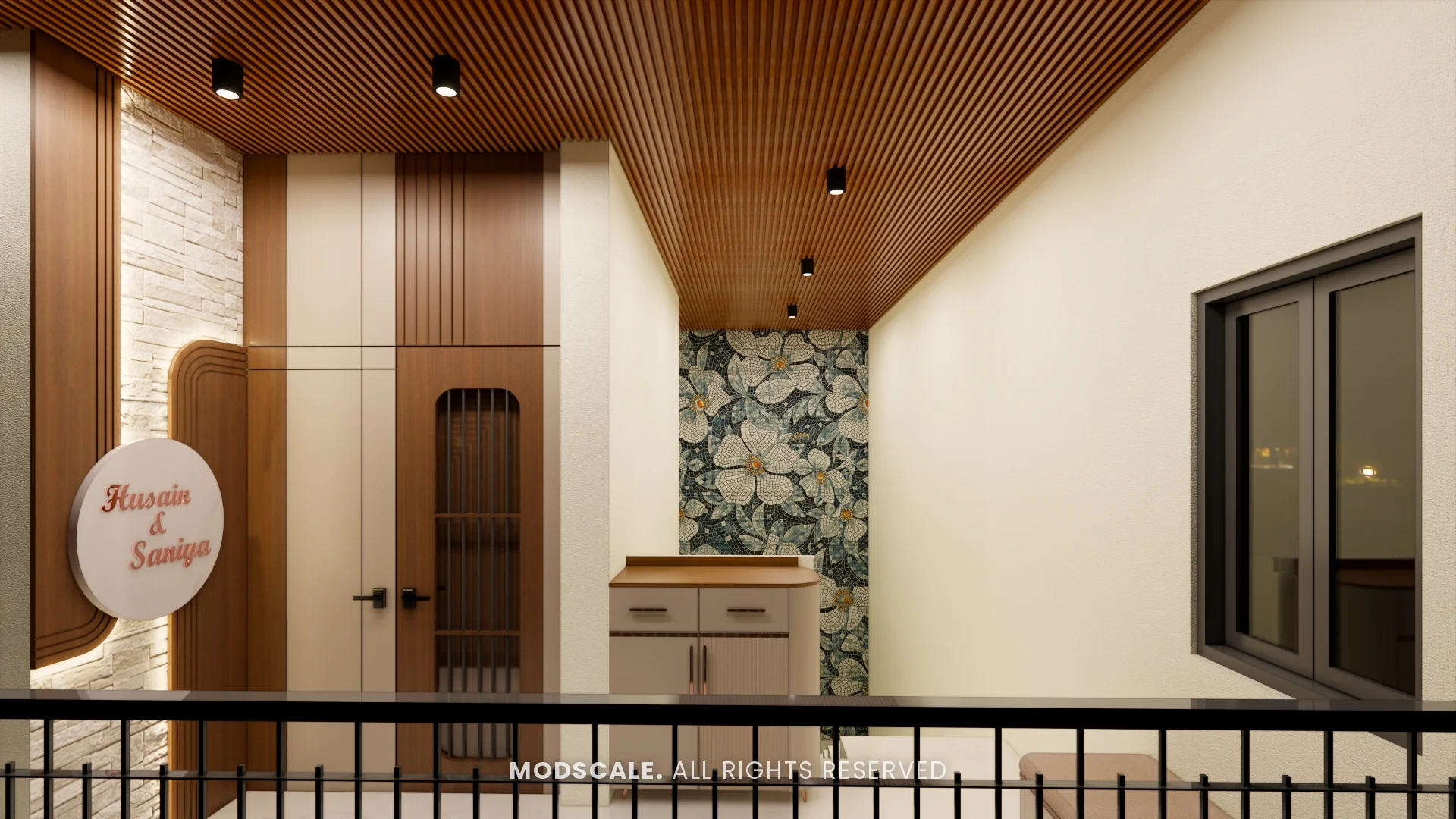
- Slat ceiling: parallel wooden battens with gaps, often with a black or dark backing. Good over dining tables, in foyers and along passages.
- Panel ceiling: flat veneer or laminate panels, sometimes with grooves, used in a section of the ceiling. Clean and modern.
- Beam ceiling: exposed or false wooden beams across the room; suits villas and high ceilings.
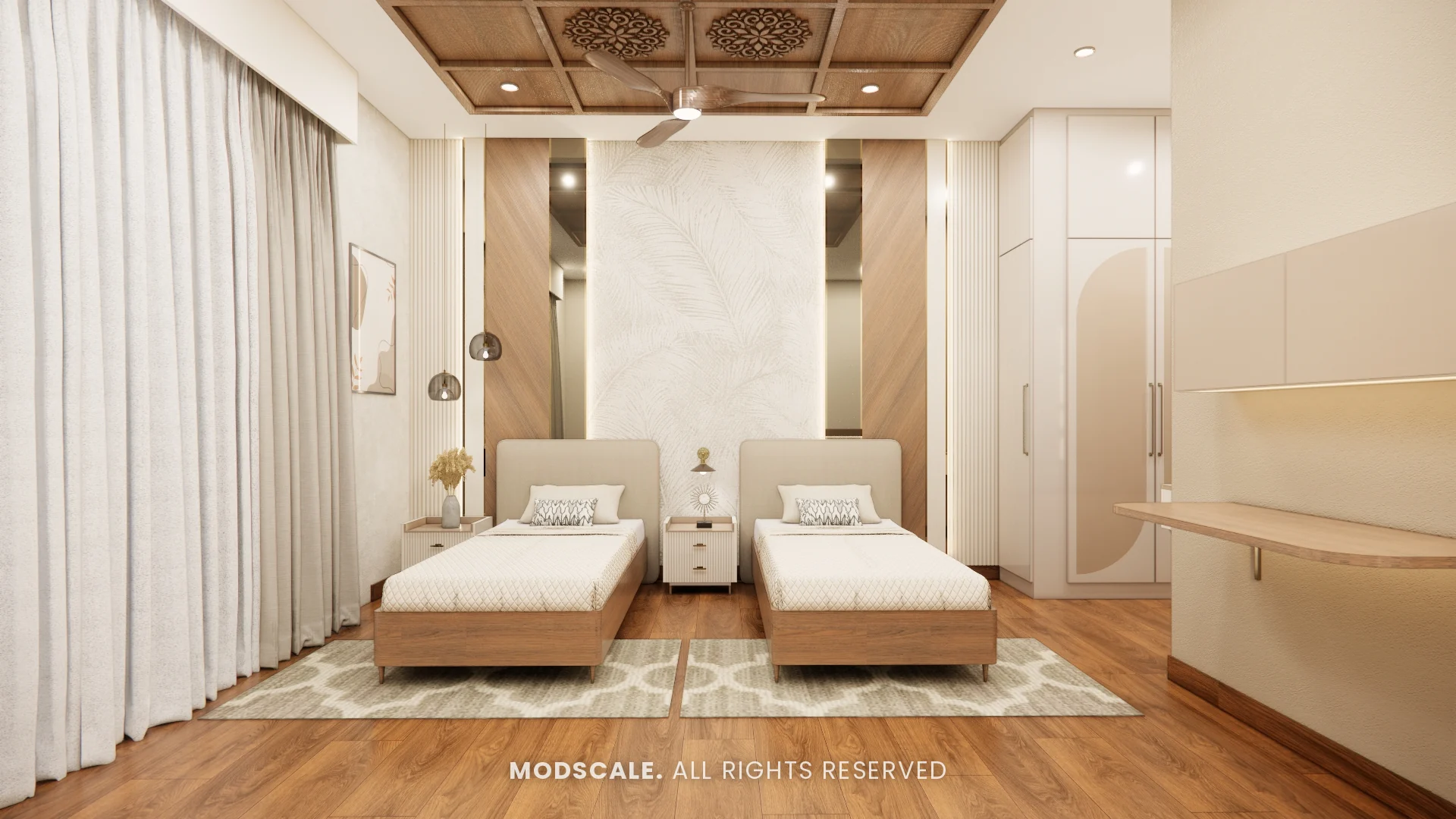
- Wooden cove frame: a wood border around a gypsum ceiling, with hidden lighting in the cove.
- Partial wood band: a strip of wood that runs from a wall panel onto the ceiling, linking the two.
Where wooden ceilings work best
- Dining area: a slat panel defines the dining zone in an open hall and frames the pendant lights.
- Entrance and foyer: wood overhead makes the entry feel welcoming and separate from the living room.
- Bedrooms: a wood panel above the bed or a wooden frame around the cove adds warmth without darkening the room.
- Balconies and sit-outs: use exterior-grade materials such as WPC or treated wood.
Materials
- Veneer on BWP plywood: real wood grain, can be polished; the most natural look.
- Laminate on BWP plywood: durable and easy to maintain, with many wood finishes.
- Solid wood battens: rich and authentic, best for slats and beams; needs good treatment against termites.
- WPC or PVC wood-look panels: moisture-resistant, for balconies and bathrooms; less natural up close.
Planning tips
- Keep wood to part of the ceiling in rooms under about 10 feet high, so the room does not feel low.
- Plan lights, AC vents and sprinklers before the wood goes up; cutting into slats later is messy.
- Match the ceiling wood to one other wood in the room, such as the TV unit or dining table.
- Use anti-termite treatment and avoid areas with any seepage.
See also our false ceiling guide, false ceiling design for hall and termite and moisture protection for woodwork.
Frequently asked questions
Yes, as a partial feature such as a slat panel over the dining table or in the foyer. A full wooden ceiling can make a standard-height apartment room feel low.
Veneer or laminate on BWP plywood for indoor rooms, solid wood for slats and beams, and WPC or PVC panels where there is moisture, such as balconies.
Yes. Plan the light positions, wiring and any profile lights before installation so cut-outs are clean and evenly spaced.
Dust it regularly with a soft brush or vacuum attachment, avoid water, and ask for anti-termite treatment during installation.
Usually yes, because of the material and the finishing work. Using wood on only part of the ceiling keeps the cost reasonable.
Planning your interiors? Book a free design consultation or WhatsApp us on +91 88845 55998.