
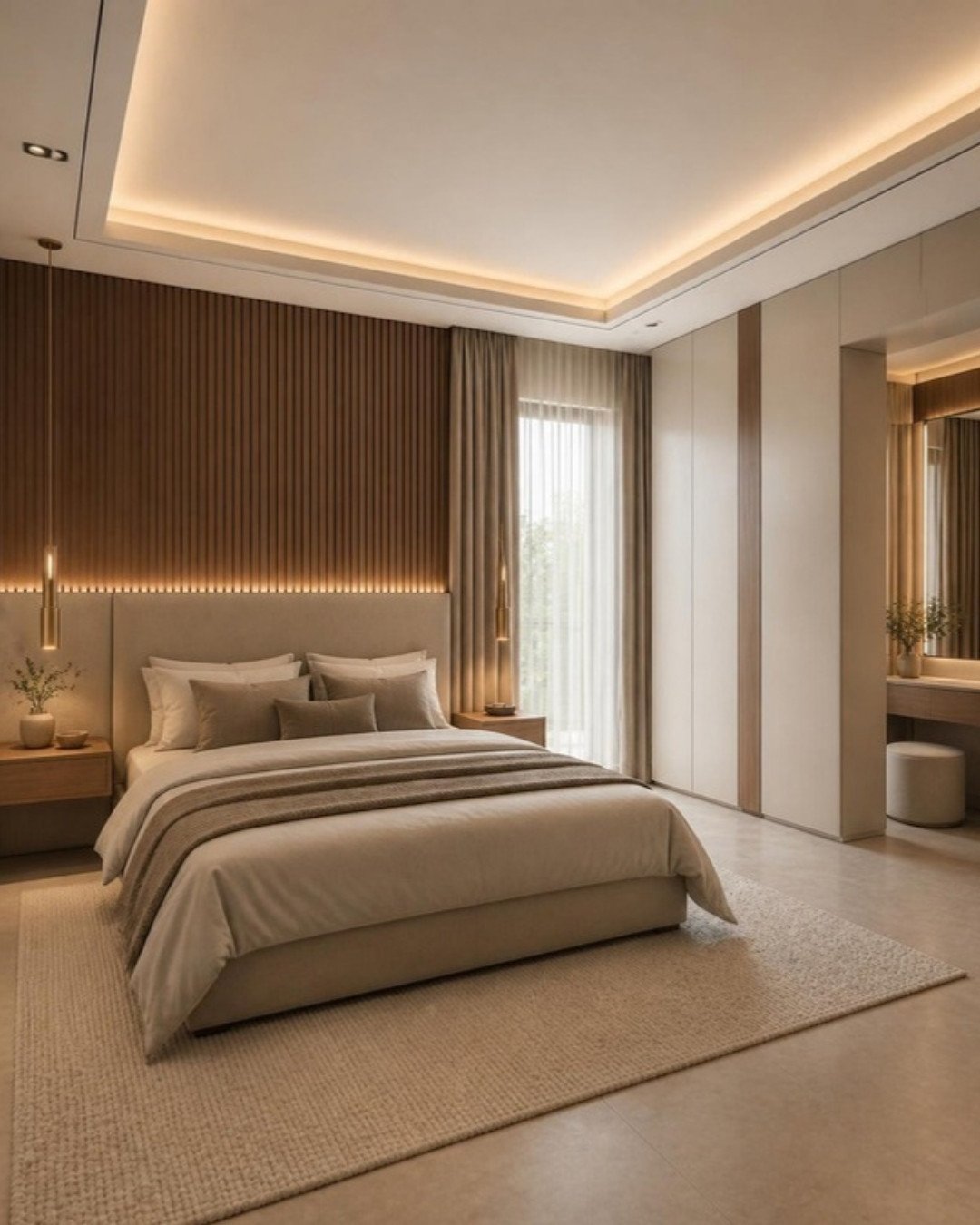
Wood surfaces bring warmth to almost any interior. The question is whether to use natural veneer, a thin slice of real wood, or laminate, a manufactured surface that can look like wood. Both have a clear place in a well-designed home, and many luxury interiors use both.
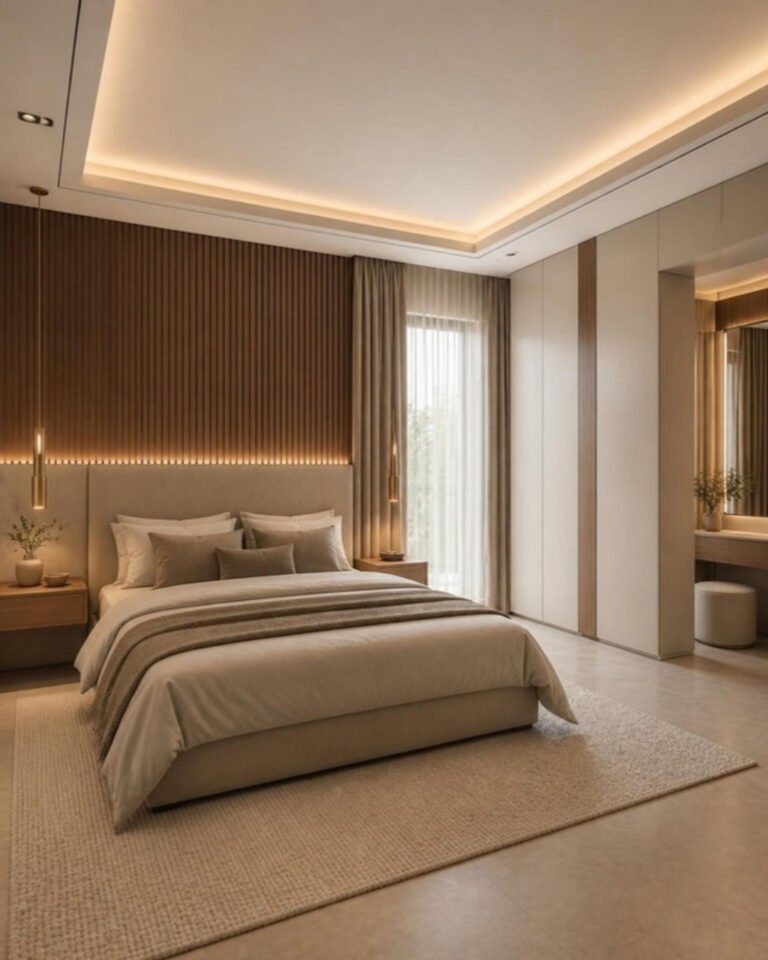
What natural veneer is
Veneer is a thin layer of real wood bonded to a board and finished with polish or lacquer. Because it is real wood, every sheet has its own grain and colour, and it can be matched across panels so the grain flows.
- Strengths: authentic look and feel, natural variation, can be re-polished and repaired, ages with character.
- Limits: needs careful finishing and some care in use; sensitive to water, heat and strong sunlight; usually costs more.
- Best for: feature walls, TV walls, wardrobe fronts in bedrooms, doors, headboards and furniture.
What laminate is
High-pressure laminate is a hard-wearing decorative sheet printed and textured to look like wood, stone or solid colour, then bonded to the board.
- Strengths: very durable, scratch- and moisture-resistant, consistent from sheet to sheet, easy to clean, cost-effective.
- Limits: cannot be sanded or re-polished; close up, it does not have the depth of real wood; edges show banding.
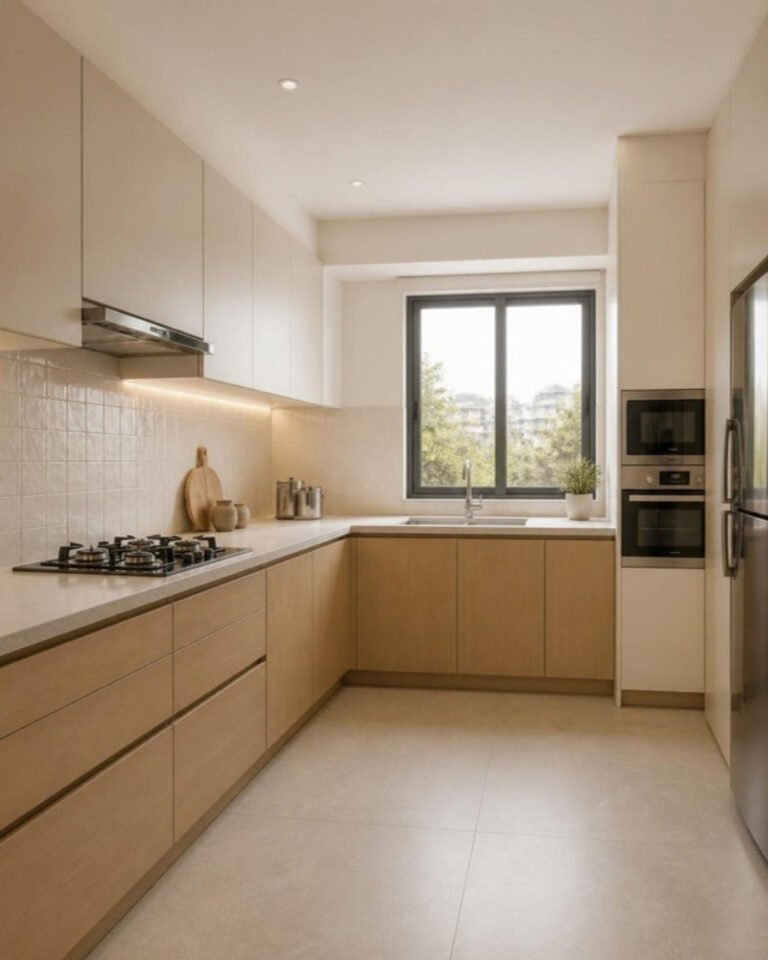
- Best for: kitchens, utility areas, children’s rooms, inside wardrobes and other hard-working surfaces.
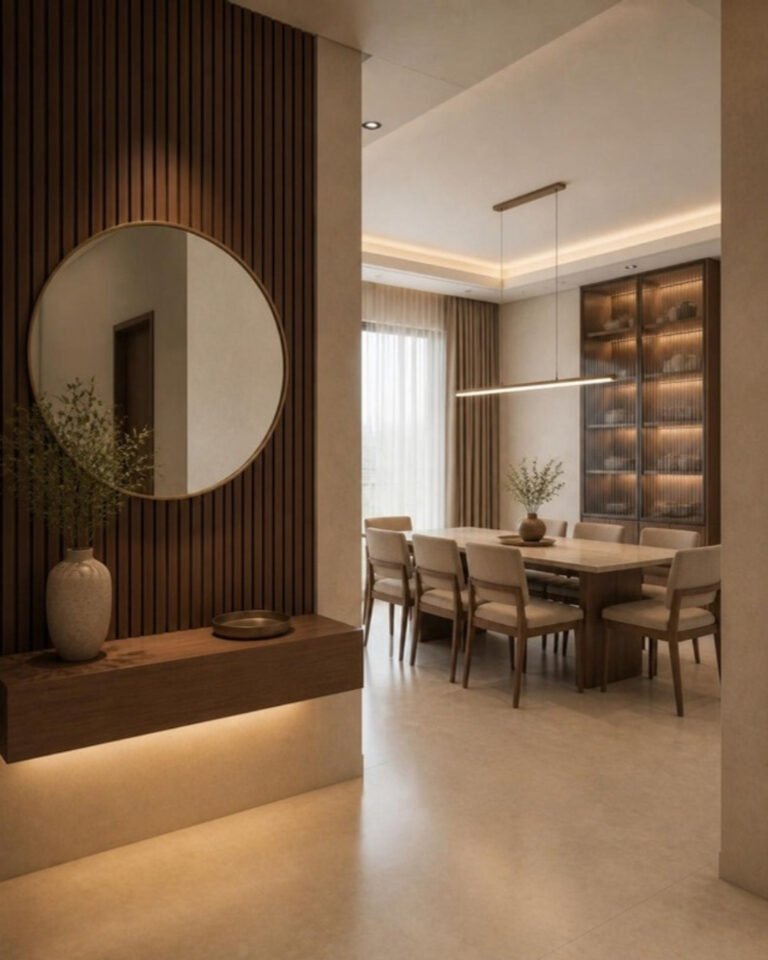
Side by side
- Look and feel: veneer is real wood; good laminates are convincing at a distance but not to the touch.
- Durability: laminate is more forgiving in daily use.
- Repair: veneer can be repaired and refinished; laminate usually has to be replaced.
- Consistency: laminate is uniform; veneer varies, which is part of its appeal.
- Cost: laminate is generally more economical.
A practical approach: use both
Many luxury homes use veneer where it is seen and touched most, such as the TV wall, the bedroom headboard and wardrobe fronts, and laminate where durability matters most, such as the kitchen and inside cabinets.
See them in person
Wood surfaces change with light, so always compare samples side by side before deciding. Visit our studio in HSR Layout, browse our material library, and read plywood grades explained for what goes underneath. For other finishes, see PU vs acrylic vs laminate.
For how materials fit into a complete home, read our guide to luxury home interiors in Bangalore.
Planning a luxury home in Bengaluru? Talk to our design team.
Book a Design ConsultationGet Your Home Interior EstimateExplore ModScale Projects