
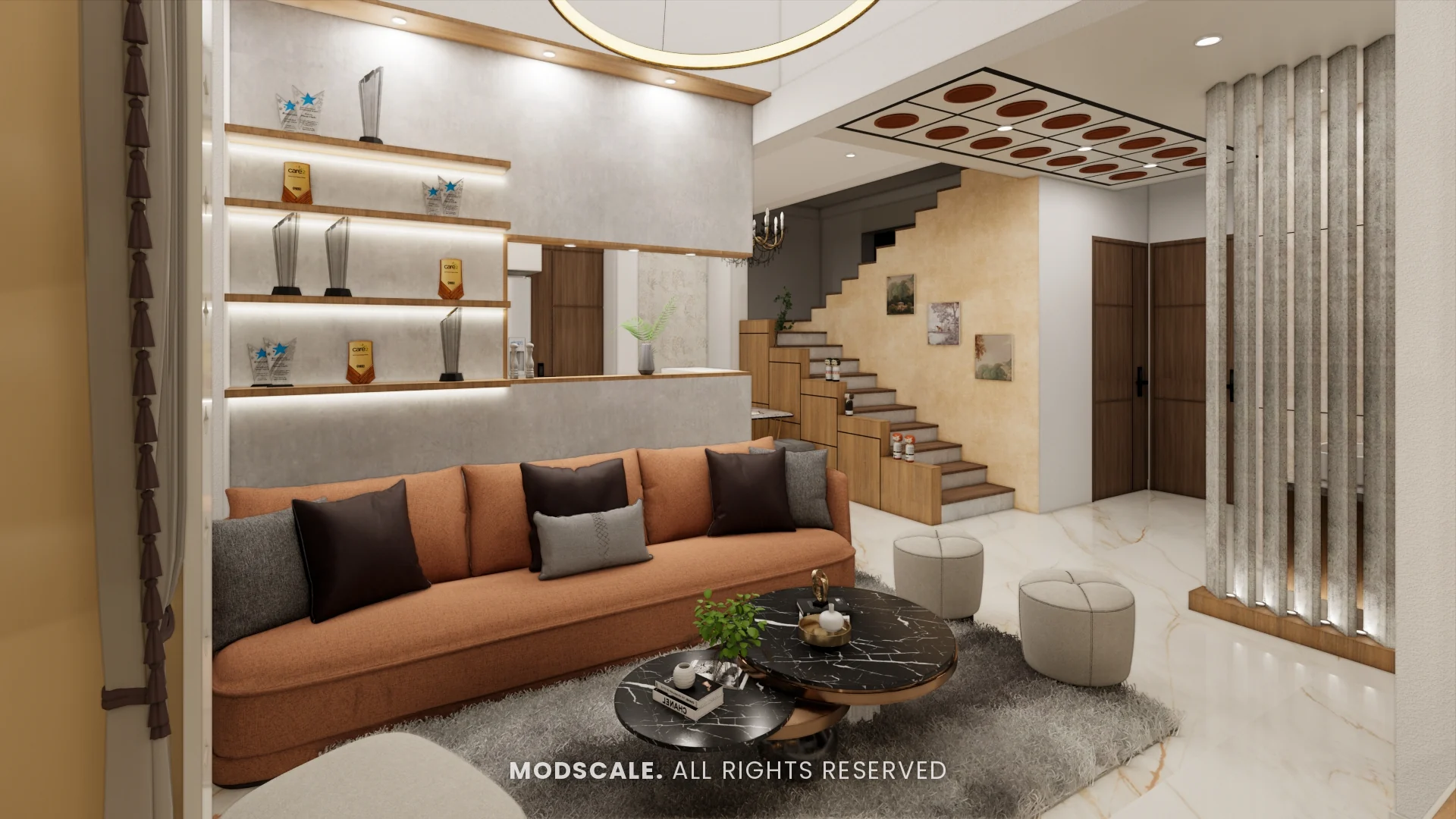
A good wall colour combination is less about finding one perfect shade and more about how colours work together from room to room. In an apartment you often see the hall, the dining area and a bedroom door in one glance, so the colours need a common thread. This guide covers the basic rule designers use, pairings that work, and suggestions for each room.
The 60-30-10 rule
Use one colour for about 60% of the room (most walls), a second for about 30% (an accent wall, upholstery or wardrobe shutters) and a third for about 10% (cushions, art, metal or wood details). It keeps a room balanced and makes it easy to change the look later by changing only the 10%.
Two-colour pairings that work
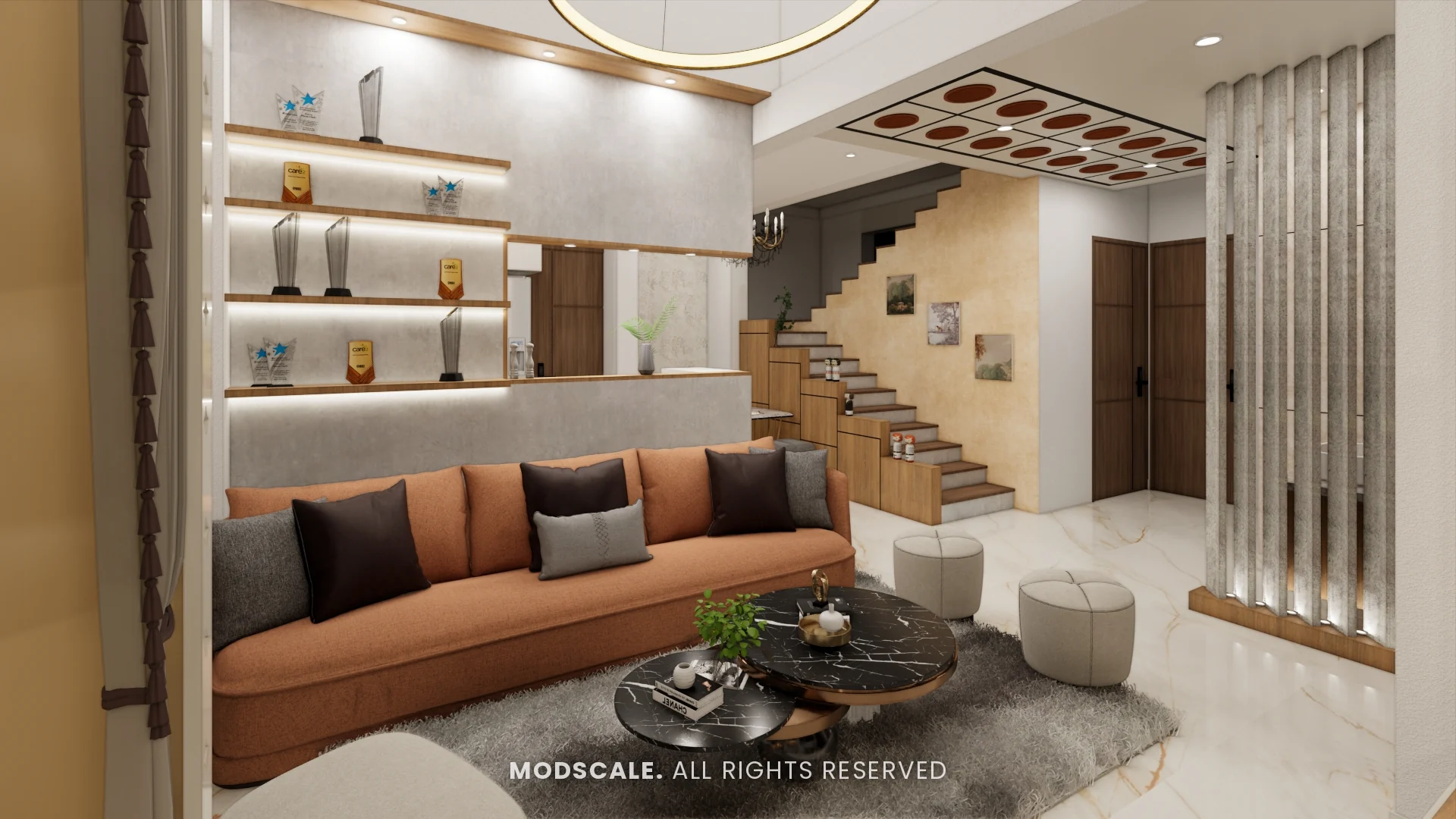
- Warm white + terracotta: earthy and welcoming, ideal for halls.
- Beige + olive green: rich but calm, good for master bedrooms.
- Greige + dusty blue: cool and restful for west-facing rooms.
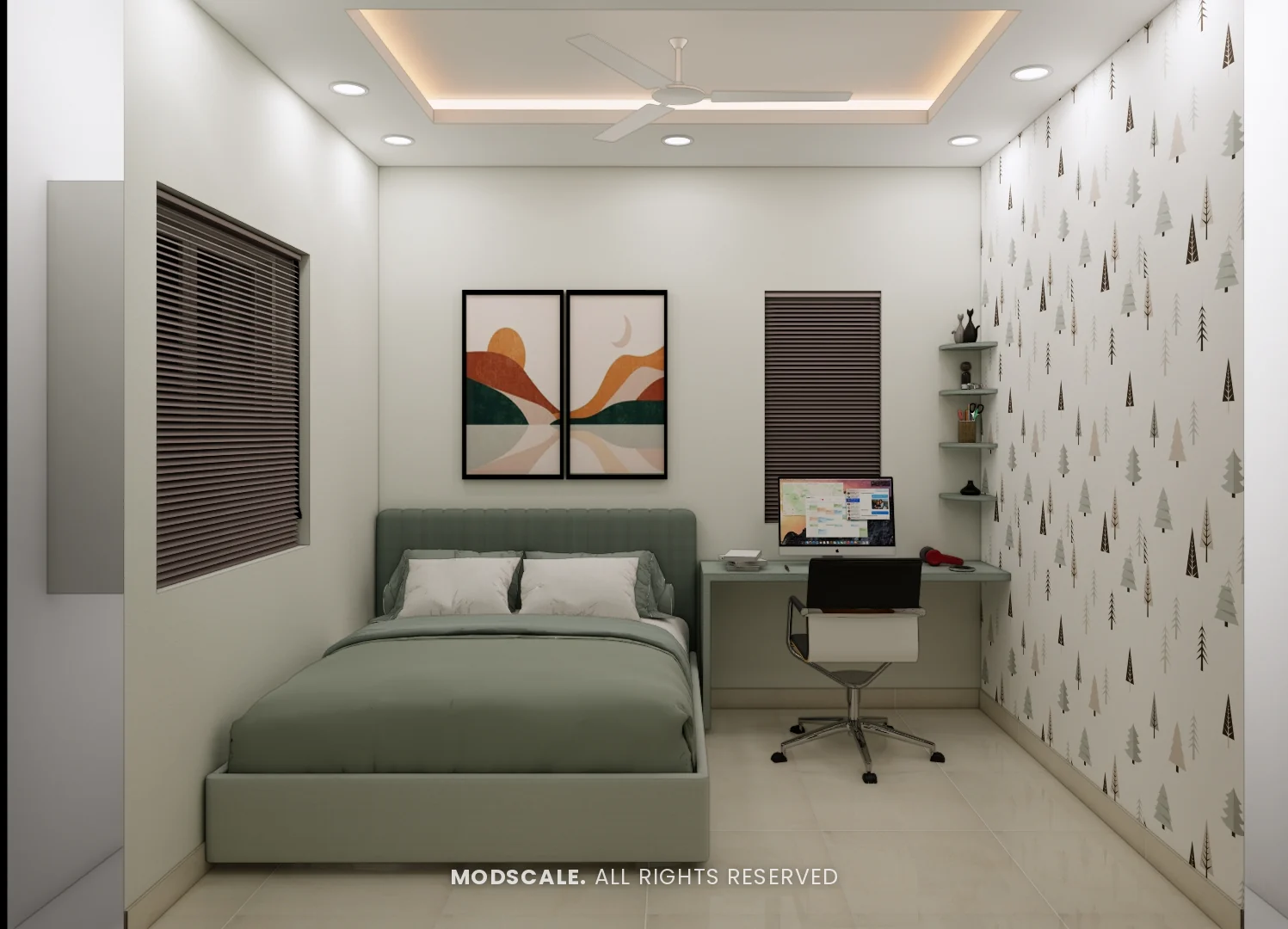
- Ivory + sage green: soft and natural; pairs with light oak.
- Light grey + navy: crisp and modern, best with good daylight.
- Cream + blush pink: gentle for dining niches and girls’ rooms.
- Sand + charcoal: dramatic on a single panel, balanced by warm light.
- White + mustard: energetic for a study corner or a teenager’s room.
Room-by-room suggestions
Hall and dining
Keep one base colour across the open area and put the accent behind the sofa or in the dining niche. More ideas in hall wall colour combination.
Bedrooms
Use softer versions of your hall colours, with a deeper shade only behind the bed. See wall colour combination for bedroom.
Kids rooms
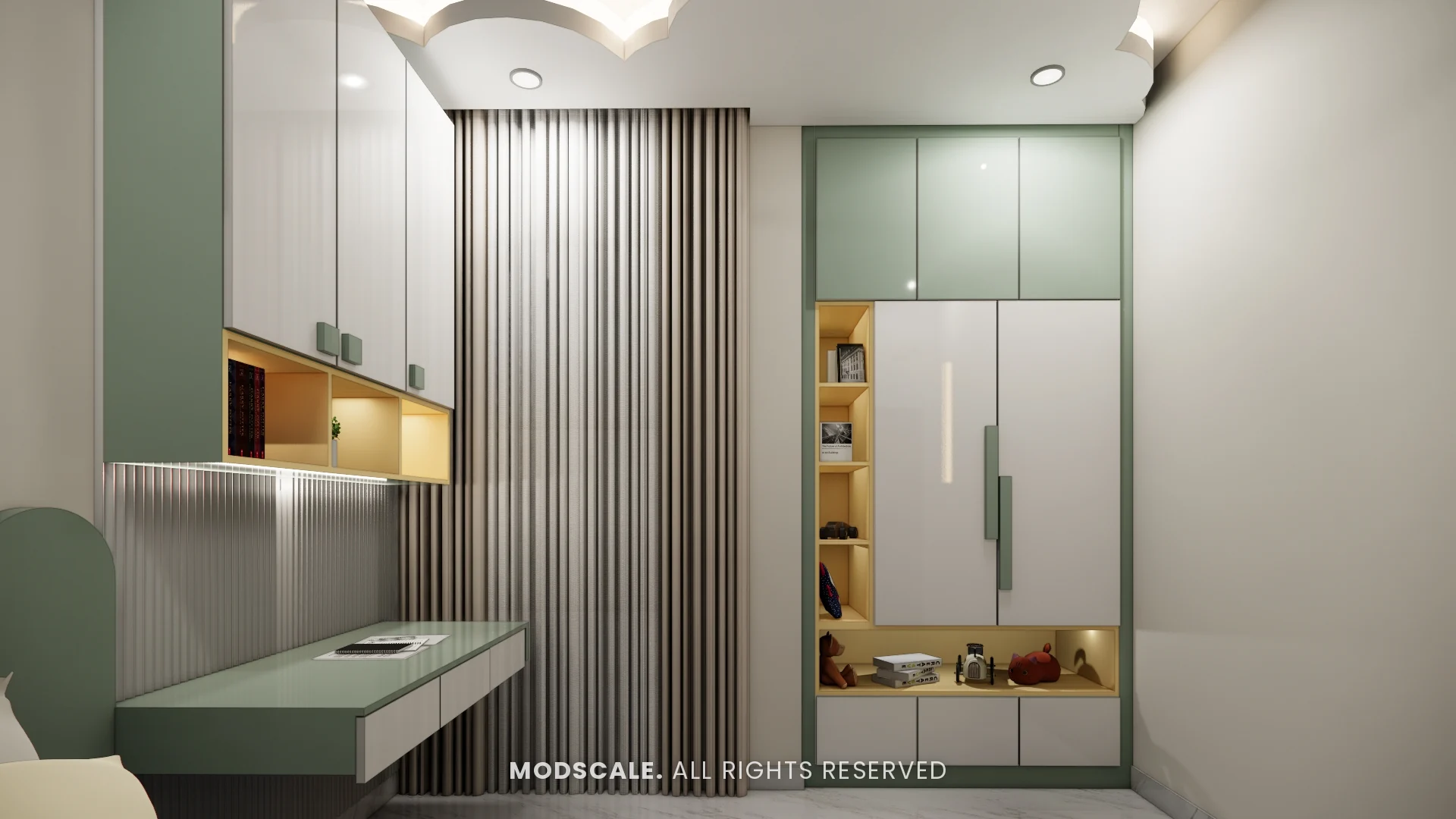
Choose a neutral or soft base (mint, pale grey, cream) and add colour through a mural, wallpaper panel or the wardrobe shutters, which are easier to change as the child grows than a fully painted room.
Kitchen
The kitchen colour is mostly set by the cabinets and backsplash, so keep the walls light and easy to clean. Our modular kitchen colour combination guide covers cabinet pairings.
Pooja room or unit
White, cream, soft yellow and light sandalwood tones suit most pooja spaces and let brass and wood stand out. See pooja room design.
Linking colours across the home
- Pick one neutral and use it in every room, then vary the accent.
- Repeat one wood tone throughout, for example light oak or walnut.
- Keep ceilings white or very light everywhere for consistency.
- Choose colours under your own lighting; the same paint looks different under warm and cool LEDs.
For finishes and when to use texture or wallpaper instead of paint, see the interior wall paint finishes guide.
Frequently asked questions
A warm neutral base such as warm white, beige or greige in every room, with a different accent in each room, like terracotta in the hall and olive or dusty blue in bedrooms.
About 60% of the room in a main colour, 30% in a secondary colour and 10% in an accent. It keeps a room balanced and easy to update.
Rooms can have different accents, but a shared base colour and wood tone help an apartment feel connected, especially where rooms open into each other.
Warm white, cream, beige, sage green, olive and terracotta all work well with wood. Very cool greys can make warm wood look orange.
Yes, on one wall or a small room with good light. Balance them with lighter floors, ceilings and warm lighting.
Planning your interiors? Book a free design consultation or WhatsApp us on +91 88845 55998.