
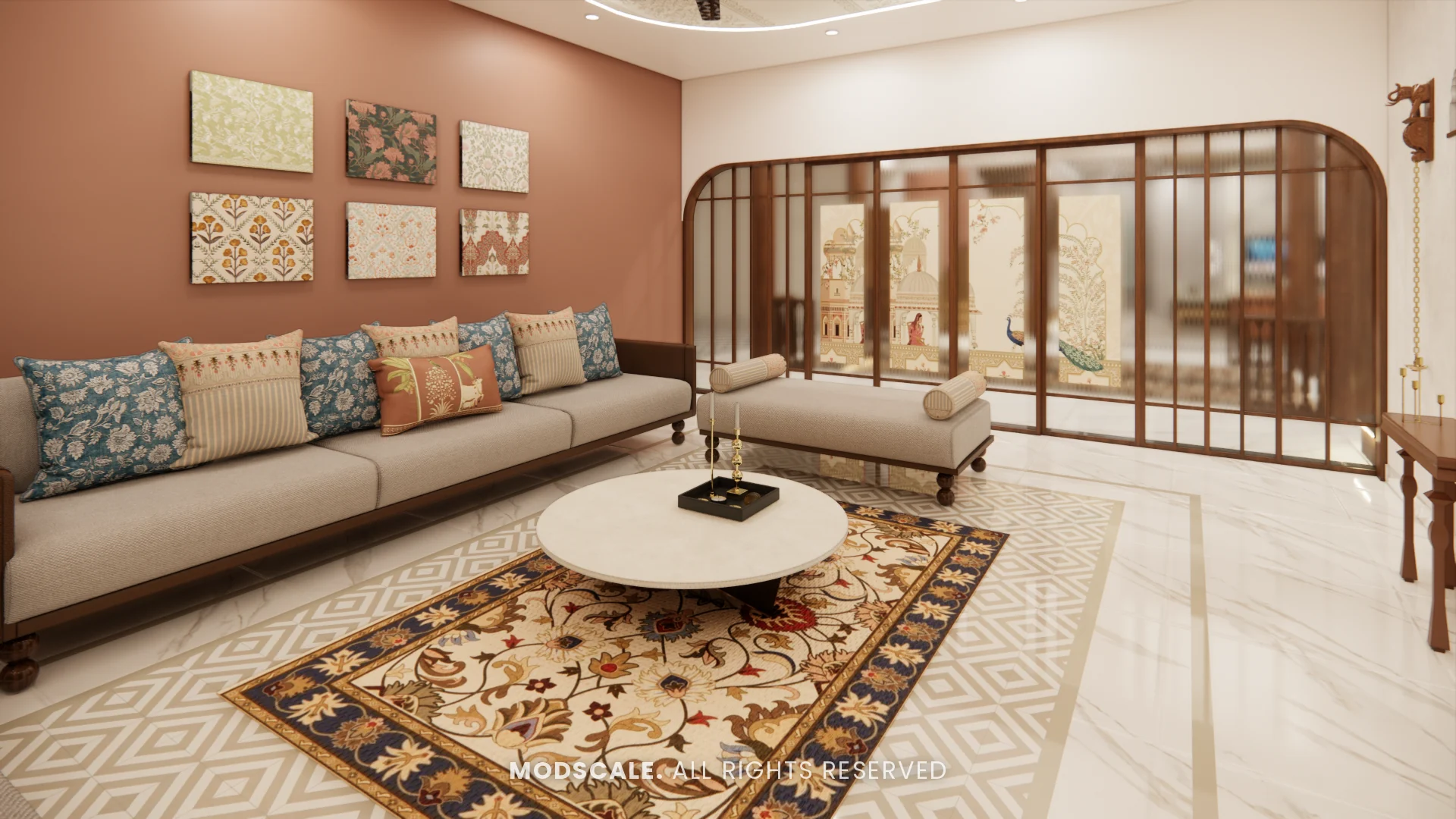
The hall is the room everyone sees, and in most Indian apartments it also flows into the dining area and foyer. That makes the wall colour combination more important than in any other room: the colours have to work with the TV wall, the sofa, the crockery unit and often a pooja unit, all in one view. The simplest rule is a calm base colour across the whole open area, with one accent wall that gives the hall its character.
Start with the base colour
Choose one base colour for every wall that you can see at once from the entrance. Warm white, ivory, beige and light greige suit most halls because they work with wood, marble-finish panels and both warm and cool lighting. If the hall gets little daylight, pick the warmer, lighter version of your shade; if it gets strong western sun, a slightly cooler greige keeps it from feeling hot.
Where the accent goes
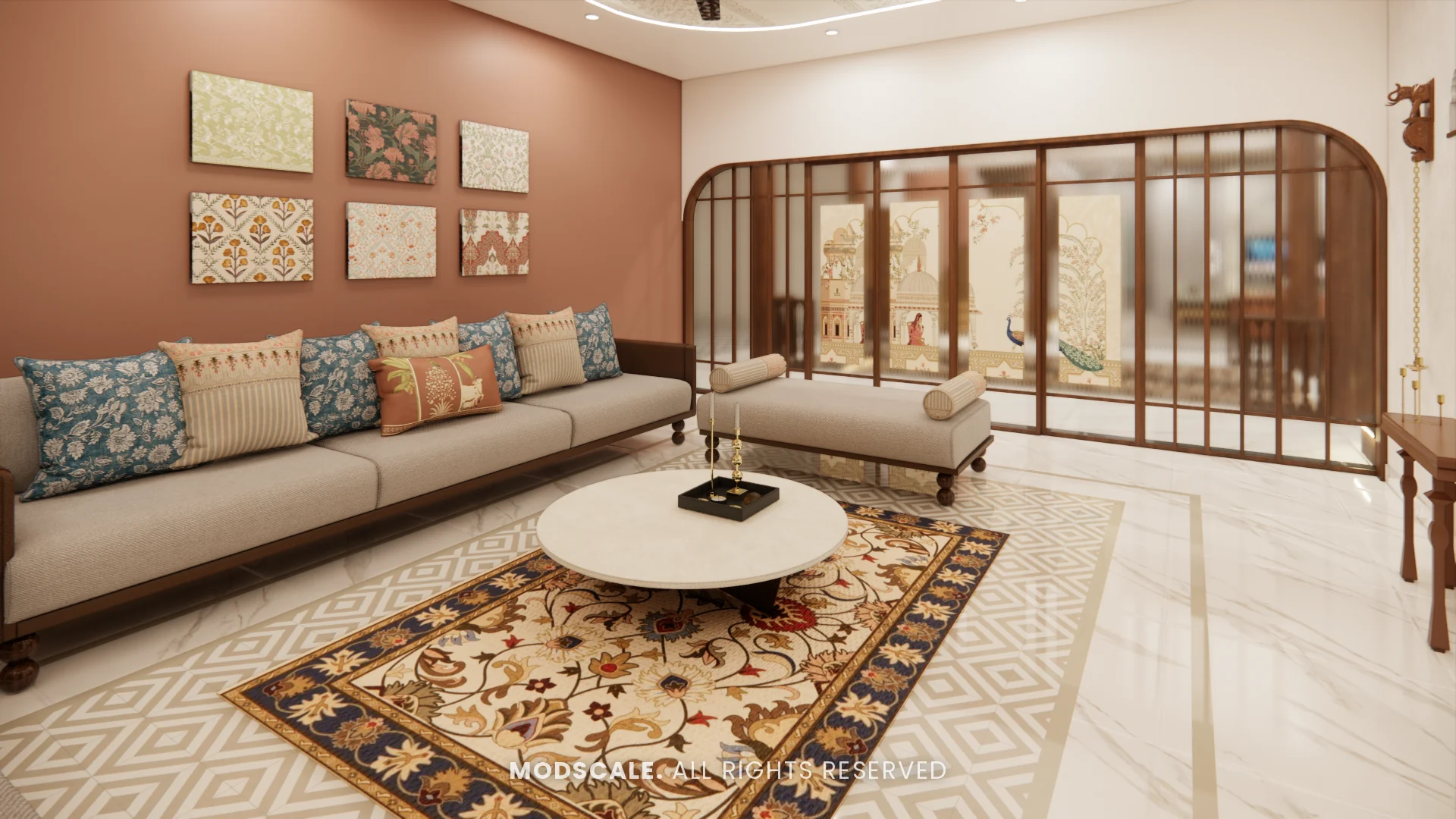
- Behind the sofa: the most forgiving place for a strong colour such as terracotta, olive or deep teal, because the sofa and art break it up.
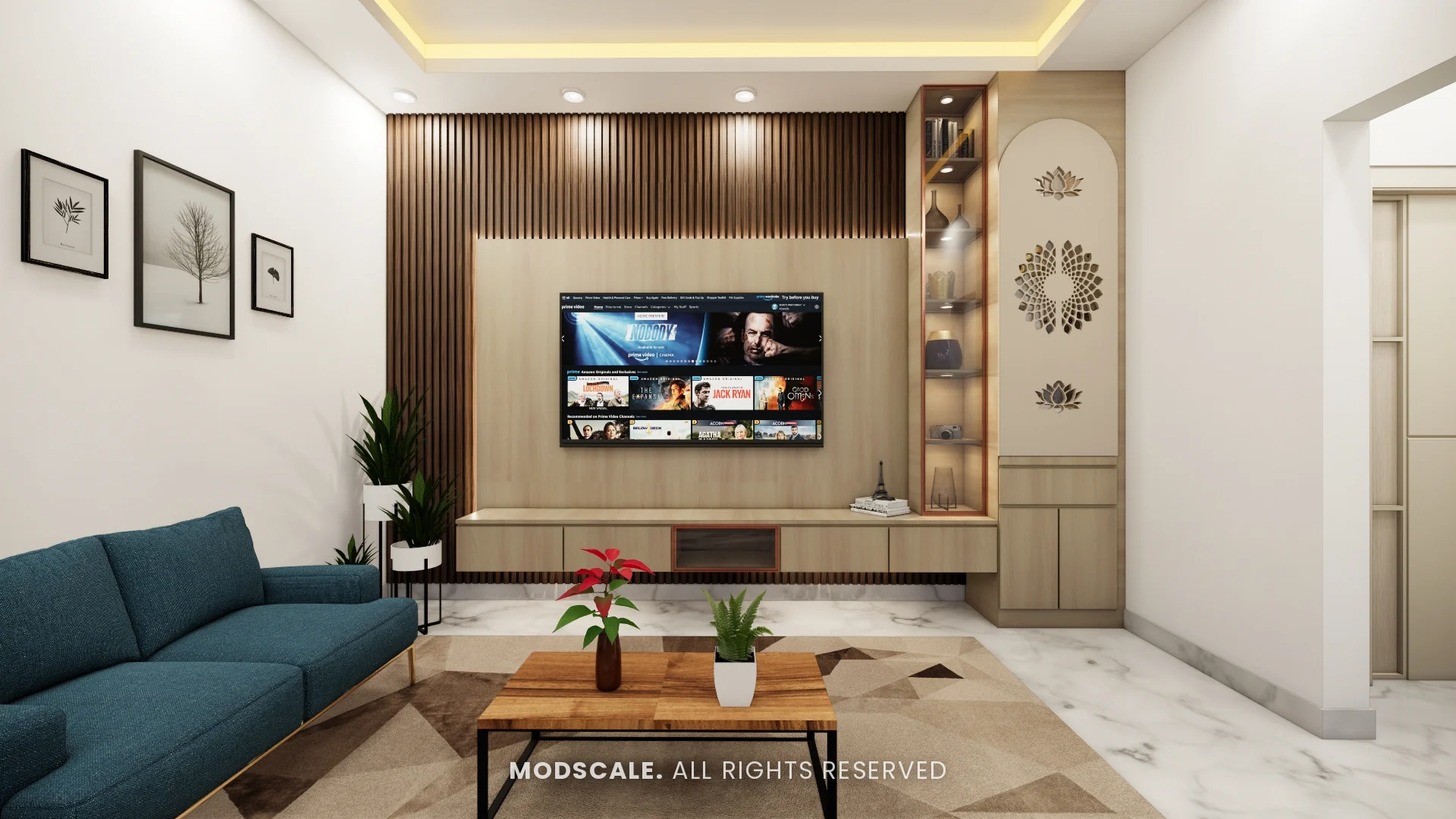
- The TV wall: usually better treated with a panel (wood, fluted, stone or marble finish) than with dark paint, which makes the screen look like a black hole.
- A dining niche or arch: a curved or framed colour panel separates the dining area without a partition.
- The foyer: a deeper colour or textured finish at the entrance creates a welcome moment before the open hall.
Hall wall colour combinations that work
- Warm white with a terracotta sofa wall and brass accents.
- Beige with olive green upholstery and a stone-finish TV wall.
- Greige with a teal or peacock sofa and walnut slats.
- Ivory with sage green panels and light oak furniture.
- Light grey with navy accents and white marble-finish surfaces.
- Cream with a soft pink or blush dining niche.
- Sand with charcoal on a single framed panel and warm lighting.
- White with a textured wall in the same white, for depth without colour.
Open-plan living and dining
When the living and dining areas share one space, keep the base colour continuous and change the accent: for example, a textured panel behind the sofa and a wallpaper or coloured niche in the dining area, in colours from the same family. Our guide to partitions between living and dining shows how to separate the two zones when colour alone is not enough.
Finish, light and maintenance
- Use a washable matt or soft-sheen emulsion in the hall; it hides plaster marks and can be wiped.
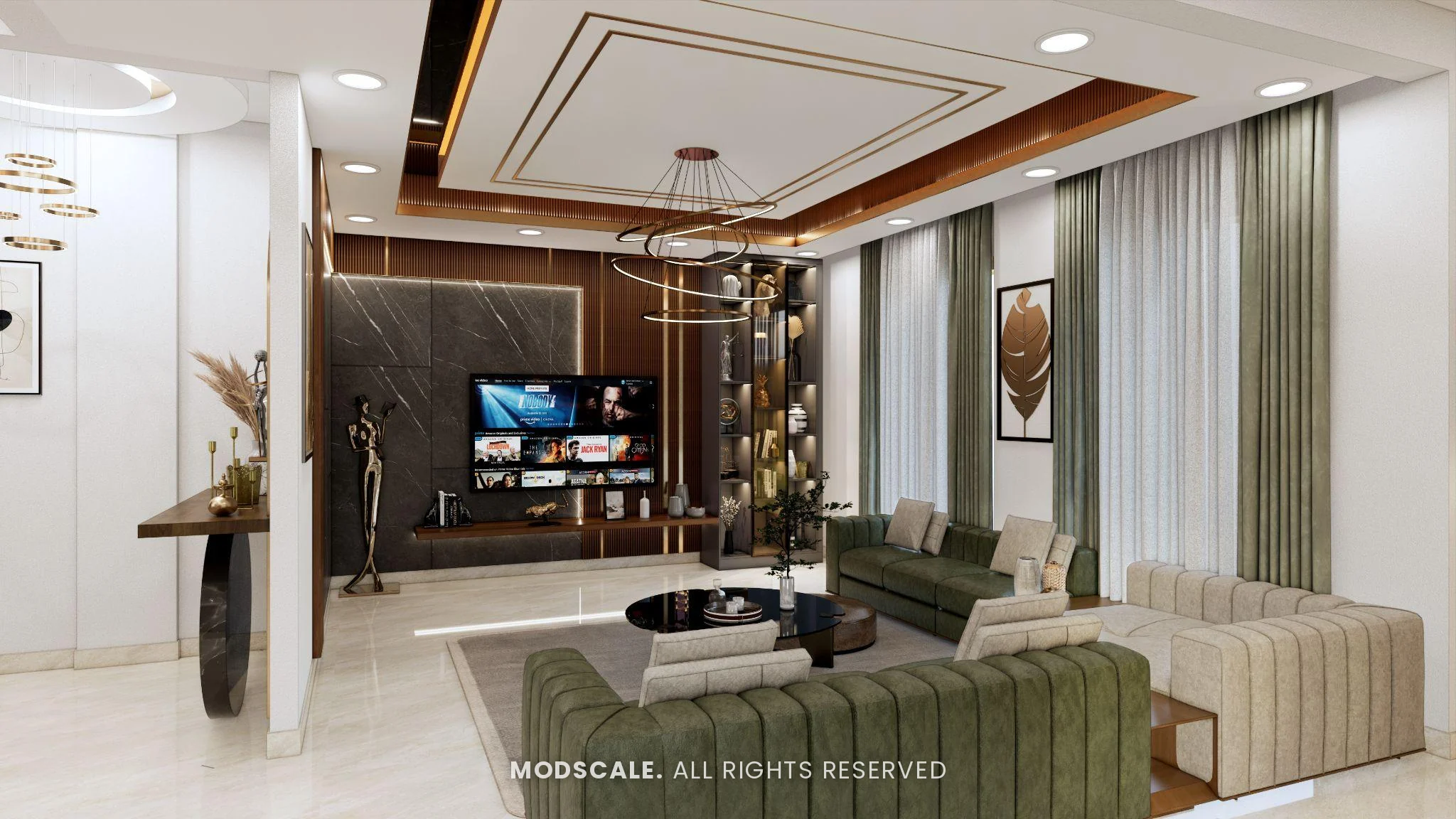
- Plan the false ceiling lighting with the colours: warm white light (around 3000K) flatters terracotta, olive and beige.
- Keep the ceiling white or a shade lighter than the walls.
- For texture, see wallpaper vs paint vs texture and wall design for hall.
If you follow vastu, living room vastu colours lists the shades commonly suggested for each direction.
Frequently asked questions
Warm neutrals such as warm white, ivory, beige or light greige make the best base, with one accent wall in a deeper colour like terracotta, olive or teal.
It is usually better to use a panel on the TV wall, such as wood, fluted or marble finish, rather than dark paint. Put a strong paint colour behind the sofa instead.
Two or three: one base colour on most walls, one accent and one wood or metal tone repeated in the furniture.
Keep one base colour across both and change only the accent, using colours from the same family so the space reads as one.
A washable matt or soft-sheen emulsion. It hides small plaster marks and can be wiped clean.
Planning your interiors? Book a free design consultation or WhatsApp us on +91 88845 55998.