
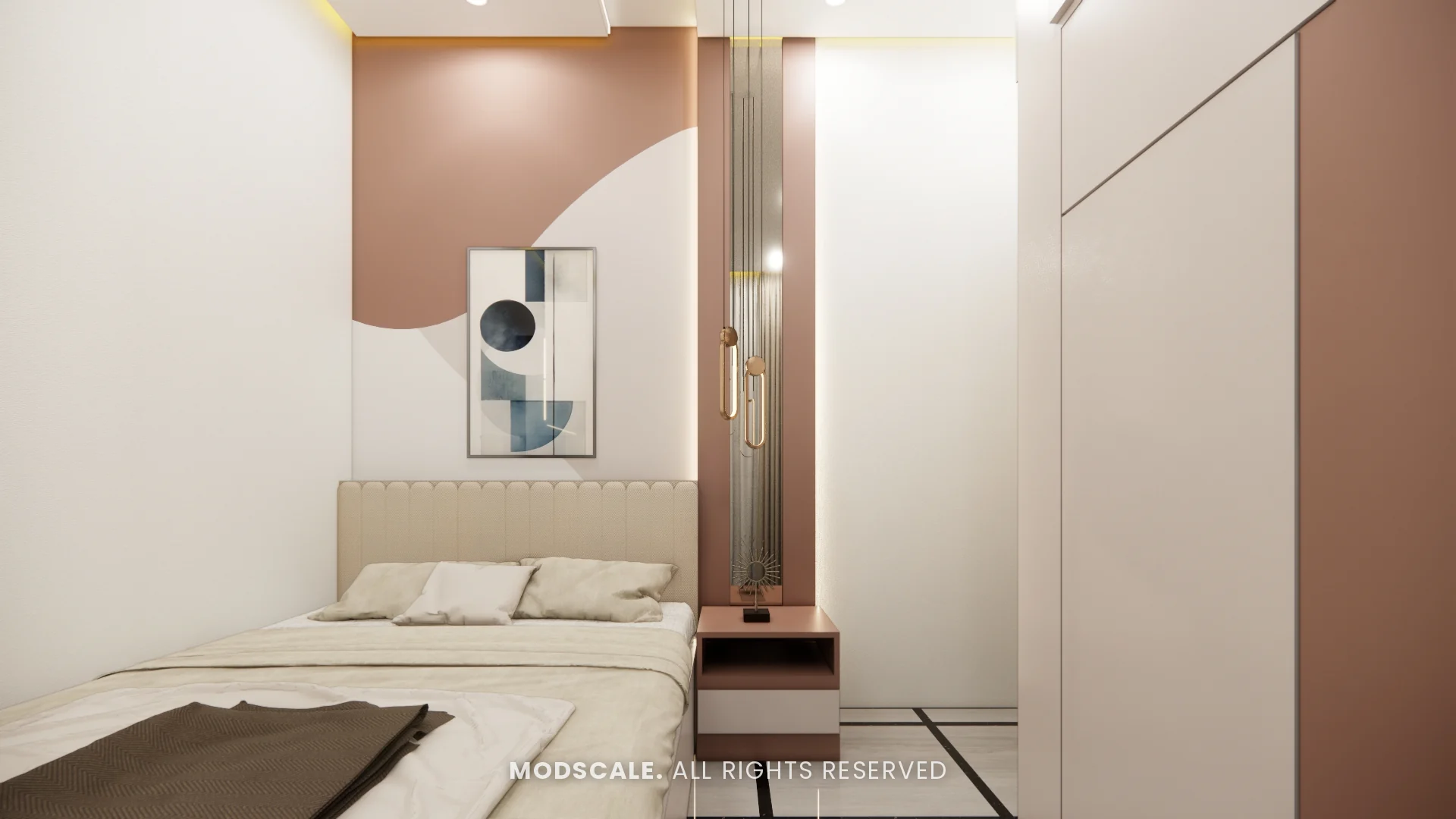
The right wall colour combination makes a bedroom feel calm, larger and finished, while the wrong one makes even good furniture look busy. In most Indian bedrooms the walls compete with a large wardrobe, a headboard, curtains and bedding, so the best combinations use one main colour, one accent and one wood or neutral tone that repeats across the room. Here are combinations that work, and how to choose between them.
How to build a bedroom colour combination
- Main colour (about 70%): three walls and usually the ceiling edge. Pick a soft, slightly warm neutral: warm white, beige, greige or a very pale green.
- Accent (about 20%): the wall behind the bed, or one curved or framed panel. This is where a deeper colour goes.
- Wood or third tone (about 10%): wardrobe shutters, side tables, a headboard or curtains. It ties the walls to the furniture.
Keep the ceiling lighter than the walls, test every colour on a large patch on two walls, and look at it in the morning and at night under your actual lights before deciding.
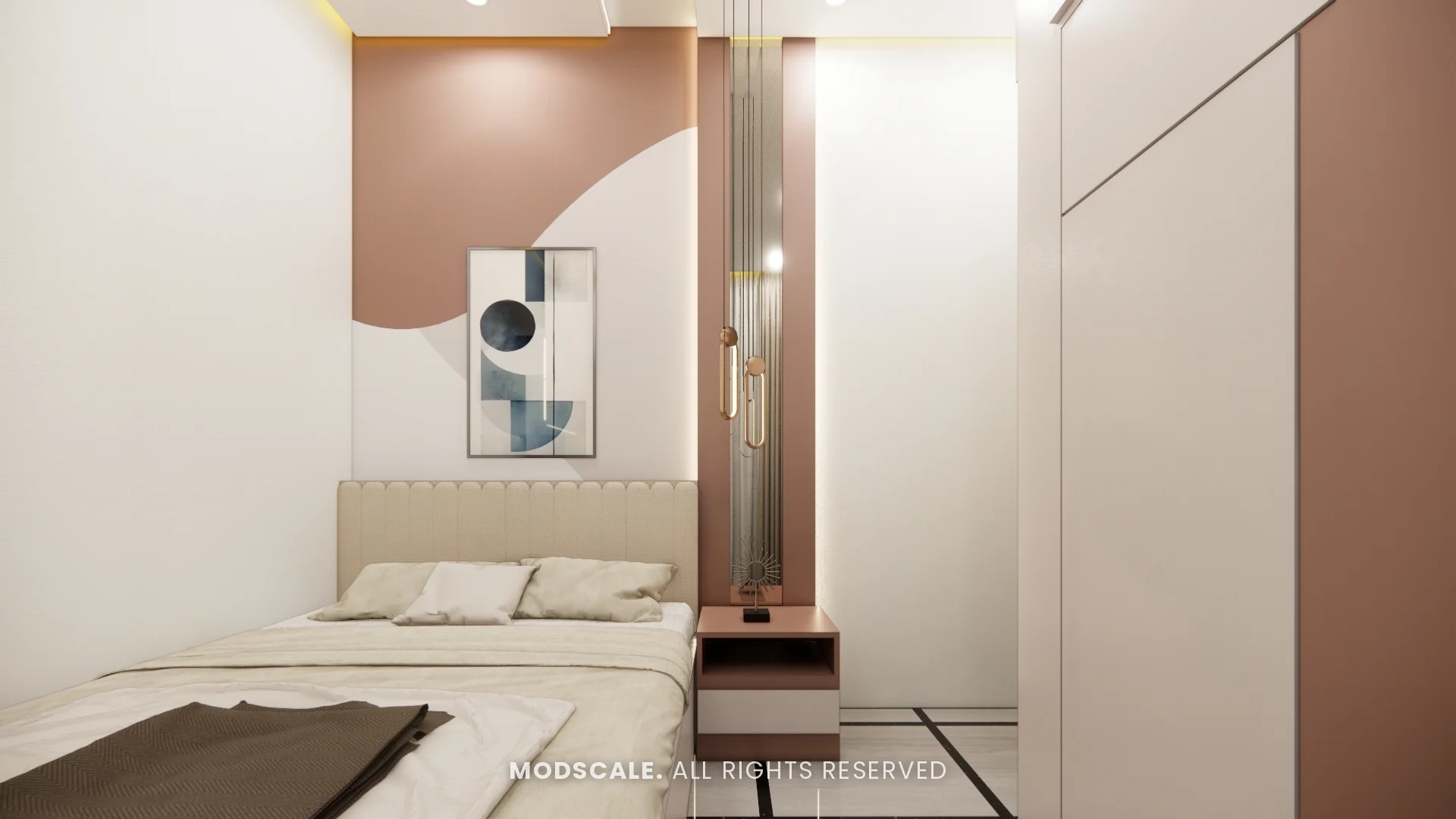
12 bedroom wall colour combinations
- Warm white and terracotta: terracotta or terracotta-pink behind the bed, warm white elsewhere, with brass or rattan accents. Cosy without being dark.
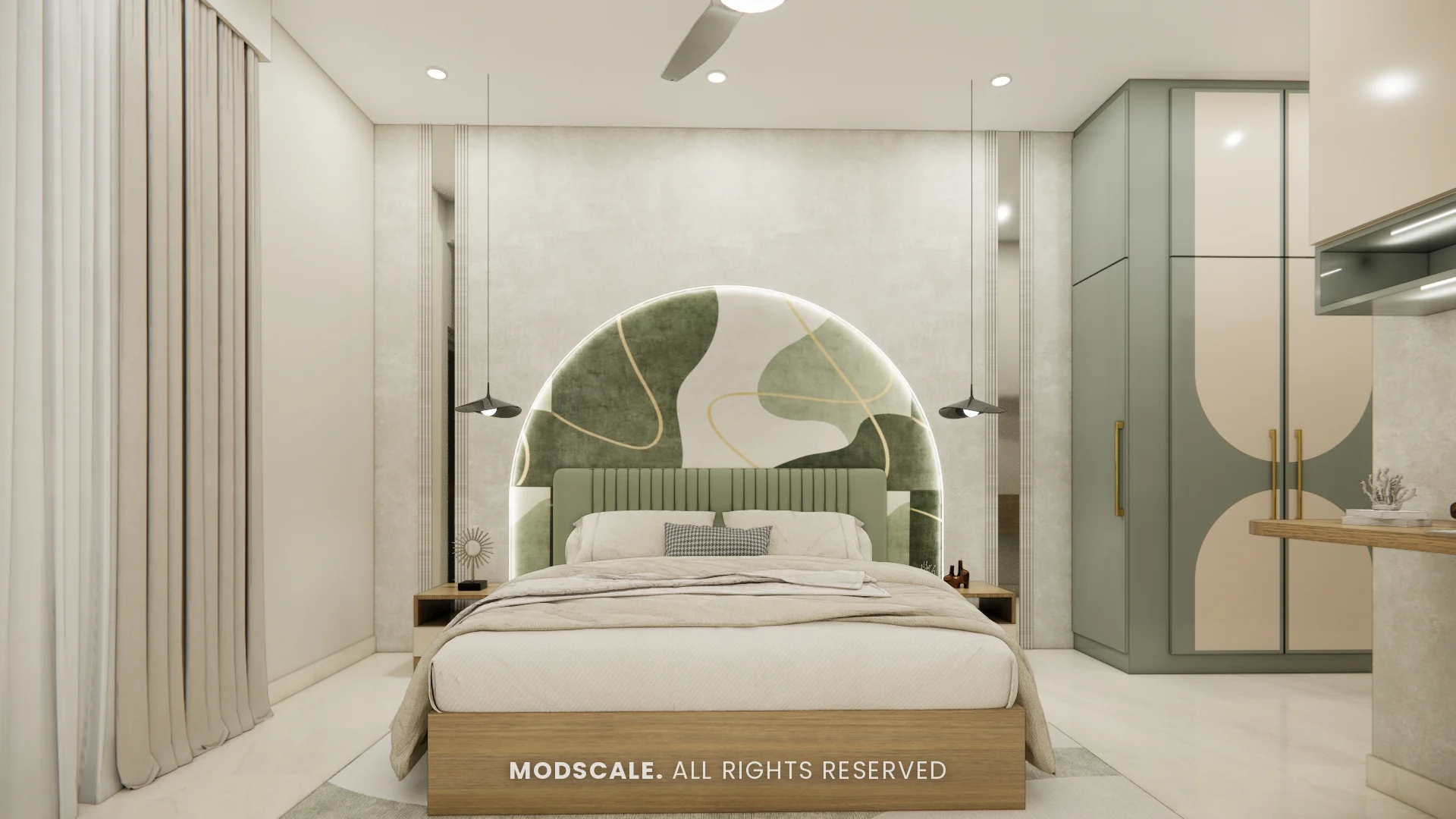
- Beige and olive: a classic for master bedrooms; olive on the headboard wall, beige on the rest, walnut wardrobes.
- Greige and dusty blue: cool and restful, good for west-facing rooms that get hot afternoon light.
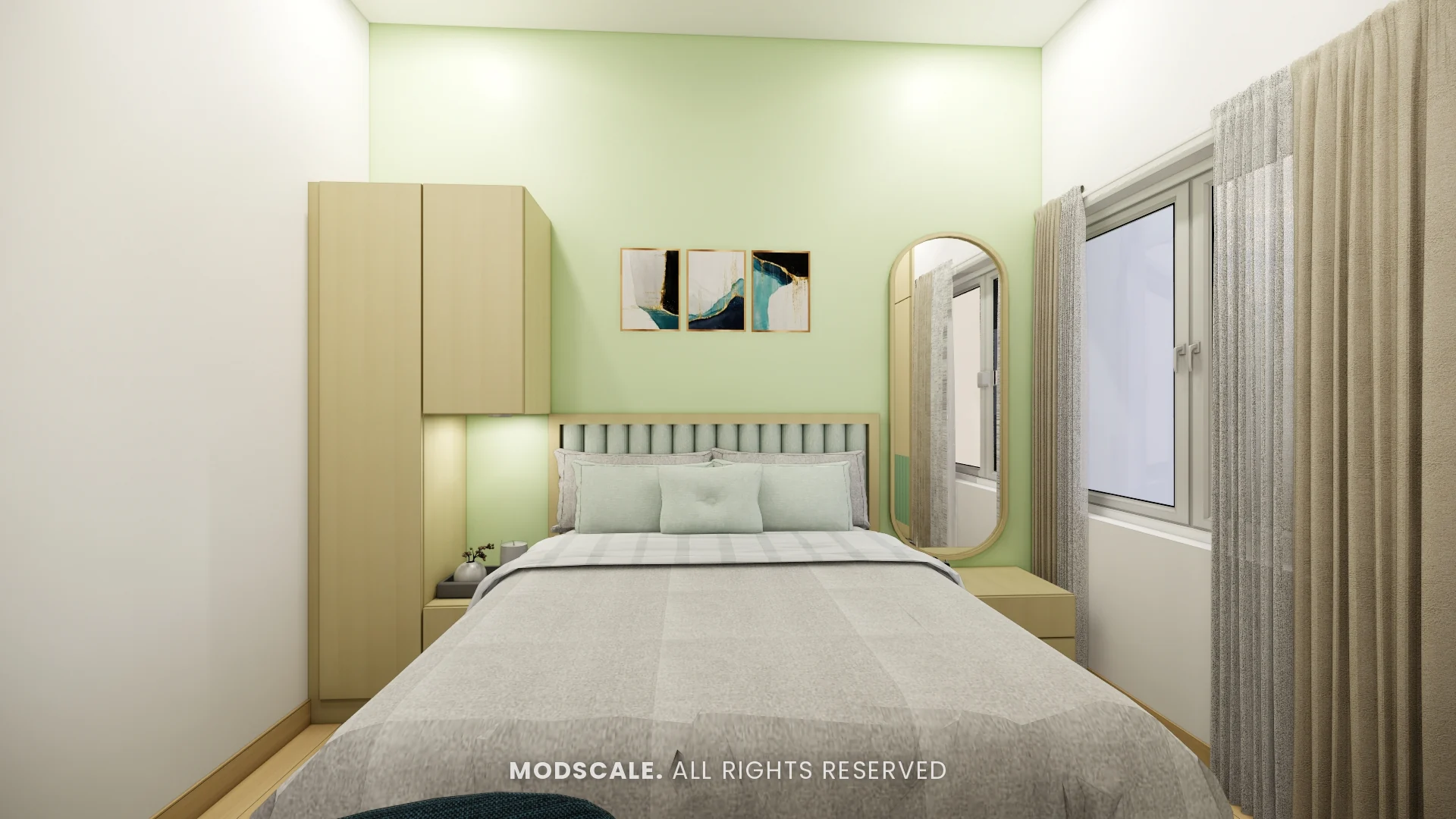
- Pale sage and cream: soft green on all walls with cream bedding and light oak, a Japandi-style calm.
- White and charcoal: a charcoal or deep grey accent behind a light upholstered bed; balance it with warm lighting.
- Peach and off-white: a gentle combination for guest bedrooms and rooms used by parents.
- Lilac and grey: popular for girls’ rooms that should grow with the child; keep the lilac muted.
- Navy and sand: navy behind the bed with sand-coloured walls and white trim; works best in rooms with good daylight.
- Mustard and grey: a small mustard panel or niche against warm grey adds energy to a teenager’s room.
- Two-tone split wall: a darker colour on the lower part of the wall, a lighter one above, with the line at headboard height.
- Mint and white for kids: fresh and easy to refresh later; add colour through bedding and wall art.
- Tone-on-tone neutrals: three shades of the same beige or greige on walls, wardrobe and headboard for a quiet, hotel-like room.
For ideas beyond paint, see our guides to bedroom wall design and bed back wall design.
Matching wall colours with wardrobes and furniture
The wardrobe is usually the largest surface in an Indian bedroom, so choose its laminate or finish together with the wall colour, not after. Light walls with a wood-finish wardrobe are the safest pairing. A coloured wardrobe, such as sage green or dusty blue, works well against warm white walls, but avoid painting the walls and the wardrobe in strong colours at the same time. Our laminate colour combinations guide has pairings that suit both.
Small and dark bedrooms
- Use light, warm colours on most walls and keep a deeper colour to the headboard wall only.
- Paint the wardrobe wall the same colour as the wardrobe shutters so it blends in.
- Choose a matt or soft-sheen finish; high gloss shows every uneven patch in the plaster.
- Add a lit mirror or a light curtain colour to bounce light around the room.
Vastu and colour
Many families like to follow vastu for the master bedroom, and earthy colours such as beige, light brown, soft pink and pale green are commonly suggested. If vastu matters to you, tell your designer at the start so the colour plan and the furniture placement are planned together. See also our interior wall paint finishes guide.
Frequently asked questions
Warm neutrals with one deeper accent work best: beige with olive, warm white with terracotta, or greige with dusty blue. Use the deeper colour only on the wall behind the bed.
Light, warm colours such as warm white, cream or pale greige on most walls, with a matt finish and a lighter ceiling. Keep strong colours to one wall.
It should coordinate. Light walls with a wood-finish wardrobe are the safest choice; a coloured wardrobe works best against plain warm white walls.
Yes, on one wall in a room with reasonable daylight. Balance it with light bedding, warm lighting and a lighter ceiling.
Paint a large sample patch on two different walls and look at it in daylight and under your own lights at night before deciding.
Planning your interiors? Book a free design consultation or WhatsApp us on +91 88845 55998.