
In an apartment bedroom, the bed occupies more floor than anything else. A bed design with storage puts that footprint to work, giving space for quilts, suitcases and off-season clothes that would otherwise fill a wardrobe loft. There are three main types, and they behave very differently in daily use. This guide compares them and helps you choose.
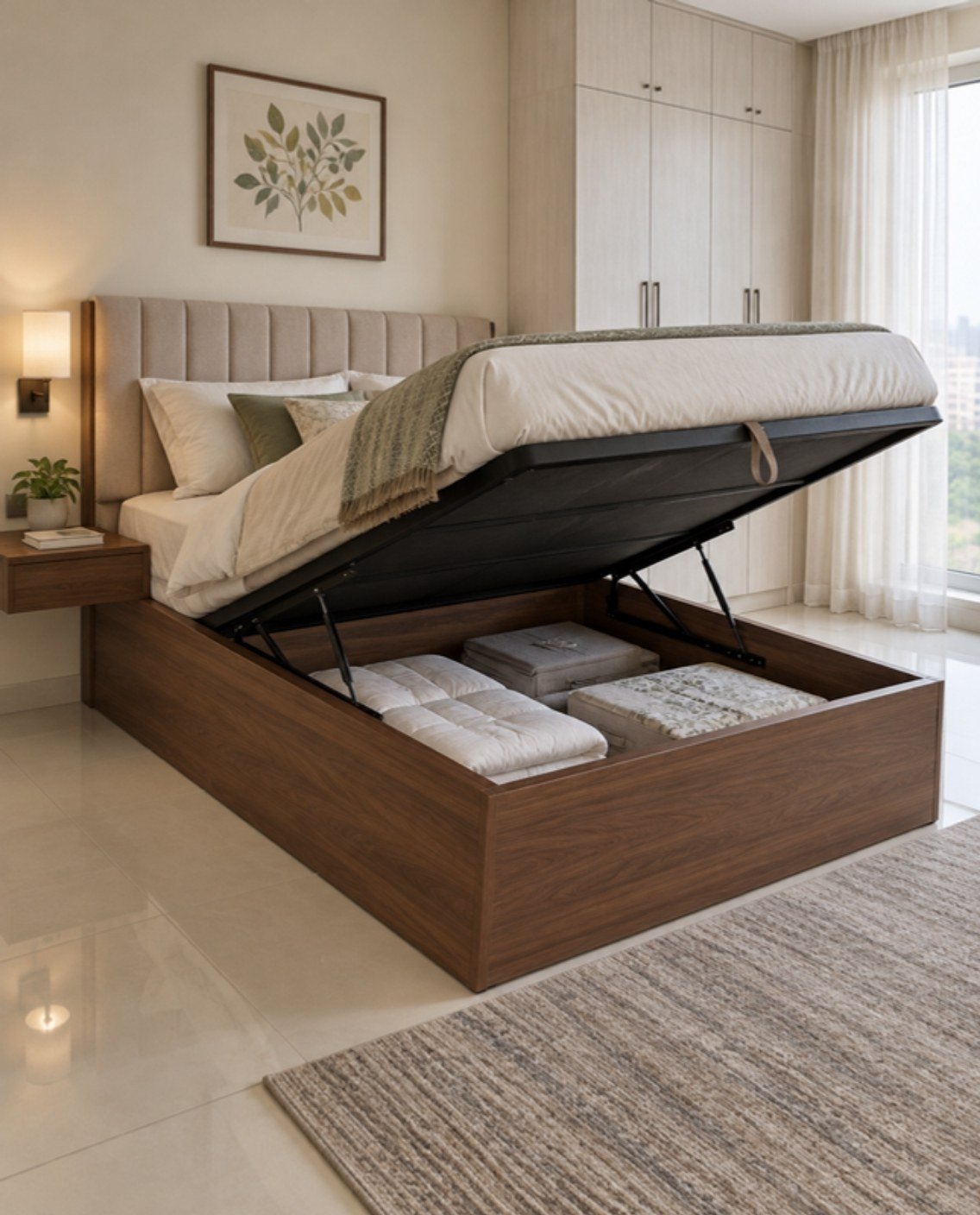
The three main types
1. Hydraulic (lift-up) storage bed
The mattress platform is hinged and lifts on gas struts to reveal the full area beneath.
- Advantages: the largest storage volume; needs no clearance at the sides, so it suits a bed pushed close to a wall or wardrobe; contents stay relatively dust-free.
- Limitations: you must lift the mattress to reach anything, so it is for occasional-access items; struts must be matched to the mattress weight and may need replacing after some years; a very heavy mattress makes lifting harder.
2. Drawer storage bed
Drawers on channels or castors pull out from the sides or the foot of the bed.
- Advantages: easy access without disturbing the bed; good for items used weekly, such as bed linen and children’s clothes.
- Limitations: each drawer needs clear space in front to open, roughly its own depth plus standing room, which rules it out where a bedside table, wall or wardrobe is close; less total volume than a lift-up bed.
3. Box bed (manual lift)
The traditional box with plywood lids that lift off or hinge up by hand.
- Advantages: simple and economical, with nothing mechanical to fail.
- Limitations: the mattress has to be moved aside and the lids held up, so it is inconvenient and usually reserved for long-term storage.
Other storage features worth considering
- Headboard storage: a box headboard with a hinged top or niches holds pillows, books and chargers. It adds to the bed’s length, so check the room.
- Side or footboard niches for books.
- Combination beds: a hydraulic section in the main area with one or two drawers at the foot gives both bulk and quick-access storage.
Which type suits which room
- Small master bedroom with the wardrobe close to the bed: hydraulic.
- Room with clear space on one side or at the foot: drawers on that side.
- Children’s room: drawers for toys and clothes; avoid heavy lift-up lids that a child might operate alone.
- Guest room: a box or hydraulic bed for spare bedding.
- Elderly users: drawers on smooth channels, or no bed storage at all; lifting a platform is not advisable.
For layout ideas see our bedroom interior design ideas and, for compact homes, 1BHK interior design in Bangalore.
Sizes
Bed frames are built around the mattress, so buy or confirm the mattress first. Common Indian mattress sizes are approximately:
- Single: 72 x 36 inches
- Queen: 72 or 78 x 60 inches
- King: 72 or 78 x 72 inches
Sizes vary between brands, so measure the actual mattress. Allow for the frame and headboard thickness, and keep a comfortable walking passage on the sides you use, around two feet where the room allows.
Materials and build quality
- Board: good-grade plywood is the usual choice for a bed’s load-bearing frame. Engineered boards are used for panels and headboards. See plywood grades explained.
- Base: the platform under the mattress should be adequately thick and supported, with a central support on wider beds, so it does not sag.
- Ventilation: a few ventilation holes or a slatted section help prevent mustiness inside the box.
- Hardware: gas struts rated for the mattress weight, sturdy hinges and smooth drawer channels from an established brand.
- Finish: laminate is durable and easy to clean; veneer and upholstered headboards add warmth. Compare in veneer vs laminate.
What to store, and what not to
- Good: quilts, blankets, pillows, off-season clothes, suitcases laid flat, spare linen.
- Avoid: important documents and valuables, food, anything damp, and heavy objects in a hydraulic bed that could shift.
- Use zipped bags and a moisture absorber, and air the compartment periodically, especially in the monsoon.
Custom-made or ready-made?
A ready-made bed is quicker. A custom bed can be sized to the room, matched to the wardrobe finish and built with the storage mix you want. The differences in cost and quality control are discussed in modular vs carpenter-made. Bed storage complements, and does not replace, a well-planned wardrobe; see wardrobe storage planning.
Frequently asked questions
Hydraulic beds give more storage and need no side clearance; drawer beds give easier, more frequent access. Choose by how often you need the contents and how much space surrounds the bed.
With correctly rated struts and proper installation they are widely used. Keep hands clear when closing, do not let young children operate them, and replace struts that no longer hold the platform up.
No, provided the base is strong and well supported. Comfort comes from the mattress and a platform that does not sag.
Can a storage bed be made in any size?
Yes, when custom-built. Confirm the mattress size first and plan the bed around it.
Planning your interiors? Book a free design consultation or WhatsApp us on +91 88845 55998.