
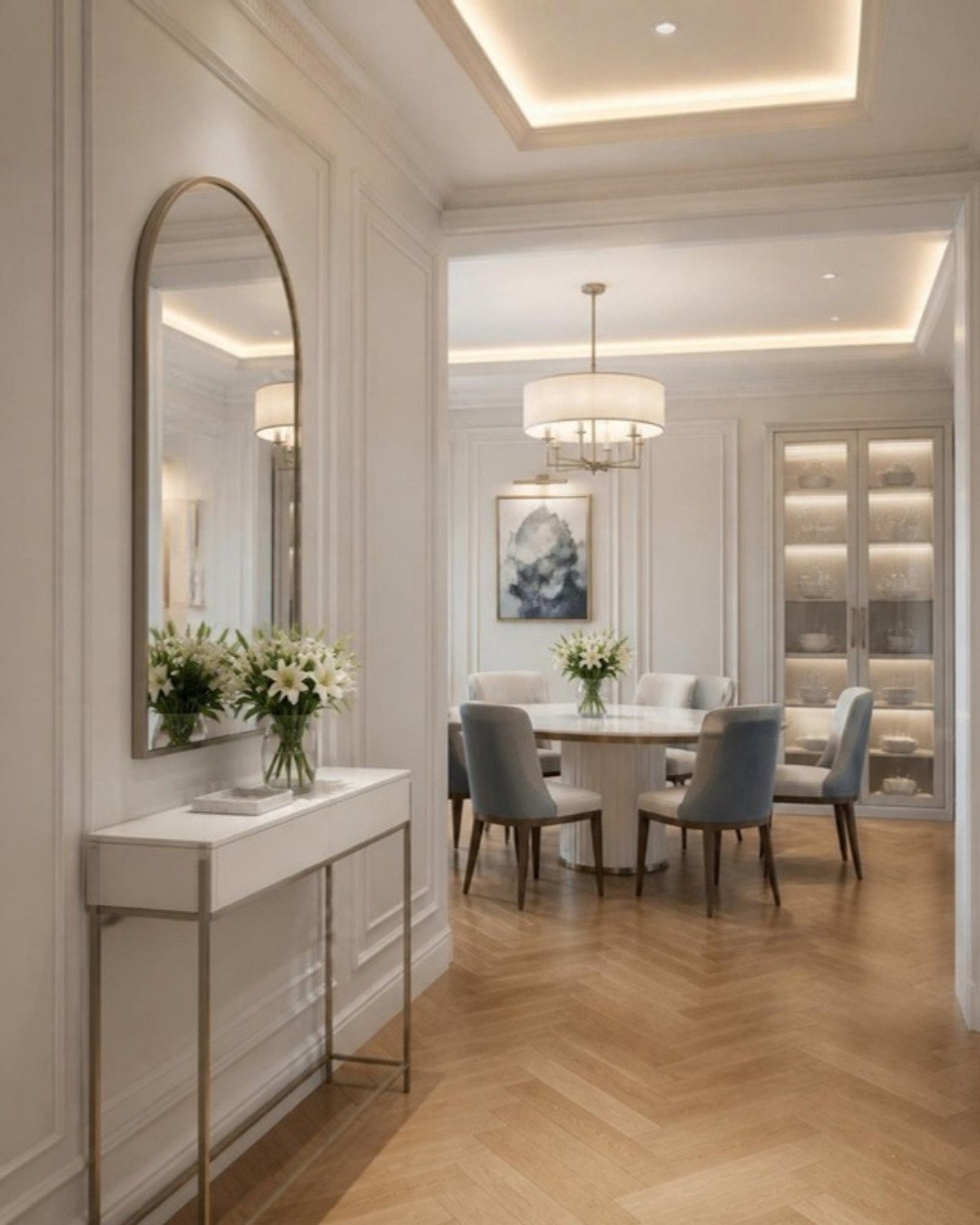
A crockery unit does two jobs. It stores the dinner sets, glassware and serving bowls that do not fit in the kitchen, and it gives the dining area a focal point. Get the proportions right and it looks like furniture. Get them wrong and it looks like a kitchen cabinet that lost its way. Here are ten designs that work in Indian apartments, followed by the sizes that make them practical.
1. Full-height unit with fluted glass
Floor-to-ceiling storage with fluted or reeded glass shutters in the upper half. The glass blurs what is inside, so the shelves need not be perfectly styled. Closed base cabinets hide the everyday items.
2. Floating sideboard with open shelves above
A wall-hung base unit about 2.5 feet high, with two or three slim shelves over it. It keeps the floor visible, which makes a small dining area feel larger.
3. Crockery unit with a serving counter
Leave a counter at 3 feet high between base and wall units, finished in quartz or stone. It becomes a landing space for dishes during meals and a coffee or tea station the rest of the day.
4. Built into a niche
Many Bangalore flats have a recess beside the dining area or under a beam. A unit built flush into it adds storage without taking any floor space.
5. Crockery unit with a bar section
One bay with a stemware rack, bottle storage and a mirrored or stone back panel. Add a lockable shutter if there are children at home.
6. Tall unit with a wash basin
Where the dining wash basin sits on the same wall, combine the two. A stone counter with the basin at one end and tall storage alongside looks planned, not patched together.
7. Dark frame, warm light
Slim black aluminium-framed glass shutters with warm profile lights inside. It suits contemporary and dark luxe interiors and shows off glassware well.
8. Veneer with cane or rattan
Natural veneer carcass with cane-inset shutters. It adds texture and warmth, and works with Japandi and modern Indian styles. Read veneer vs laminate before choosing the surface.
9. Partition crockery unit
A unit that divides the living and dining areas, open or glazed on both sides. It defines the two zones without blocking light.
10. Kitchen-side crockery unit
In an open kitchen, extend the kitchen’s tall units into the dining side in the same finish. One continuous wall of storage looks calmer than two different units.
Sizes that work
| Element | Recommended size | Why |
|---|---|---|
| Base cabinet depth | 16 to 18 inches | Fits dinner plates and serving bowls without eating into the room |
| Wall or display cabinet depth | 12 to 14 inches | Enough for glasses and plates on stands |
| Counter height | 34 to 36 inches | Comfortable for serving |
| Shelf spacing for glasses | 10 to 12 inches | Tall enough for stemware |
| Clearance from dining chairs | At least 3 feet | Lets someone pass when a chair is pulled out |
Materials and finishes
- Carcass. BWR plywood is the usual market choice for a dry area, with BWP near a wash basin. ModScale uses BWP plywood for the whole unit. Our plywood grades guide explains the difference.
- Shutters. Laminate for closed base units; clear, fluted or tinted glass for display sections. Use toughened glass.
- Back panel. Mirror, veneer or a stone-look laminate lifts the display section.
- Hardware. Soft-close hinges, and drawers with cutlery organisers for everyday use.
Lighting makes the unit
A crockery unit without lighting is only a cupboard. Fit warm white profile lights, around 2700 to 3000K, vertically along the sides or under each shelf. Put them on a separate switch so the unit can glow in the evening. See lighting design for Indian homes.
Common mistakes
- Making the whole unit glass, leaving nowhere to hide everyday clutter
- Building it too deep, so the dining chairs have no room
- Forgetting a power point for a coffee machine or kettle
- Skipping drawers, which are the most used part of the unit
Frequently asked questions
About 16 to 18 inches for the base and 12 to 14 inches for the upper display section.
Toughened glass. Fluted or tinted glass hides clutter better than clear glass.
Yes. A sideboard-style unit or a partition unit works well where the dining area is small.
It is priced like other joinery: by size, board, finish and hardware. Glass shutters and profile lighting add to the base rate.
Plan your dining area with us
ModScale designs crockery units as part of complete apartment interiors in Bangalore. Browse our portfolio for built examples, or book a free design consultation. WhatsApp: +91 88845 55998.