
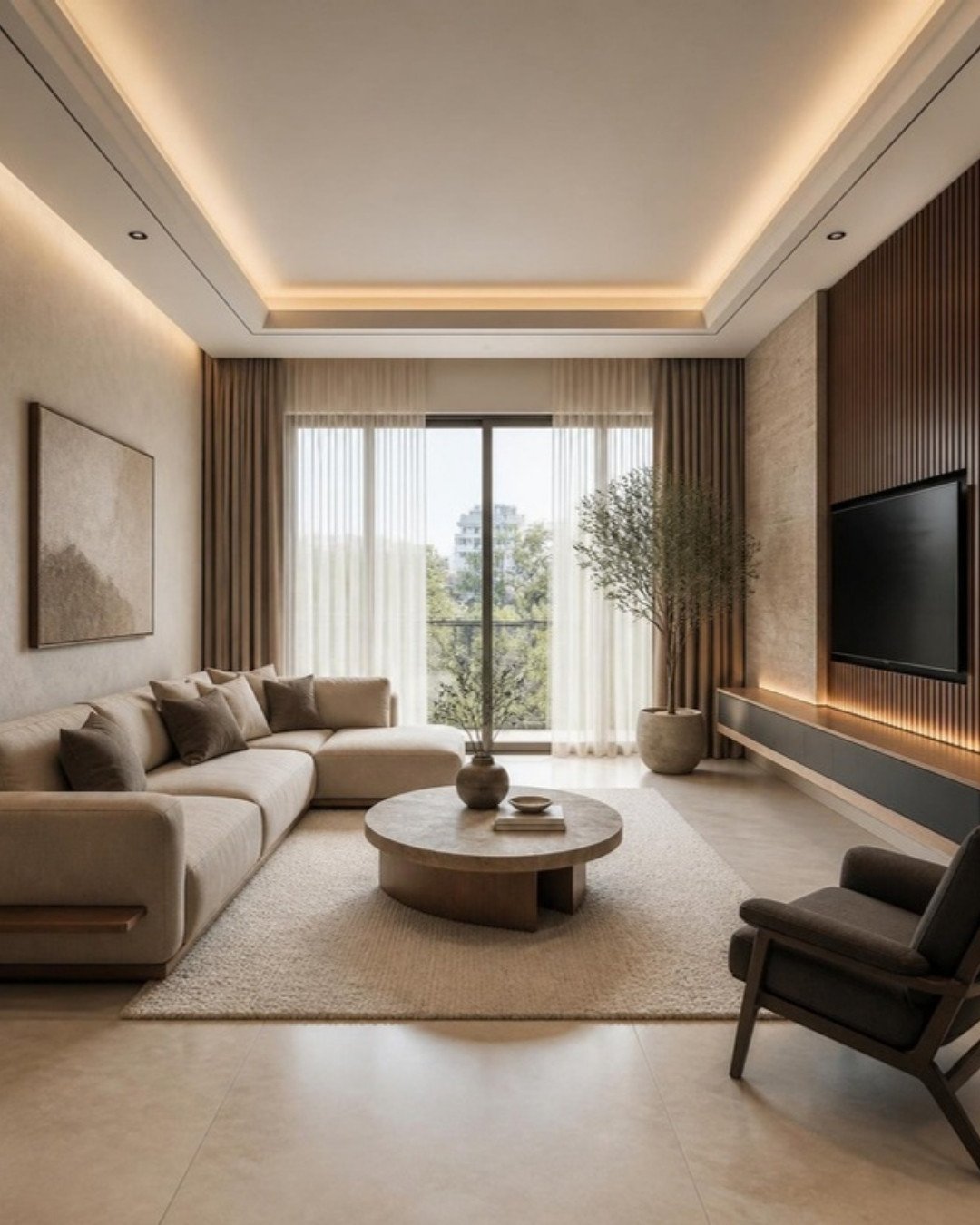
Flooring is the one finish you touch every day and the one that is hardest to change once the furniture is in. Wardrobes can be re-laminated and walls repainted over a weekend, but replacing a floor means emptying rooms, dust, and often re-doing skirting and door bottoms. So it pays to choose carefully, and to choose for how your household actually lives rather than for how a showroom sample looks under spotlights.
This guide compares the three families of flooring most Indian homeowners end up choosing between: vitrified tiles, wood-look floors (laminate, engineered wood and SPC), and natural stone (marble and granite). We look at durability, maintenance, indicative cost bands, where each one suits, and whether you can lay a new floor over existing tiles.
Start with how the room is used
Before comparing materials, answer four questions for each room:
- Does it get wet? Bathrooms, utility areas, balconies and kitchens need a floor that tolerates standing water and frequent mopping.
- How much traffic and abrasion? Living rooms and entrances take grit from outdoors; bedrooms take far less.
- Who lives there? Small children, elderly parents and pets change the priority from looks to slip resistance, warmth underfoot and scratch resistance.
- Is it a new floor or a renovation? In a lived-in flat, floor height, door clearances and the mess of demolition matter as much as the material.
Most homes are best served by a mix of materials rather than one floor throughout. That is also how costs stay sensible, a point we cover in our guide to what drives interior cost.
Vitrified tiles
Vitrified tiles are made by firing clay, silica, quartz and feldspar at high temperature until the body becomes dense and glass-like. The result is a tile with very low water absorption, which is why it has become the default floor in Indian apartments, including most builder handovers in Bengaluru.
Durability and maintenance
A good vitrified tile resists stains, does not need polishing or sealing, and is cleaned with a wet mop and a mild cleaner. The weak points are not the tile but the joints and the laying: hollow spots beneath tiles lead to cracks, and cement grout darkens with time. Asking for epoxy grout in kitchens and wet areas, and insisting on proper bedding or adhesive coverage, solves most long-term complaints.
Two cautions. High-gloss tiles show footprints and dust and can be slippery when wet, so choose matt or textured finishes for bathrooms, balconies and homes with elderly family members. Tiles are also hard and cool underfoot, which is pleasant in summer but less comfortable in bedrooms for some people.
Where vitrified tiles suit
Living and dining areas, kitchens, bedrooms, bathrooms (matt or anti-skid), balconies and utility areas. In short, almost anywhere. Large formats such as 800 x 1600 mm reduce the number of joints and make compact rooms look calmer.
Wooden, laminate and SPC flooring
These three are often grouped together as “wooden flooring”, but they are quite different products.
Laminate flooring
Laminate planks have a high-density fibreboard core with a printed wood-pattern layer and a clear wear layer on top. They click together and float over a thin underlay. Wear resistance is graded by AC rating; AC4 and AC5 are the grades normally recommended for busy homes. Laminate is warm underfoot, quick to install and convincing to look at, but the fibreboard core swells if water gets into the joints. It suits bedrooms and studies, and is a poor choice for kitchens, bathrooms or balconies. Clean it with a well-wrung mop, never a wet one.
Engineered wood
Engineered wood has a real hardwood veneer on top of a plywood or multi-layer base. It looks and feels like timber because the surface is timber, and it is more dimensionally stable than solid wood in changing humidity. It can dent and scratch, it dislikes standing water, and it costs considerably more. It is best kept for master bedrooms and formal living rooms where you want the real thing. If you are weighing real wood surfaces against printed ones elsewhere in the home, our veneer vs laminate comparison covers the same trade-off for furniture.
SPC flooring
SPC stands for stone plastic composite: a rigid core of limestone powder and PVC with a printed layer and a wear layer. The core does not absorb water, so SPC handles spills and wet mopping far better than laminate. Planks are thin (commonly 4 to 6 mm) and click together, which makes SPC the most popular choice for covering an existing tiled floor. It is softer and quieter underfoot than tile. Its limits: it can fade or expand in strong direct sunlight near large windows, heavy furniture can leave marks on thinner planks, and it will show any unevenness in the floor beneath.
Where wood-look floors suit
- Bedrooms and studies: laminate, SPC or engineered wood all work.
- Living rooms: SPC or engineered wood; laminate only if the room stays dry.
- Kitchens: SPC is possible, though tiles remain the safer choice.
- Bathrooms and open balconies: avoid all three; use anti-skid tiles or wood-look tiles instead.
Marble and granite
Marble
Marble gives a depth and continuity that a printed tile cannot fully copy, and it stays cool in summer. It is also porous and relatively soft. Lemon juice, vinegar, turmeric and tea can etch or stain it, and it scratches under grit. Marble is laid in a thick mortar bed and then ground and polished on site, so it needs more time, more skilled labour and creates more slurry than tiling. Expect to seal it and to re-polish every few years to keep the shine. Indian marbles from Rajasthan are the practical choice for most homes; Italian marble is softer, costlier and needs careful slab selection.
Granite
Granite is harder and denser than marble, resists scratches and stains much better, and needs little upkeep. Much of it is quarried in South India, which helps its pricing in Bengaluru. Design choice is narrower and darker, and a polished finish is slippery when wet, so flamed or leather finishes are preferred for steps, entrances and outdoor areas. Granite is an excellent choice for kitchen floors and counters, staircases, entrance lobbies and balconies.
Where natural stone suits
Marble suits living and dining areas and bedrooms in homes prepared to maintain it. Granite suits hard-working areas. Neither is a simple renovation material: both add significant thickness and weight, and marble polishing is not something you want happening next to finished woodwork. Stone is best decided at the bare-shell stage, so it belongs on your list when you go through a flat possession checklist before interiors.
Indicative cost bands
Flooring prices move with brand, size, thickness, design, site conditions and the season, so treat any published number as a planning aid. The figures below are indicative installed ranges for Bengaluru published by Studio Matrx in its flooring cost guide for Bangalore (marked as last verified in June 2026). Studio Matrx states that they include material, bedding or adhesive, labour, grouting and GST, and that they vary by area and vendor. They are not ModScale quotations.
- Vitrified tiles (mid-range): about Rs 120 to 220 per sq ft
- Laminate (AC4/AC5 click): about Rs 120 to 250 per sq ft
- SPC/vinyl click: about Rs 120 to 300 per sq ft
- Local granite: about Rs 130 to 280 per sq ft
- Indian marble: about Rs 220 to 450 per sq ft
- Engineered wood: about Rs 350 to 750 per sq ft
- Italian marble: about Rs 450 to 1,200 or more per sq ft
Two things stand out. First, tiles, laminate, SPC and local granite overlap heavily, so the decision between them should be made on performance rather than price. Second, in a renovation the hidden costs matter: removing old flooring, debris disposal, new skirting, trimming doors and re-fixing thresholds. Ask for these to be itemised in any estimate.
Can you lay new flooring over existing tiles?
Often yes, and it can save a great deal of dust and time. But check these points first.
- Soundness: tap the existing tiles. Hollow-sounding, loose or cracked tiles must be removed and the patch levelled; a new floor is only as stable as what lies beneath.
- Level: click floors such as SPC and laminate need a flat base. Deep grout lines and lippage between tiles should be filled with a levelling compound, or they will show through or stress the click joints.
- Height: SPC adds only a few millimetres plus underlay. Tile-on-tile with adhesive adds roughly the tile thickness plus the adhesive bed. Check main door and bedroom door clearances, sliding wardrobe bottoms, the kitchen plinth and the step at the bathroom and balcony thresholds.
- Dampness: never cover a floor that shows seepage or rising damp. Fix the source first, or moisture will be trapped.
- Method: tile-on-tile requires a suitable tile adhesive and a clean, roughened or primed surface, not ordinary cement mortar. Follow the adhesive manufacturer’s instructions.
- Wet areas: in bathrooms, overlaying is risky because waterproofing and slopes lie under the old tiles. If there is any leakage history, strip to the slab and waterproof again, as explained in our guide to bathroom renovation cost in Bangalore.
Marble and thick granite are not sensible overlays: they add too much height and load.
Before you finalise
Whatever you choose, see the material in daylight, in a large piece, next to your laminate and wall colour samples. Our materials page explains how we specify finishes across a home so that the floor, woodwork and walls read as one scheme.
Frequently asked questions
For most apartments, good-quality vitrified tiles offer the best balance of durability, low maintenance and cost. Wood-look floors add warmth in bedrooms, and natural stone suits homeowners who value its character and accept the maintenance.
In moisture resistance, yes. The SPC core does not swell with water, whereas laminate’s fibreboard core can. Laminate can feel slightly warmer and more wood-like underfoot, so in a dry bedroom either works.
Usually yes, provided the tiles are firmly bonded, dry and level. SPC and laminate are floating floors designed for this. Check door clearances and thresholds before ordering.
Should the builder’s tiles be replaced before starting interiors?
Only if they are damaged, hollow, poorly laid or clearly wrong for your design. If you plan to change them, do it before any woodwork is installed, because flooring is the dustiest part of the job.
Planning your interiors? Book a free design consultation or WhatsApp us on +91 88845 55998.