
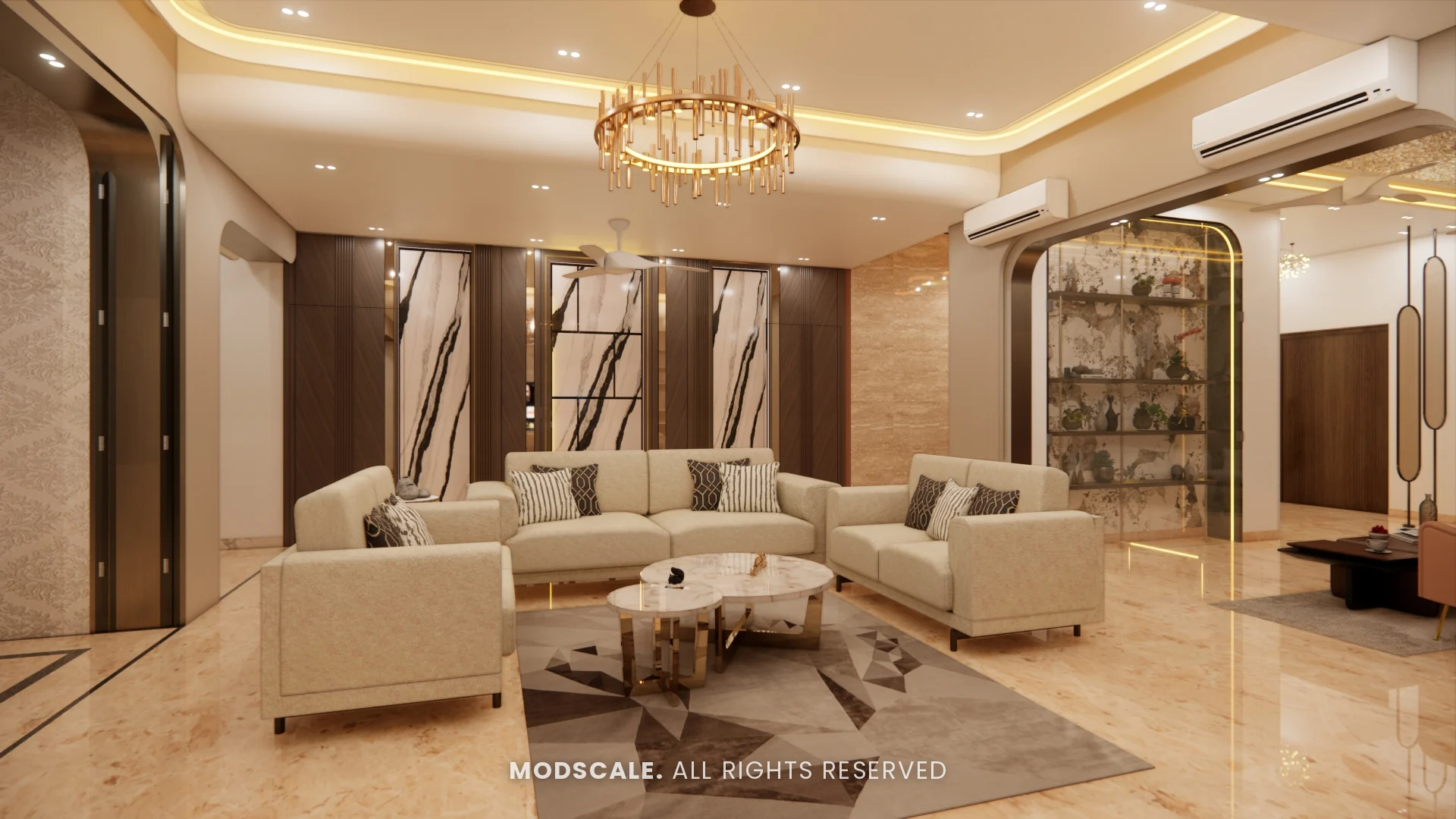
A peripheral false ceiling usually drops 100 to 150 mm (4 to 6 in) at the edges; a full ceiling drops 150 to 250 mm everywhere. In a Bangalore apartment with a 9.5 to 10 ft ceiling, a peripheral design keeps most of the room height while hiding wiring and cove lights. Keep ceiling fan blades at least about 7 to 8 ft above the floor.
In this guide
False ceilings are standard in most Bangalore interiors now, for cove lighting, spotlights and hiding AC pipes. The question we are asked most often is how much height they take, and whether a room will feel low afterwards. The answer depends on the type of ceiling and on what has to be hidden inside it.
How much height does a false ceiling take?
| Ceiling type | Typical drop | Where it suits |
|---|---|---|
| Peripheral (border) ceiling | 100 to 150 mm at the edges, original slab in the middle | Living rooms and bedrooms that need cove light without losing height |
| Full flat ceiling | 150 to 250 mm everywhere | Rooms with many spotlights, ducts or uneven beams to hide |
| Multi-level or coffered | 200 mm or more at the deepest level | Large living rooms, villas and double-height spaces |
| Cove pocket for LED strip | adds about 75 to 100 mm to the step | Any room with indirect lighting |
The drop includes the metal frame, the board and enough space for lights, junction boxes and any pipes above. A recessed spotlight typically needs at least 75 to 100 mm of clear depth behind the board.
How low is too low?
Many Bangalore apartments have a slab height of about 9.5 to 10 ft. A peripheral ceiling that drops 4 to 6 inches at the edges still leaves about 9 ft or more in the centre, which feels generous. A full ceiling with a 6 to 10 inch drop leaves about 9 ft, still comfortable in most rooms. In older homes or top floors with lower slabs, keep the ceiling to a border only, or skip it in small rooms and use surface lights instead.
Mark the proposed ceiling line on the wall with tape before deciding. Standing in the room with the line at the right height tells you more than any drawing.

Fans, lights and AC
- Ceiling fans: keep the blades at least about 7 to 8 ft above the floor and about a foot below the ceiling for good air flow. With a false ceiling, the fan hook must be fixed to the slab, not the board, and a short downrod used.
- Chandeliers: leave about 7 ft of clearance under the lowest point where people walk; over a dining table it can hang lower.
- Split AC: plan the indoor unit position and the pipe route before the ceiling frame goes up, so pipes run inside the ceiling rather than across the wall.
- Cove lights: the pocket needs enough depth for the LED strip to throw light upwards evenly.
Room by room
- Living room: a peripheral ceiling with cove light is the most common choice; see false ceiling designs for the hall.
- Bedroom: a simple border with a central fan and warm cove light; see bedroom false ceiling designs.
- Kitchen: keep it plain and moisture-resistant, or skip it; see kitchen false ceiling.
- Bathroom: use moisture-resistant boards or grid ceilings with access to the plumbing; see bathroom ceiling design.
Material and cost
Gypsum board is the usual choice for living rooms and bedrooms; PVC suits damp areas; POP is still used for curved work. Published 2026 figures put gypsum ceilings at roughly ₹80 to ₹150 per sq ft; see our false ceiling cost guide and gypsum vs POP.
Frequently asked questions
How much height does a false ceiling reduce?
A peripheral ceiling usually drops 100 to 150 mm (4 to 6 in) at the edges; a full ceiling drops 150 to 250 mm, more where ducts or deep lights must be hidden.
What is the minimum room height for a false ceiling?
There is no single rule, but with a 9.5 to 10 ft slab most rooms take a full ceiling comfortably. In rooms under about 9 ft, keep to a border ceiling or skip it.
What should be the gap between the false ceiling and the slab?
Enough for the frame, lights and services: about 75 to 100 mm for recessed lights, more for AC pipes or ducts.
What is the right height for a ceiling fan with a false ceiling?
Keep the fan blades at least about 7 to 8 ft above the floor, with the hook fixed to the slab, not the ceiling board.
Is a false ceiling a good idea in a small room?
A narrow peripheral ceiling with cove light usually works; a full, deep ceiling can make a small room feel low.