
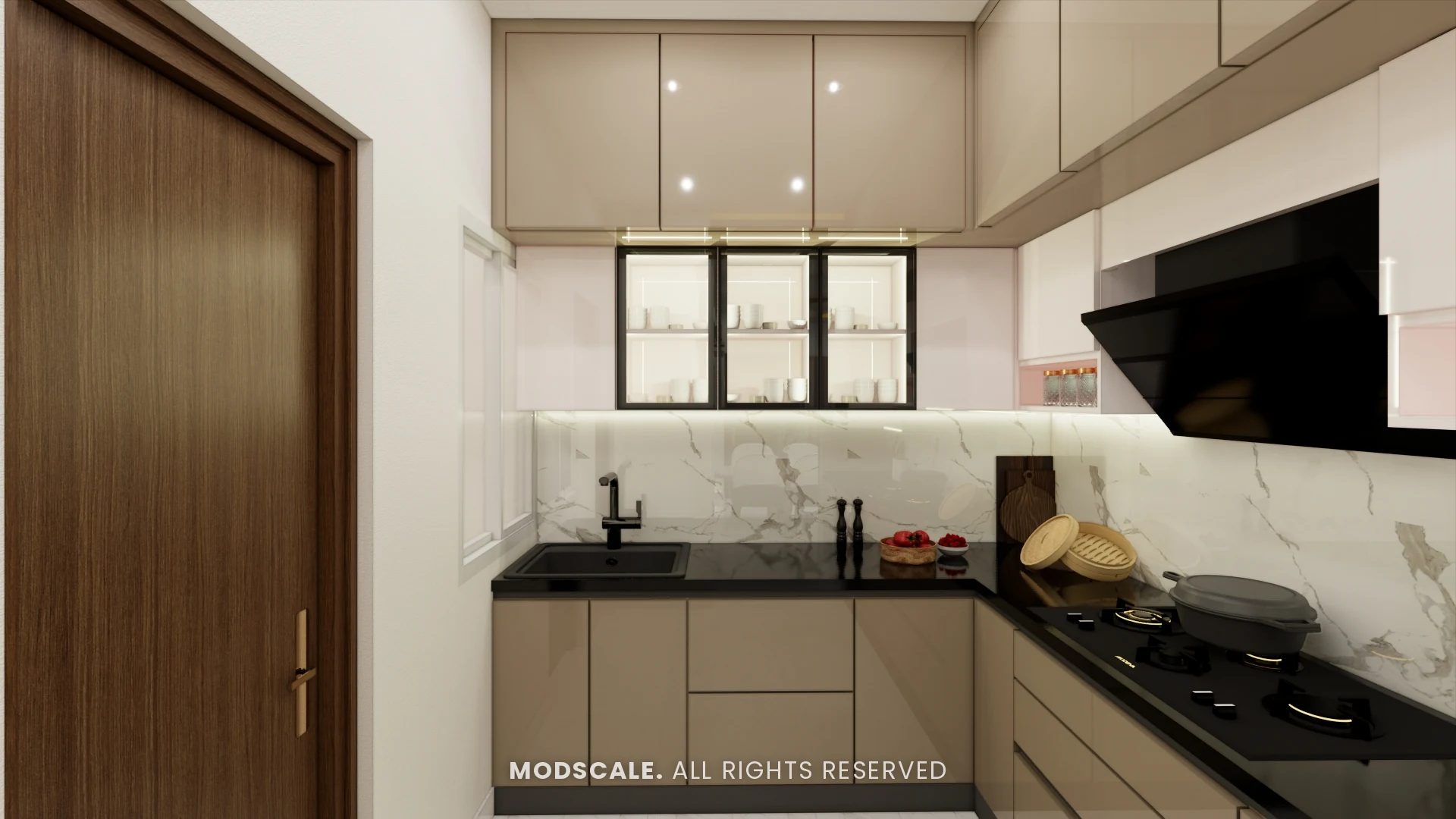
Pick a chimney at least as wide as your hob: 60 cm for a 2–3 burner hob and 90 cm for a 4–5 burner hob. For Indian cooking with tadka and frying, manufacturers commonly suggest suction of about 1,000–1,200 m³/hr or more. Mount it about 65–75 cm above the hob (follow the model’s manual) and keep the duct short with few bends.
A chimney that is too narrow or badly ducted lets smoke and oil reach your cabinets. Size, suction and ducting matter more than the brand.
Width
| Hob | Chimney width |
|---|---|
| 2 burner | 60 cm |
| 3 burner | 60 cm (or 75 cm) |
| 4–5 burner | 90 cm |
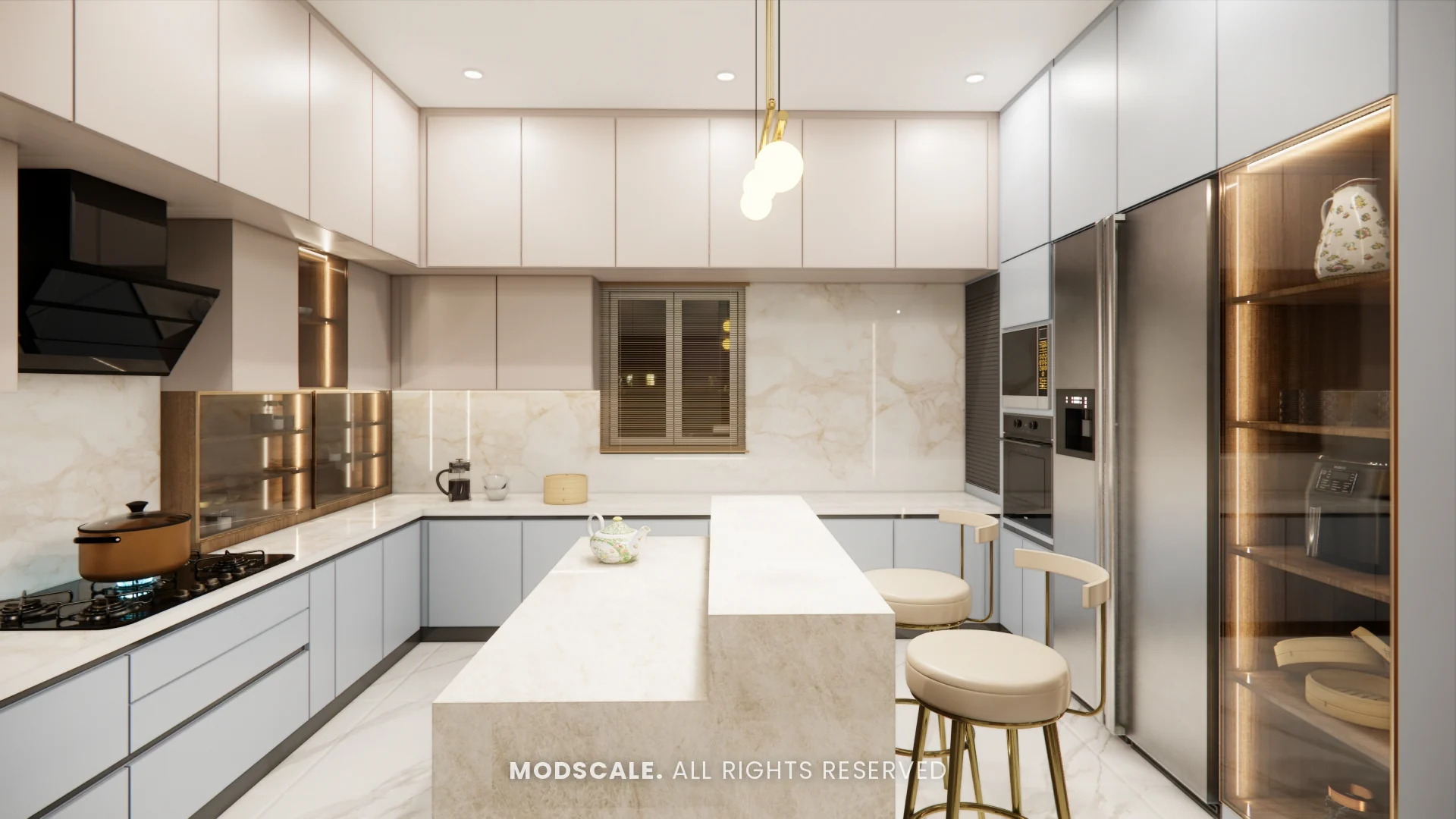
Suction, ducting and filters
- Suction ratings are measured without a duct; real suction drops with long or bent ducts.
- Use a smooth duct of the size the manufacturer specifies, ideally under about 3 m, with no more than two bends.
- Filterless or baffle filters suit oily Indian cooking better than mesh filters.
- Plan the duct hole and power point before tiling and cabinets.
Fix the chimney position with the hob position at the design stage, so the wall cabinets above can be sized around it.
Related
See kitchen platform height and standard kitchen sizes.
Frequently asked questions
What size chimney do I need?
At least as wide as the hob: 60 cm for 2–3 burners, 90 cm for 4–5 burners.
How much suction is enough?
For Indian cooking, around 1,000–1,200 m³/hr is commonly recommended.
How high should a chimney be above the hob?
About 65 to 75 cm; follow the manufacturer’s manual.
Is a filterless chimney better?
It needs less cleaning and suits oily cooking; baffle filters also work well.
Does duct length matter?
Yes; long ducts and bends reduce suction.