
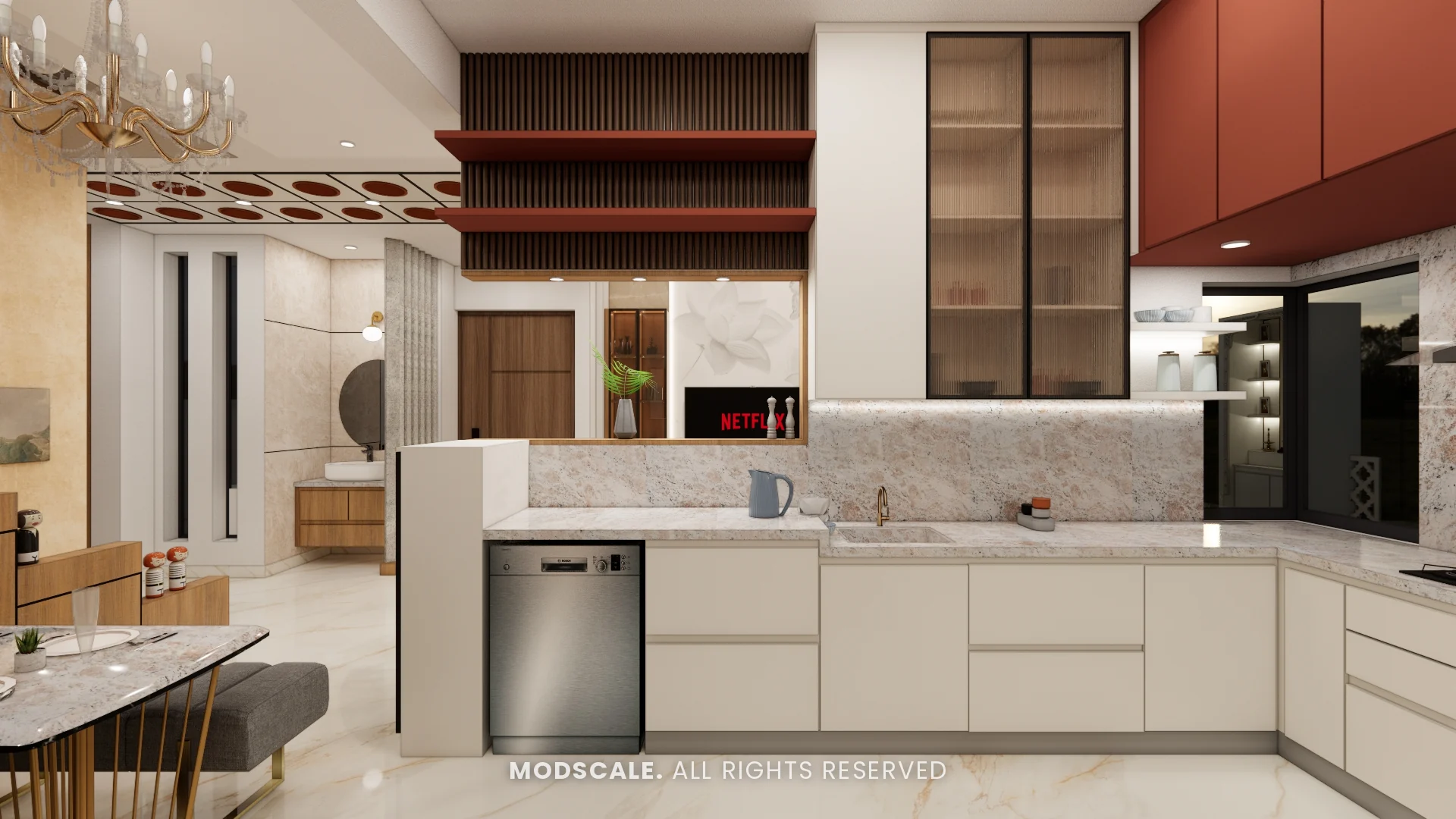
For most Indian kitchens, use laminate or acrylic on base units, which take the most wear, and add glass or a contrasting colour on a few wall units for display. Choose PU for a premium painted look and veneer for real wood. Pair them with profile handles (G or J) or a handleless gola channel for a clean front. Whatever the finish, build the shutters on a BWP plywood or HDHMR core.
In this guide
A modular kitchen shutter is two things: a core board and a finish on top. The core decides how long the shutter stays flat and how it copes with water near the sink; the finish decides the look, the feel and how easily it cleans. Getting both right matters more than the design pattern.
Shutter finishes compared
| Finish | Look | Strengths | Watch out for |
|---|---|---|---|
| Laminate | Matt, suede, gloss, wood and stone textures | Tough, scratch-resistant, widest range, value for money | Visible edge banding; gloss laminate shows fingerprints |
| Acrylic | Deep high gloss or super matt | Rich, uniform colour; easy to wipe | Gloss can show fine scratches |
| PU paint | Seamless painted finish in any colour | Premium look, no visible edges, custom shades | Higher cost; chips need professional touch-up |
| Membrane (PVC foil) | Moulded, shaker-style profiles | Curved and grooved designs | Can peel near heat if poorly made |
| Glass | Clear, fluted, tinted or back-painted | Display, lightness, lit cabinets | Fingerprints; best on wall units |
| Veneer | Real wood grain | Warm natural finish | Needs polish care; avoid near the sink |
Our guide to PU vs acrylic vs laminate compares the three main finishes in detail, and veneer vs laminate covers wood looks.
The core: what the shutter is made of
Most good modular shutters use an 18 mm core. Around the sink and hob, where water and heat are constant, a water-resistant core matters most. ModScale builds kitchen carcasses in BWP plywood; for shutters, BWP plywood and HDHMR are both used depending on the finish. Read HDHMR vs plywood for the trade-offs.
Handles and handleless options
- G-profile and J-profile: an aluminium lip along the top edge of base shutters; clean and easy to grip.
- Gola (handleless channel): a recessed aluminium channel between counter and shutter; the most minimal look.
- Bar handles: long slim pulls in black, brass or steel; easy for everyone in the family.
- Knobs: suit traditional and shaker-style shutters.
- Push-to-open: works on wall units; avoid on heavily used base drawers.
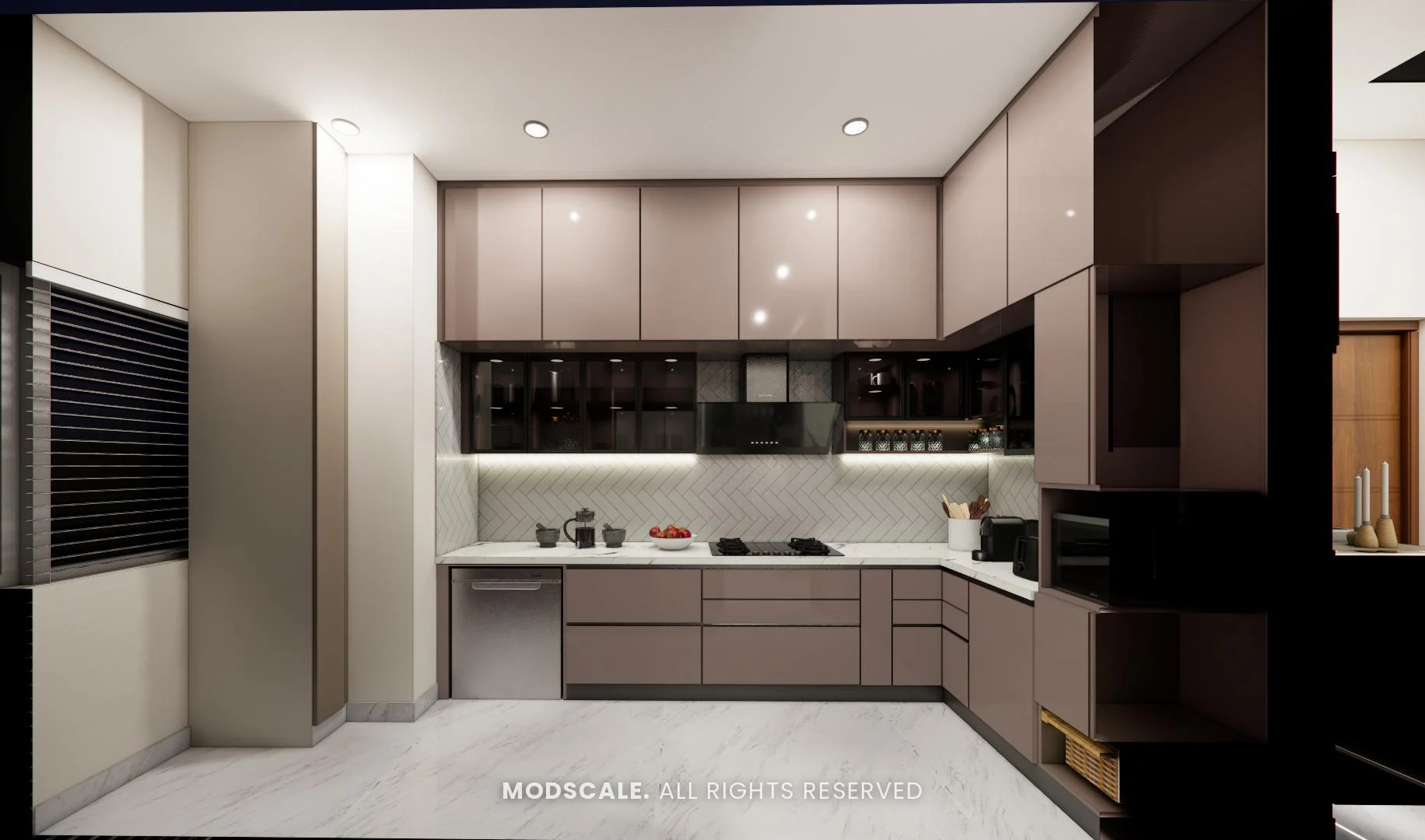
Shutter designs that work in Indian kitchens
- Two-tone: a darker or coloured base with lighter wall units keeps the kitchen bright and hides marks low down. See kitchen colour combinations.
- Fluted glass wall units: soften the wall and let you display good crockery without showing clutter.
- Wood-grain base with plain uppers: warm without looking heavy.
- Full-height tall units with flush shutters for the fridge, oven and pantry, so the wall reads as one piece.
- Lit glass cabinets or a single open shelf to break up a long run of shutters.
Sizes and practical details
- Base unit shutters are typically 300 to 600 mm wide; drawers of 600 to 900 mm hold heavy vessels best.
- Wall unit shutters are often lift-up (flap) or hinged; lift-ups suit units above the hob and sink.
- Choose soft-close hinges and channels; compare brands in Hettich vs Hafele vs Ebco.
- Edge banding should match the finish and be machine-applied, especially on shutters near water.
Cleaning and care
Wipe shutters with a soft damp cloth and mild soap; avoid scrubbers on gloss acrylic and PU. Wipe spills near the sink and hob quickly, and keep the chimney working so oil does not settle on the wall units.
Frequently asked questions
Which shutter material is best for a modular kitchen?
Laminate is the most durable everyday finish and good value. Acrylic and PU give a more premium gloss or matt look. Glass is best on a few wall units.
Is acrylic better than laminate for kitchen shutters?
Acrylic gives a richer gloss and is easy to wipe, but shows fine scratches; laminate is tougher and offers more textures. Many kitchens use both.
What is a G-profile handle?
An aluminium profile along the top of a base shutter that you grip from above, giving a clean, handle-free front.
What thickness should a kitchen shutter be?
Usually an 18 mm core board plus the finish on top.
Are glass shutters practical in an Indian kitchen?
Yes on wall units for display, especially fluted or tinted glass; avoid glass on base units near the hob and sink.