
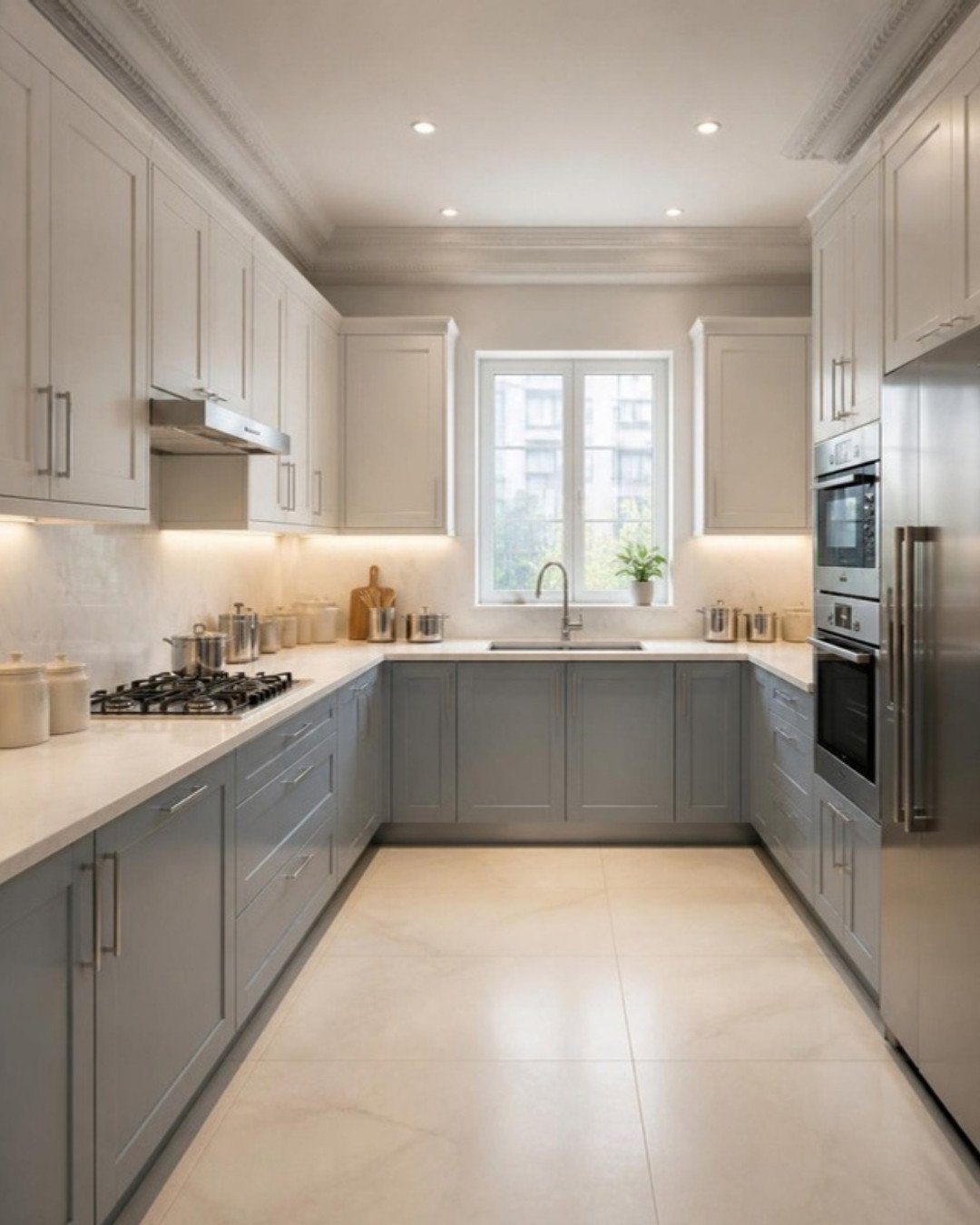
The shutter finish is what you see and touch every day in a kitchen or wardrobe. The three most common choices in Indian homes are laminate, acrylic and PU paint. Each has a clear place; the right one depends on the room, the look you want and how much care you are willing to give it.
Laminate
High-pressure laminate is a hard-wearing decorative sheet bonded to the board. It comes in a very wide range of solid colours, wood grains, stone looks and textures.
- Strengths: durable, scratch- and heat-resistant, easy to clean, good value.
- Limits: edges are finished with edge banding, so it does not give a completely seamless look; profiled or curved shutters are difficult.
- Best for: heavily used kitchens, children’s rooms and wardrobes where durability matters most.
Acrylic
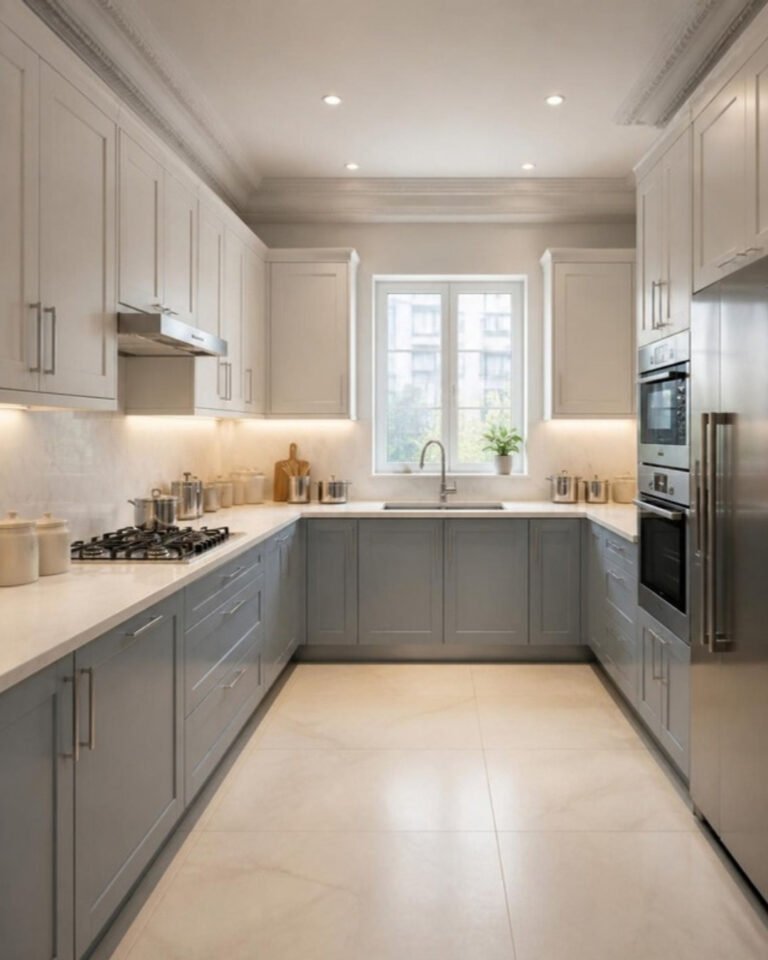
Acrylic is a solid-colour sheet, usually high-gloss, bonded to the board.
- Strengths: a deep, mirror-like gloss and rich colour; reflects light and makes spaces feel brighter.
- Limits: high-gloss surfaces show fingerprints and fine scratches; colour choice is narrower than laminate.
- Best for: contemporary kitchens and wardrobes where a glossy, sleek look is the goal.
PU paint
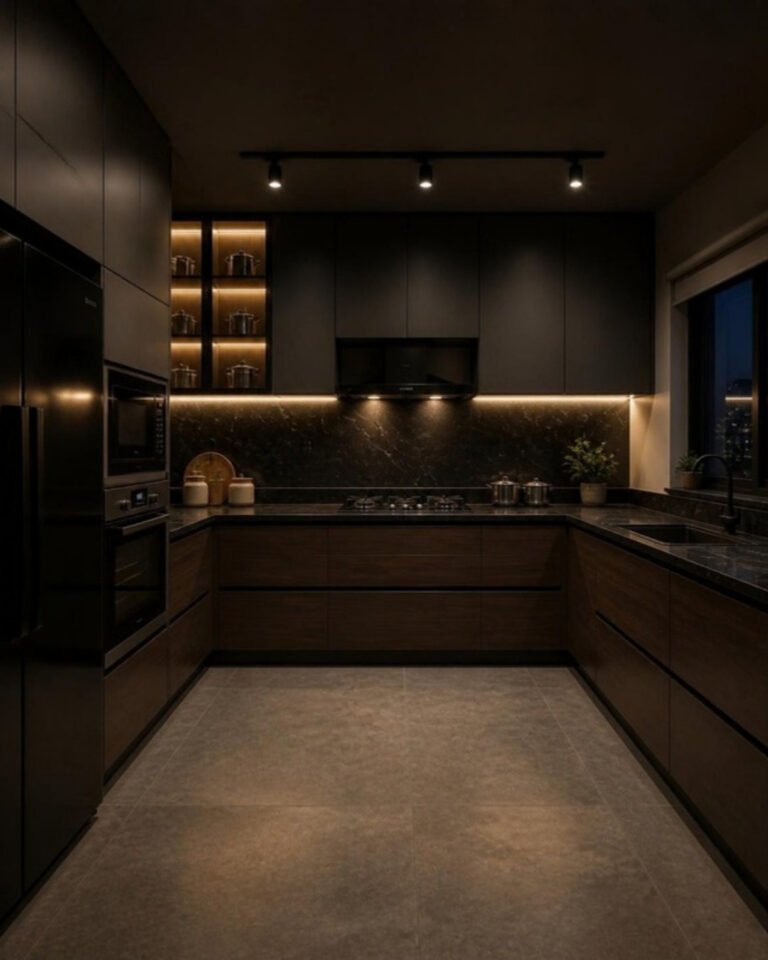
Polyurethane paint is sprayed onto the shutter in layers and can be finished matte, satin or high-gloss, in almost any colour.
- Strengths: seamless edges, any colour, works on profiled and curved shutters, and can be touched up or repainted.
- Limits: costs more, takes longer to produce, and needs more care than laminate.
- Best for: luxury kitchens and wardrobes, shaker or profiled designs, and custom colours.
A quick comparison
- Durability: laminate is the most forgiving, then PU, then high-gloss acrylic.
- Seamless look: PU first, then acrylic, then laminate.
- Colour freedom: PU first.
- Cost: laminate is usually the most economical; PU is usually the highest.
Do not forget what is underneath
The finish is only as good as the board and hardware behind it. Read plywood grades explained, and see our material library or visit the studio to compare finishes side by side.
For how finishes fit into a full home, read our guide to luxury home interiors in Bangalore or premium vs luxury interiors. Planning a kitchen? See our modular kitchen service.
Which finish for which room
- Kitchen with daily Indian cooking: laminate, or matt PU on a section if you want a painted look and accept more care. Keep high-gloss surfaces away from the hob side, where oil film shows quickly.
- Wardrobes: laminate for durability; acrylic or PU where the wardrobe is the room’s main feature.
- Children’s rooms: laminate, because it stands up to knocks, stickers and frequent wiping.
- Bathroom vanities: laminate or PU on a moisture-suited board; the board matters more than the finish here.
- TV and feature units: any of the three, or veneer, depending on the style.
Matt or gloss?
Gloss reflects light and makes a small room feel brighter, but shows fingerprints, fine scratches and any unevenness in the panel. Matt is calmer and hides marks better, particularly in mid tones. Very dark matt colours can show greasy fingerprints, so consider an anti-fingerprint surface for dark handleless shutters.
Edges tell you the quality
Look closely at the edges of a sample shutter. On laminate and acrylic, the edge band should be the same colour, tightly bonded and smooth to the touch with no glue line. On PU, the paint should wrap the edge evenly with no thin patches at the corners. Poor edges are where moisture enters and where a shutter begins to fail.
Cleaning and care
- Laminate: damp cloth and mild soap.
- Acrylic: a soft microfibre cloth only; paper towels and scrubbers leave fine scratches.
- PU: a soft damp cloth; avoid harsh chemicals, and attend to chips early so they can be touched up.
For colour pairing see modular kitchen colour combinations, and for the board underneath read HDHMR vs plywood.
Frequently asked questions
Laminate is the most durable and economical and suits heavily used kitchens. Acrylic gives a deep gloss but shows fingerprints; PU gives seamless edges and any colour but costs more and needs more care.
Acrylic looks glossier and richer in colour, but high-gloss surfaces show fingerprints and fine scratches. Laminate is more forgiving in daily use and offers a wider range of colours and textures.
Yes. PU paint can be touched up or repainted, which is one of its advantages over laminate and acrylic.
Planning a luxury home in Bengaluru? Talk to our design team.
Book a Design ConsultationGet Your Home Interior EstimateExplore ModScale ProjectsSee also: Modular kitchen shutter designs, Laminate Thickness Guide, Wardrobe Shutter Design.