
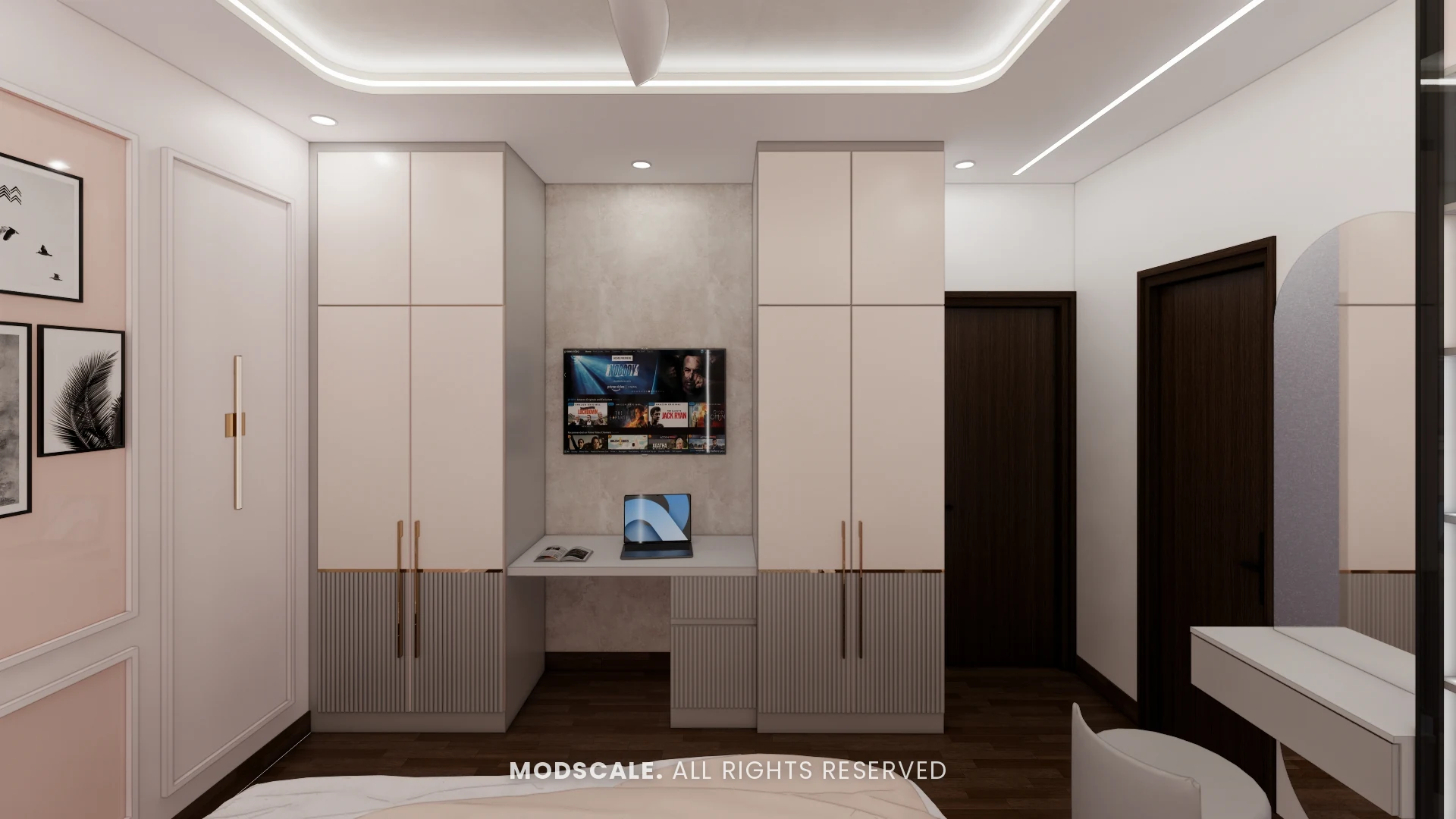
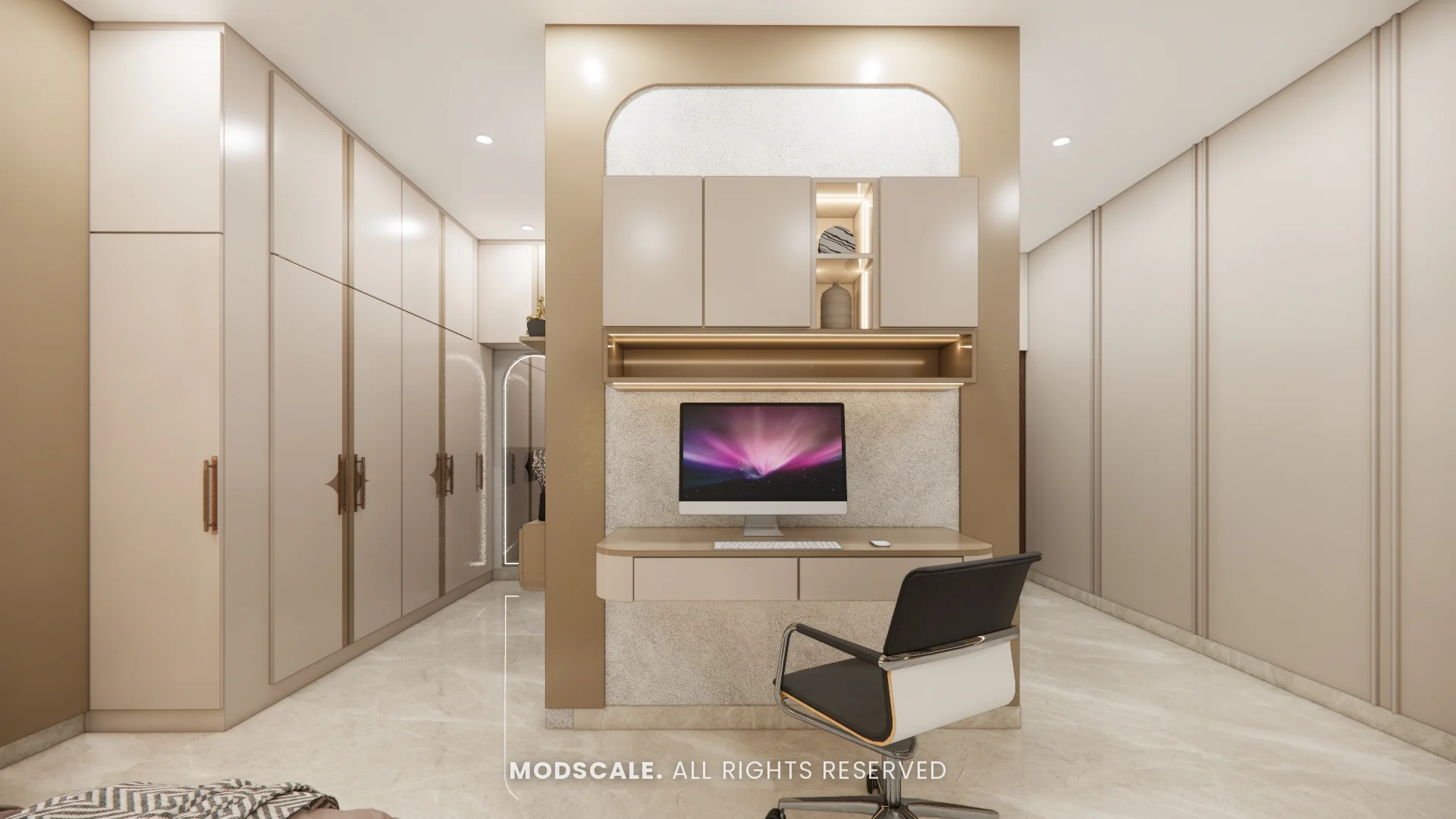
For modular furniture in Indian homes, carcass panels (sides, top, bottom, shelves) are usually 18–19 mm plywood; long or heavily loaded shelves 25 mm or supported; back panels 6–9 mm; and drawer sides 12 mm. In kitchens and bathrooms the grade matters as much as the thickness: use BWP (boiling water proof) plywood.
In this guide
Two quotations for the “same” wardrobe can differ only in plywood thickness, and you would not notice until a shelf starts to sag. Knowing the usual thicknesses lets you check a quotation line by line.
Plywood thickness by use
| Part | Thickness | Why |
|---|---|---|
| Wardrobe and kitchen carcass | 18–19 mm | Holds screws and hinges firmly and stays square |
| Shelves up to about 3 ft | 18–19 mm | Carries vessels, books and folded clothes |
| Long or heavy shelves | 25 mm, or 18 mm with a support | Prevents sagging |
| Back panels | 6–9 mm | Closes the unit; carries little load |
| Drawer sides and backs | 12 mm | Light but firm enough for channels |
| Drawer bottoms | 6–9 mm | Supported on all four sides |
| Shutters | 18 mm | Takes hinges; laminated both sides to stay flat |
Thickness is not the same as grade
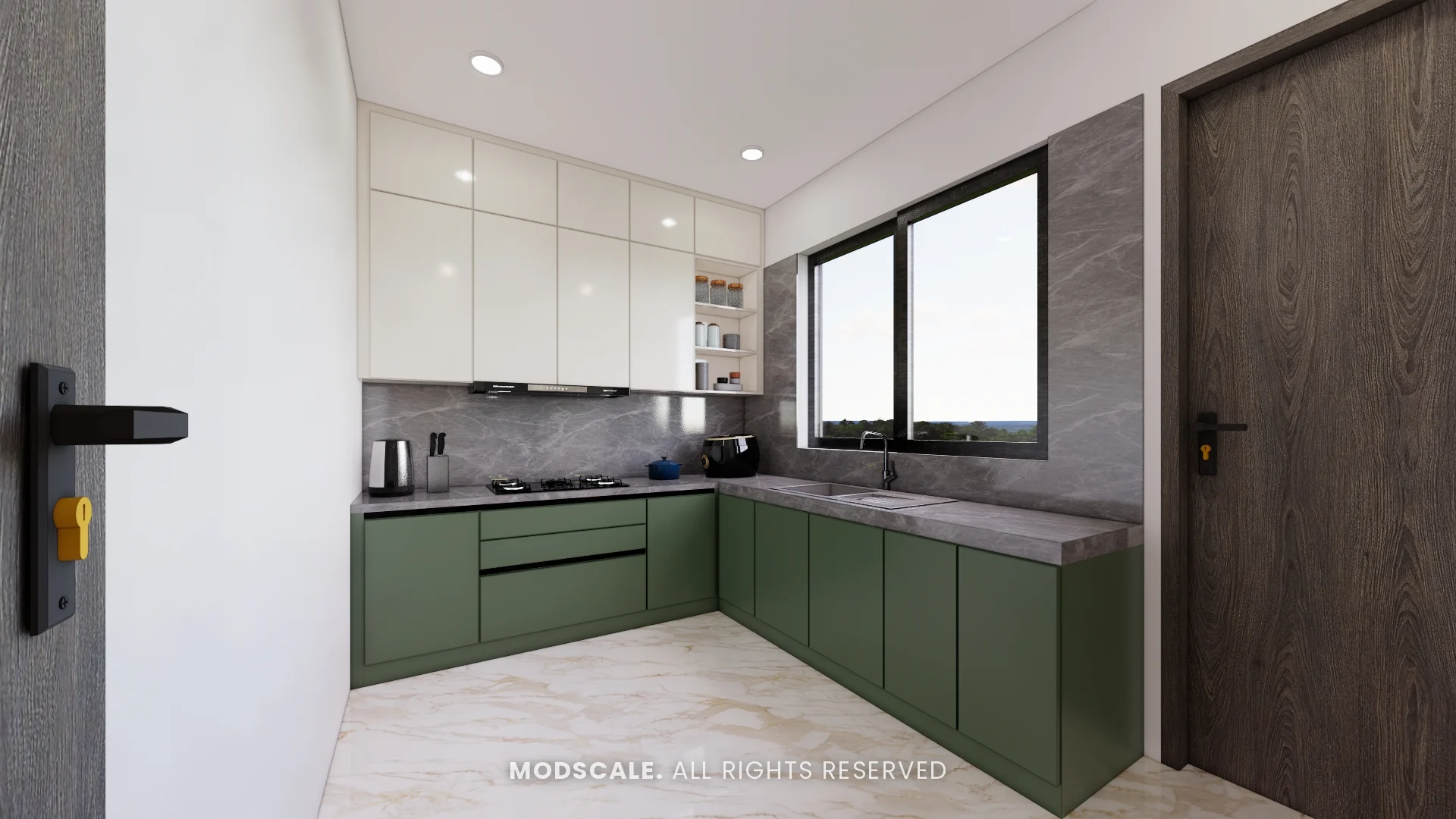
Plywood is graded by how its glue stands up to water. MR (moisture resistant) suits dry rooms; BWR (boiling water resistant) is better; BWP (boiling water proof) is made for wet conditions. Kitchens and bathroom vanities see water every day, which is why ModScale uses BWP plywood throughout. Our plywood grades and BWR vs BWP guides explain the difference.
Nominal vs actual thickness
Plywood sold as 18 mm or 19 mm can measure slightly less. Ask for the measured thickness and the IS marking on the sheet. A millimetre matters at hinge and channel fixing points.
Look at the sheet edge on site: tight, even, gap-free plies are a better sign of quality than a brand sticker alone.
How thickness affects cost
Plywood is priced per sq ft and rises with thickness and grade. Choosing 6 mm instead of 9 mm backs saves little and is usually fine; cutting carcasses from 18 mm to 12 mm saves more but weakens the unit. See our plywood price guide for typical rates.
See also: Particle Board vs Plywood: Differences, Life and Cost.
Frequently asked questions
What plywood thickness is used for wardrobes?
18 to 19 mm for the carcass and shutters, and 6 to 9 mm for the back panel.
What plywood thickness is best for kitchen cabinets?
18 to 19 mm BWP plywood for carcasses and shutters, with 6 to 9 mm backs.
Is 12 mm plywood strong enough for shelves?
Only for short, lightly loaded shelves. Use 18 mm for normal shelves and 25 mm or a support for long or heavy ones.
Is 18 mm and 19 mm plywood the same?
They are used for the same purpose; the actual thickness varies by maker, so check the measured sheet.
Which plywood grade should I use in a kitchen?
BWP (boiling water proof) plywood, because kitchens are wet every day.