
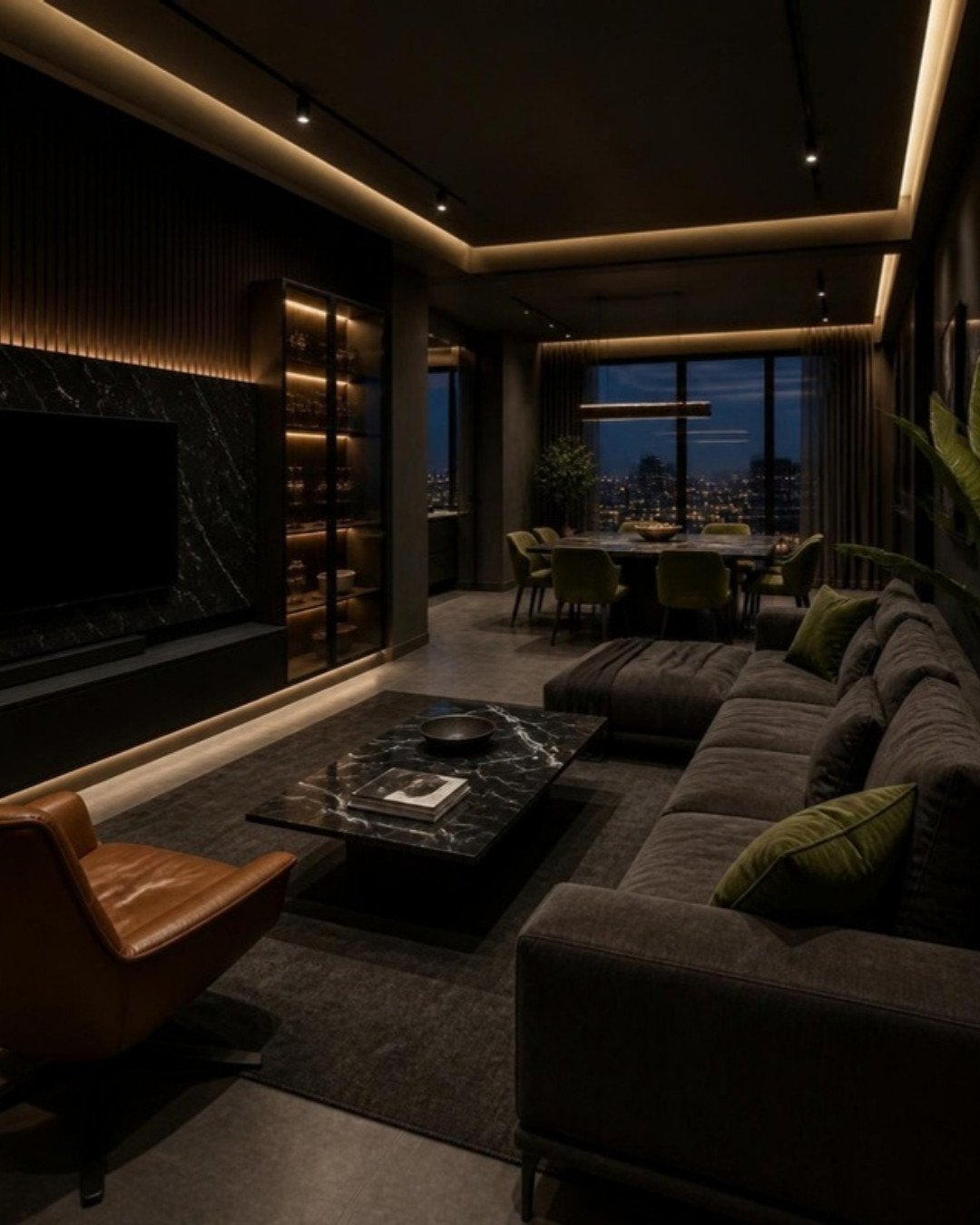
A home bar in an apartment does not need a separate room, a long counter or a row of bar stools. For most homes it is a well-planned piece of storage: a place where bottles, glasses and tools live together, with a surface to pour on and lighting that makes it pleasant to use. This guide covers compact bar formats that suit Bangalore apartments, how to combine a bar with a crockery unit, and the storage, lighting and material decisions that make the difference between a showpiece and something you actually use.
Decide how you will use it
Before choosing a design, answer a few plain questions:
- How many bottles do you keep? A household with six bottles and a few glasses needs a very different unit from a collector with forty.
- What do you drink? Wine needs horizontal storage and a stable temperature; spirits stand upright; cocktails need tools, mixers and a work surface.
- How often do you host? Occasional hosting suggests a discreet unit that closes away. Frequent hosting may justify a counter and seating.
- Who else lives in the home? With children or elders around, lockable, closed storage is the responsible default.
- Do you want it on display? Some families prefer a bar that disappears behind shutters when not in use.
Compact bar formats for apartments
The bar cabinet
A freestanding or built-in cabinet, roughly the footprint of a small sideboard, with closed storage below and a counter or open niche above. It is the simplest format and can sit against any free wall in the living or dining area.
The pocket or fold-away bar
A tall unit whose doors open to reveal a mirrored, lit interior with shelves for bottles and a pull-out or drop-down flap as the serving surface. Closed, it reads as an ordinary cabinet. This is the most discreet option and suits homes where the bar should not be on permanent view.
The niche bar
Many apartments have an awkward recess: beside a structural column, under a staircase in a duplex, or between the dining area and the kitchen. A niche fitted with a small counter, a back panel and a few shelves turns dead space into a feature without taking floor area from the room.
The wall-mounted bar
A floating counter with shelves above, fixed to the wall with no floor cabinet. It keeps the floor clear, which helps in a small living room. The wall must be solid enough to take the load of bottles and glass, and fixing into hollow blocks needs suitable anchors.
The breakfast counter that doubles as a bar
If your kitchen opens to the dining area with a raised counter, the dining side can hold bottle storage and stemware racks, with stools tucked beneath. One piece of furniture then does two jobs.
The TV unit or bookshelf bay
A single bay within a larger wall unit can be detailed as a bar, with a lit niche, a stone or glass shelf and a closed cabinet beneath. This suits living rooms where there is no spare wall for a separate piece. Our TV unit design ideas show how such bays are composed.
The crockery-cum-bar unit
For most apartments the most practical answer is to combine the bar with the dining room crockery unit. The dining area is where drinks are served anyway, the unit already exists in the plan, and the two functions need similar storage.
How to divide the unit
- Base cabinets: drawers for cutlery, table linen and serving ware; one closed, lockable cabinet for bottles.
- Counter level: a clear surface at a comfortable standing height for serving and pouring, ideally in stone or another material that tolerates spills.
- Above the counter: a lit niche for the bar section, with a mirror or a contrasting back panel, and a hanging rack for stemmed glasses.
- Upper cabinets: glass-fronted shutters for display crockery on one side; solid shutters for everyday storage.
Keep the two zones legible
The bar portion should be a defined section, not bottles scattered among dinner plates. A change of back-panel finish, a separate lighting circuit, or a pair of tambour or pocket shutters that close over the bar niche all help. If you would rather the bar not be visible when family or guests who do not drink are present, closing shutters are the easy solution.
For proportions, shutter styles and layouts of the wider unit, see our dining room crockery unit design ideas.
Storage details that matter
Bottles
- Measure your tallest bottle before fixing shelf heights; many liqueur and wine bottles are taller than standard spirit bottles. Adjustable shelves are safer than fixed ones.
- Spirits are stored upright. Wine with a natural cork is traditionally stored on its side so the cork stays moist, in a diamond or cross-lattice rack or on individual cradles.
- Bottles are heavy. Shelves carrying them should be thick enough and adequately supported so they do not sag over time, and pull-out bottle racks need channels rated for the load.
- Keep bottles away from direct sunlight and heat sources, both of which can affect the contents.
Glassware
- Stemmed glasses hang upside down from under-shelf rails, which protects the rims and keeps dust out of the bowl.
- Tumblers and highballs sit on shelves or in a shallow drawer with a non-slip liner.
- Glass-fronted shutters keep dust off while leaving the glassware visible.
Tools and consumables
A shallow drawer with dividers for the opener, jigger, strainer, stirrers, coasters and napkins keeps the counter uncluttered. Allow one deeper drawer or cabinet for mixers, an ice bucket and a tray.
Refrigeration and water
A small under-counter refrigerator or wine cooler is a useful addition if you host often. It needs a power point and, importantly, ventilation as per the manufacturer’s instructions; a cooler sealed into a cabinet with no airflow will struggle. A sink is rarely worth the plumbing in an apartment bar unless the unit backs on to a wet wall. A tray and a short walk to the kitchen do the job.
Lighting the bar
Lighting is what turns a cabinet into a bar. Glass and liquid respond to light better than almost any other material in the home.
- Back lighting: an LED strip behind a translucent stone or frosted glass panel makes the bottles glow in silhouette.
- Shelf lighting: slim LED profiles recessed into the underside or front edge of each shelf light the bottles and glasses directly. Use a diffuser so individual LED dots are not reflected in the glass.
- Counter lighting: a small downlight or under-cabinet strip over the pouring surface is the working light.
- Warm white light generally flatters amber spirits, wood and brass better than cool white.
- Controls: put the bar lights on their own switch, preferably with a dimmer. A door-activated sensor is convenient for closed pocket bars.
Plan the wiring, driver location and switch position before the unit is built; retrofitting is untidy. Keep LED drivers accessible for replacement. For general principles, see our lighting design guide for Indian homes.
Materials and finishes
Carcass
Good-quality plywood is the usual choice for the body of the unit, given the weight it carries. Our guide to plywood grades explains the options.
Counter surface
Spilled alcohol, citrus juice and wine are hard on surfaces. Polished marble looks wonderful but is porous and can etch and stain; quartz, granite and sintered or porcelain slabs are more forgiving. If the counter is laminate or veneer, use a tray for pouring and wipe spills straight away.
Shutters and external finish
Veneer with a good polish gives a classic, warm look. Laminate is the hard-wearing, economical choice. PU paint and lacquered glass give a contemporary, seamless finish. Fluted glass shutters are popular for bars because they blur the contents while letting the light through. Our veneer versus laminate comparison may help with the choice.
Back panel
Mirror, tinted mirror, back-lit stone, fluted panels, metal-finish laminate and textured tiles are all used. A mirror doubles the apparent depth and the light, though it also doubles any clutter.
Shelves
Toughened glass shelves let light pass through the unit and suit display sections; check that the thickness and span suit the weight. Timber or stone shelves suit heavier loads.
Where to put it
- Dining area: the most natural spot, usually as part of the crockery unit.
- Living room corner or niche: good for a statement cabinet.
- Between living and dining: a low bar unit can act as a subtle divider in an open plan.
- Balcony: pleasant for seating, but heat, sunlight and monsoon damp make it a poor place to store bottles or to build wood-based cabinets.
Avoid placing the bar next to the pooja unit; most families prefer the two kept well apart, as a matter of custom and personal sentiment.
What drives the cost
We have not quoted rupee figures, as a bar unit can be anything from a modest cabinet to an elaborate stone-and-glass installation. The main factors are the size of the unit, the carcass and shutter materials, the counter and back-panel material (back-lit stone being among the more expensive choices), the quantity of glass and mirror, the lighting, hardware and accessories, and any appliance such as a wine cooler. A bar bay within a crockery or TV unit usually adds less than a separate piece, since it shares the structure.
Frequently asked questions
Very little. A pocket bar or a bay within a crockery unit occupies about the width of a single wardrobe shutter or two. What matters is depth for bottles, a pouring surface and a clear standing area in front.
In most apartments, yes. It saves a wall, shares cost with furniture you need anyway, and sits where drinks are served. A separate bar makes sense in a larger home or for a serious collection.
Store all bottles in a closed, locked cabinet, keep glassware above a child’s reach or behind shutters, and avoid open trolleys. Soft-close hardware also protects small fingers.
Only if you keep wine regularly. For a few bottles consumed soon after purchase, a cool, dark cabinet is adequate. If you add a cooler, follow the manufacturer’s ventilation requirements.
Which lighting is best for a bar unit?
Warm white LED strips in diffused profiles, on a separate dimmable switch. Combine shelf or back lighting for effect with one working light over the counter.
Planning your interiors? Book a free design consultation or WhatsApp us on +91 88845 55998.