
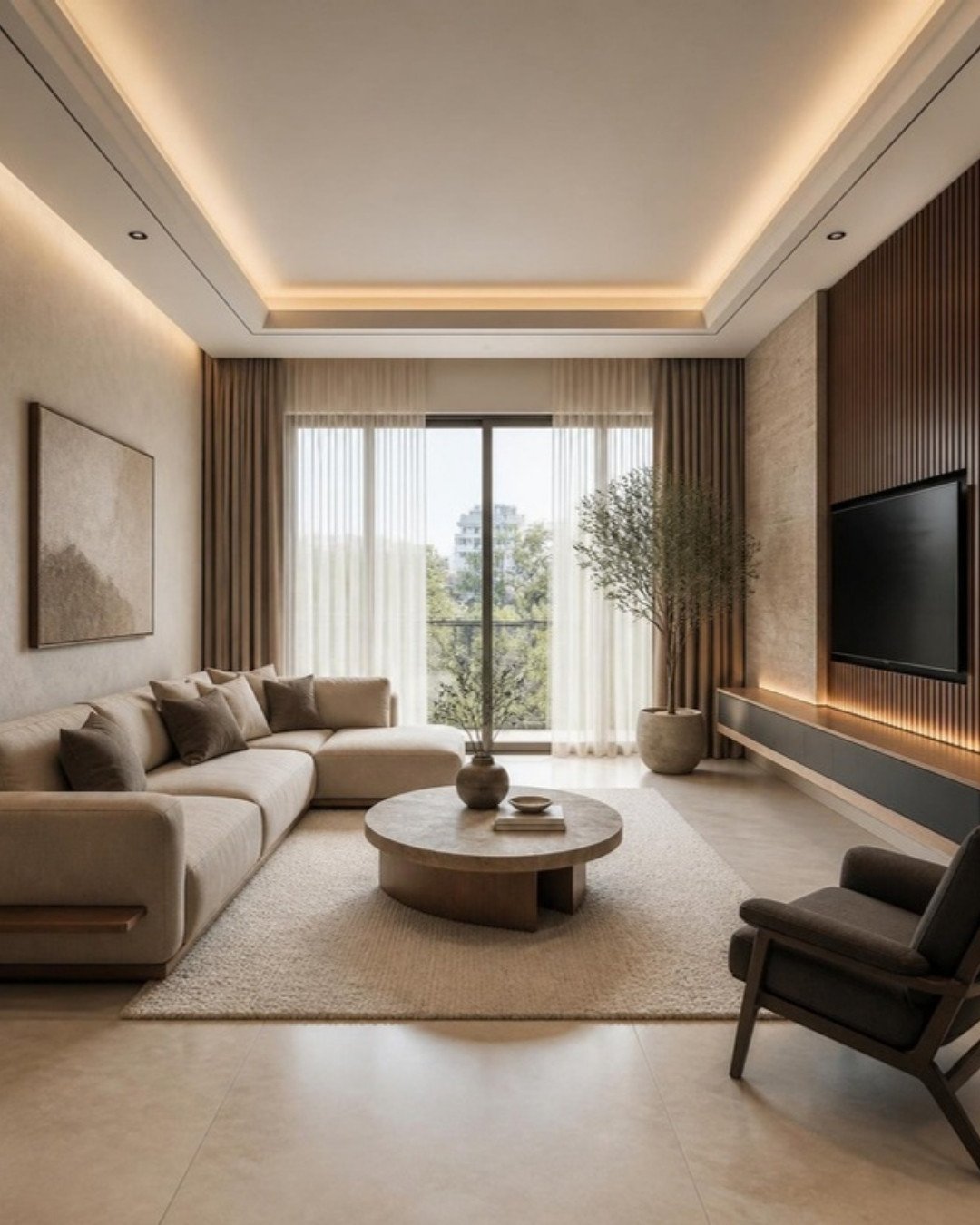
A dog or cat changes how a home is used. Floors get wet paws and the occasional accident, sofa corners become scratching posts, and the balcony turns into a favourite lookout. None of this means giving up a well-designed home. It means choosing finishes that forgive, planning a few dedicated spots and closing off the real hazards. This guide covers what to decide while your interiors are still on paper, since that is when these choices are cheapest to make.
One caveat: this is interior design guidance. For anything concerning your pet’s health, such as toxic plants, diet or joint problems, please ask your veterinarian.
Think about your pet’s routine first
Walk through an ordinary day from the animal’s point of view.
- Where does it enter after a walk, and where will the paws be wiped?
- Where does it eat, drink and sleep?
- For cats: where will the litter tray go, and how will it be ventilated?
- Which rooms are off limits, and how will you enforce that?
- Is the animal young and destructive, or older and less steady on its feet?
A large, energetic dog and an indoor cat need quite different homes, so the answers shape almost everything that follows.
Flooring that survives paws and puddles
The floor takes the most punishment. You want something that resists scratches, does not absorb liquid and gives enough grip for running paws.
Good choices
- Matt or lightly textured vitrified and porcelain tiles: hard-wearing, non-absorbent and easy to mop. A matt surface gives better grip than a polished one and hides paw prints.
- Natural stone with a honed finish: granite and similar dense stones cope well. Polished marble is softer, can etch when urine is left on it and is slippery for dogs.
- Good-quality vinyl or SPC flooring: warmer and quieter underfoot, with a little more grip. Check the manufacturer’s stated wear layer and water resistance before choosing.
Use with care
- Solid and engineered wood: beautiful, but claws mark the surface and standing liquid can damage it. If you love wood, consider it for a bedroom the pet rarely uses.
- Laminate flooring: the surface resists scratches reasonably, but joints can swell if accidents are not wiped up quickly.
- Wall-to-wall carpet: holds hair and odour and is hard to clean thoroughly.
Details that help
- Use narrow grout joints and a stain-resistant epoxy grout in a mid-tone; white cement grout discolours quickly.
- Choose a floor colour close to your pet’s coat if shedding bothers you. A black Labrador on an ivory floor means daily sweeping.
- Older dogs often struggle on slippery floors. Washable runners with anti-slip backing along their usual route give them confidence.
Scratch-resistant finishes for furniture and walls
Shutters, wall panels and the lower half of walls are within reach of claws, noses and wagging tails. Finish choice here makes a visible difference after a year or two.
Cabinet and wardrobe shutters
- High-pressure laminate is the most forgiving everyday finish: hard, wipeable and economical to replace panel by panel. Textured or matt laminates hide minor marks better than high gloss.
- Acrylic and high-gloss surfaces show every scratch and nose print at pet height. Keep them for wall units and upper cabinets.
- PU paint looks seamless but chips can show and need professional touch-up.
- Veneer is real wood and marks like wood. Use it above the reach of the animal or accept the patina.
Our comparison of PU, acrylic and laminate finishes goes into durability and maintenance in more detail, and the materials page lists what we typically specify.
Walls and corners
- Use a washable emulsion on walls, so that marks from a damp dog leaning against them wipe off.
- Consider a dado of tile, laminate panelling or a tougher paint finish up to about a metre in the entrance and passage.
- Protect exposed corners with a neat metal or wooden corner guard where a cat is likely to scratch.
- Avoid delicate textured wallpaper at low level; it is irresistible to cats.
Furniture construction
- Raise furniture on legs high enough to clean underneath, or take it down to the floor with a closed plinth. The awkward gap in between collects hair and lost toys.
- Choose metal or solid wood legs over wrapped or veneered ones, which chew and scratch easily.
- Fit positive latches or push-to-open catches with a firm hold on the cupboards holding food, medicines and cleaning products. Clever pets learn to open ordinary handles.
Fabrics: sofas, curtains and bedding
No fabric is completely pet-proof, but some are far more tolerant than others.
- Tight weaves win. Closely woven polyester blends, microfibre and performance fabrics resist snagging and release hair more easily. Loose weaves, boucle and anything with loops will catch claws.
- Leatherette and leather wipe clean and do not hold hair, but claws can puncture or scratch them. They suit calm dogs better than cats.
- Avoid velvet with a long pile and delicate silks on anything the pet will climb on.
- Removable, washable covers on seat cushions are the single most practical feature. Ask for zips on all cushions.
- Pattern and mid-tones hide hair and marks better than flat, very dark or very light colours.
- Curtains should stop a little above the floor rather than pooling on it, and blinds with dangling cords should have the cords secured out of reach.
Give the animal its own approved place on the sofa with a washable throw, and provide a proper scratching post beside the piece of furniture your cat favours. Redirecting behaviour works better than trying to defend every surface.
Balcony and window safety
This is the part of the home where design is about safety rather than convenience, particularly in high-rise apartments.
- Close the gaps. Check the spacing between railing bars and the gap below the bottom rail. A small dog or a cat can squeeze through an opening that looks narrow. Glass railings remove the gaps but check the fixing and height.
- Enclose for cats. Cats climb and jump, so a railing alone is not enough. Fit a sturdy net or grille that closes the balcony fully, including the top, fixed by an installer who uses proper anchors. Check your apartment association’s rules on facade changes first.
- Remove launch pads. Keep chairs, planters and storage boxes away from the railing so they cannot be used as a step up.
- Windows: fit strong mesh or grilles on windows that are left open. Ordinary mosquito mesh is not designed to stop a determined cat.
- Flooring and shade: use an anti-skid tile outdoors, make sure water drains away, and provide shade and a water bowl, as balcony floors get very hot in summer.
- Plants: several common ornamental plants are harmful to pets if chewed. Ask your vet for a list before buying planters.
Feeding, grooming and sleeping nooks
Built-in spots for the pet’s things keep the home tidy and are simple to include when the woodwork is being designed.
Feeding station
- A pull-out drawer or an open niche at the base of a kitchen or utility cabinet for bowls, lined with a waterproof laminate or a removable steel tray.
- A tiled or stone floor patch below, since water bowls spill.
- An airtight bin for dry food in a tall pull-out nearby, with a hook for the measuring scoop.
Entry and grooming
- A shallow drawer or hooks near the main door for leashes, harnesses, waste bags and a paw towel.
- If you have a utility area, a hand shower at low level over a floor drain makes washing muddy paws easy. A raised wash platform saves your back with smaller dogs.
- A closed cabinet for shampoos, brushes and medicines, well out of reach.
Beds, crates and litter
- An open niche under a console, window seat or staircase makes a snug bed space. Leave it ventilated and line it with laminate so it can be wiped.
- For cats, wall-mounted shelves and a perch near a window satisfy the urge to climb without sacrificing your curtains.
- A litter tray can sit inside a ventilated cabinet with a cat-sized opening, ideally in a utility area or bathroom with an exhaust fan. Use a moisture-resistant board here; our guide to plywood grades explains which boards suit damp locations.
Small things that prevent big problems
- Conceal cables behind TV units and study tables or run them in trunking; puppies and kittens chew wires.
- Place sockets a little higher in rooms used by pets, and use shuttered sockets.
- Choose bins with lids, or put the kitchen bin inside a pull-out.
- Plan a half-height gate or a sliding door to keep the pet out of the kitchen or pooja space when needed.
- Add good exhaust ventilation and openable windows; fresh air does more for pet odour than any fragrance.
- Keep fragile decor on higher shelves or behind glass, especially within tail-height.
If you are planning a complete home, tell your designer about your pets at the first meeting so that these details are built into the layout rather than added afterwards. Our overview of apartment interior design in Bangalore describes how that planning stage usually runs.
Frequently asked questions
Matt or lightly textured vitrified tiles are the most practical all-round choice: they resist scratches, do not absorb liquid and offer better grip than polished surfaces. Good-quality vinyl is a warmer alternative.
Tightly woven fabrics without loops, such as microfibre or dense polyester blends, are the least tempting to scratch and the easiest to clean. Provide a scratching post next to the sofa as well.
At low level, generally yes. Matt or textured laminate hides small scratches and smudges, whereas glossy acrylic shows them clearly. Acrylic remains fine for upper cabinets.
Fully enclose it with a properly anchored net or grille, including the top, keep furniture away from the edge and check society rules before installation. A railing by itself will not contain a cat.
Can pet-friendly interiors still look premium?
Yes. Most of the choices involved, such as matt tiles, textured laminates, performance fabrics and built-in niches, are standard in well-designed homes. The difference lies in where each finish is used.
Planning your interiors? Book a free design consultation or WhatsApp us on +91 88845 55998.