
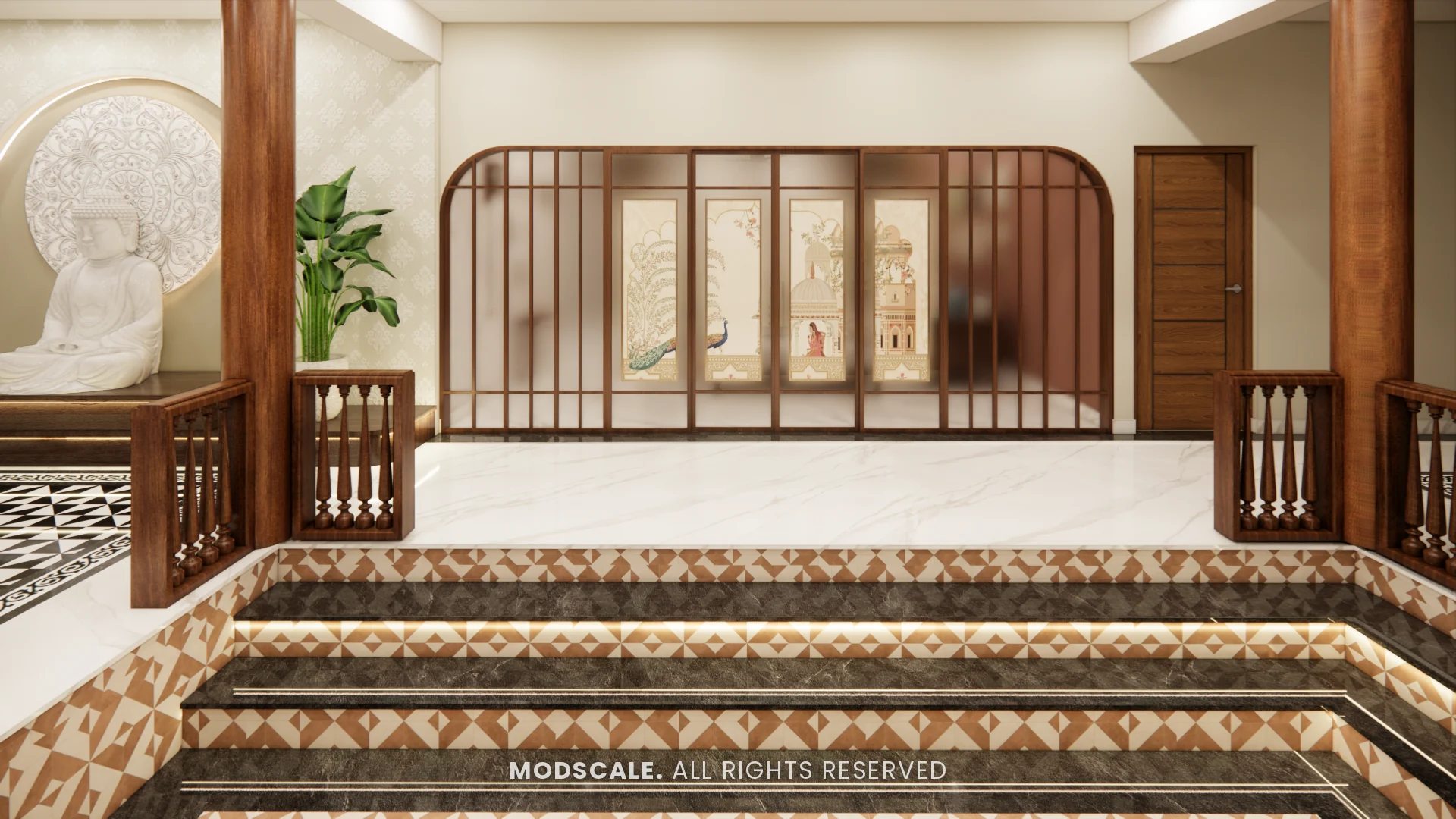
Biophilic design connects people with nature indoors. In an apartment, that means maximising daylight and cross-ventilation, keeping views open, adding living plants and vertical gardens, using natural materials such as wood, stone, cane, jute, clay and linen, choosing earthy colours and organic shapes, and adding the sound or sight of water where practical. Designer surveys for 2026, such as Fixr’s bathroom report, list biophilic design among the top trends.
In this guide
Bengaluru’s climate suits biophilic ideas well: mild temperatures, good light and a long growing season. You do not need a villa courtyard to try them; balconies, windows and material choices do most of the work. For related ideas, see small balcony design ideas.
The core principles
| Principle | In an apartment |
|---|---|
| Daylight and air | Light curtains, clear windows, cross-ventilation |
| Views of nature | Furniture arranged to face windows or balconies |
| Living plants | Indoor plants, planters on ledges, vertical gardens |
| Natural materials | Wood-tone finishes, stone, cane, jute, linen, clay |
| Natural patterns and forms | Curves, leaf motifs, irregular textures |
| Water | A small fountain or urli with flowers |
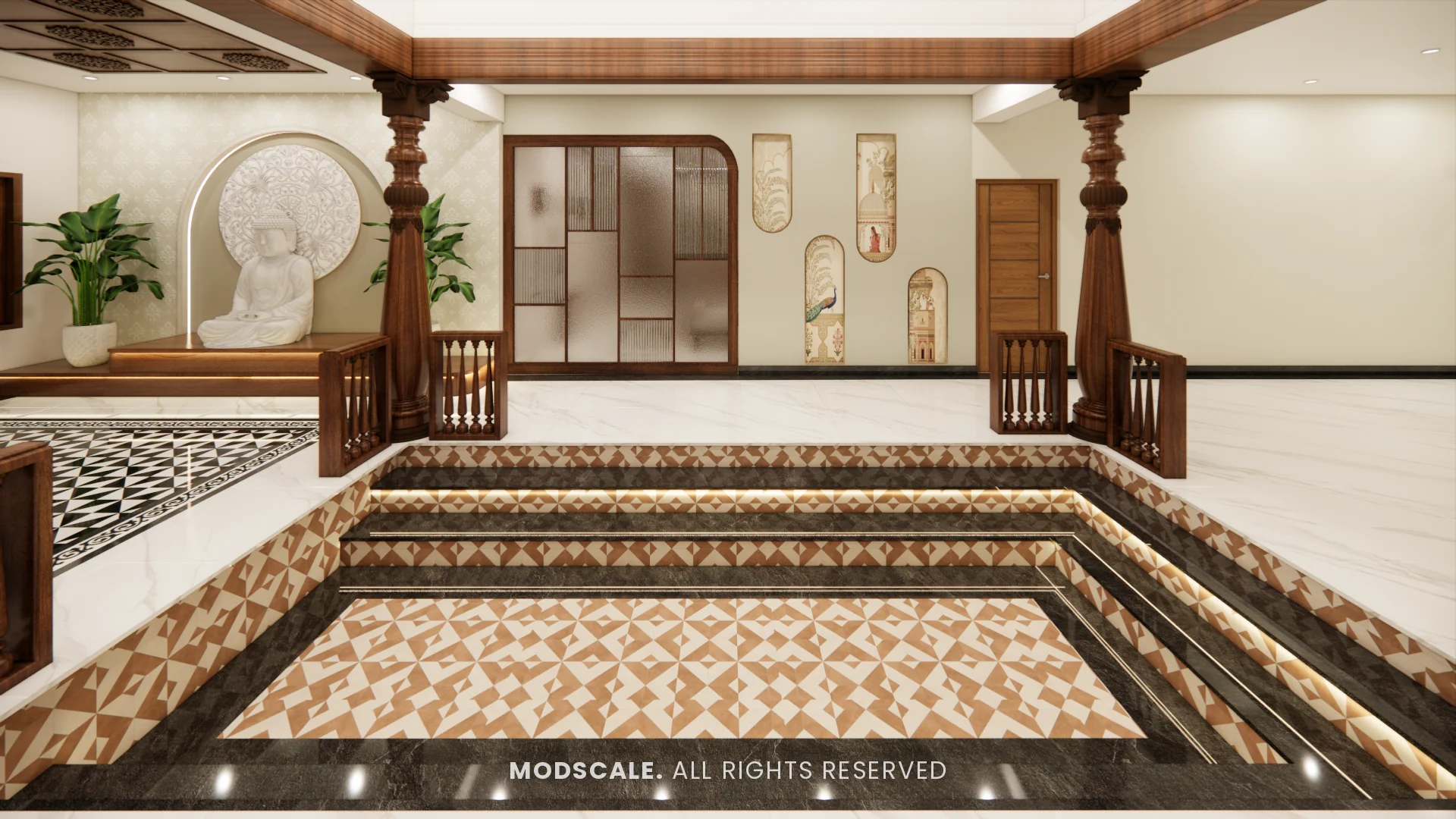
Room-by-room ideas
- Living room: a plant cluster near the window, cane or wood furniture, a jute rug and a botanical wall.
- Bedroom: linen bedding, wood headboard, a snake plant or ZZ plant, blackout plus sheer curtains.
- Kitchen: herbs on the window ledge, wood-look open shelf, stone-look counter.
- Bathroom: humidity-loving plants near the window, warm stone-look tiles.
- Balcony: vertical planters, timber-look deck tiles, a seating nook.
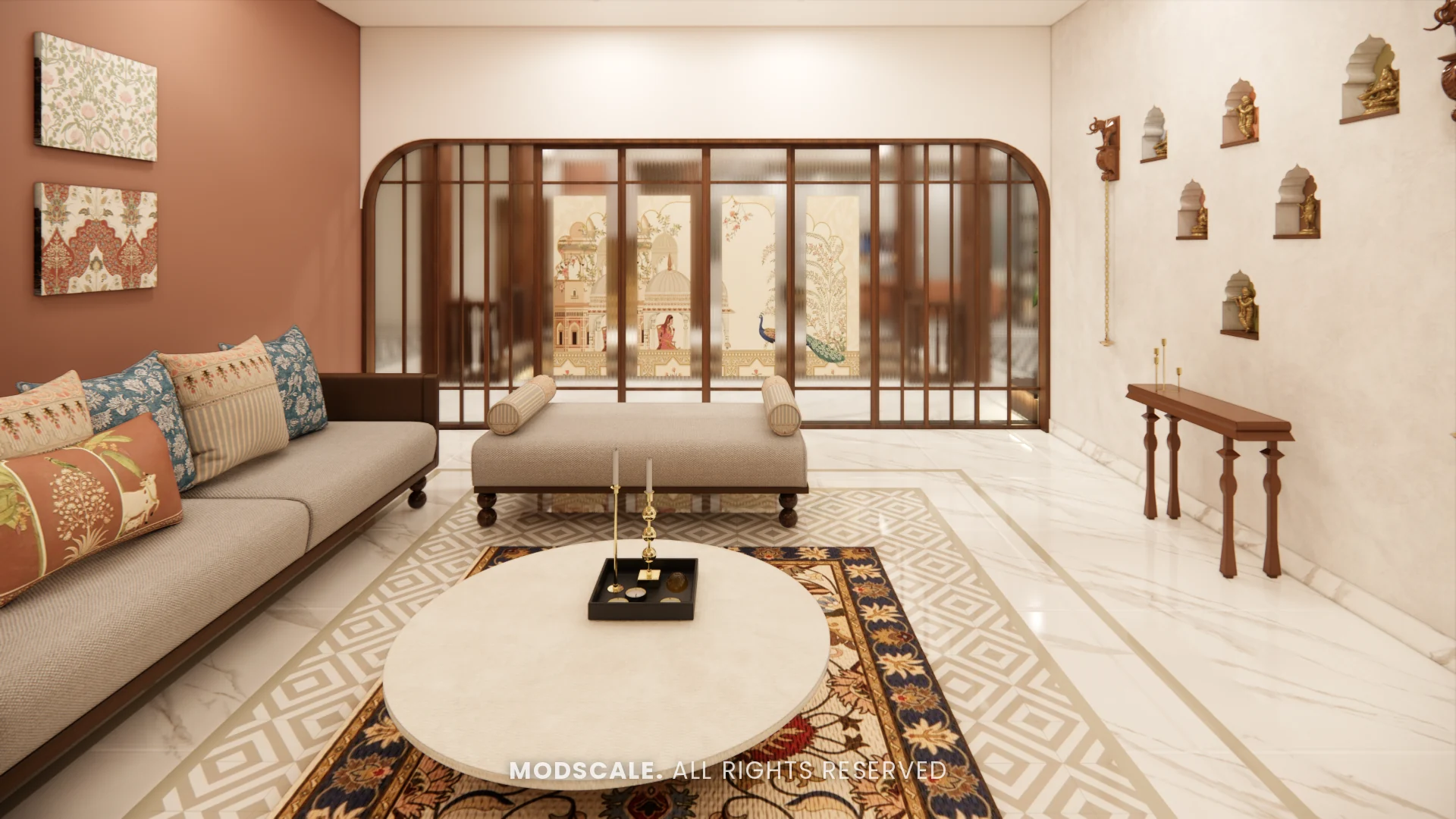
Natural materials that work in Bengaluru
| Material | Use | Care note |
|---|---|---|
| BWP plywood with wood-tone laminate or veneer | Wardrobes, TV units, panelling | Handles monsoon humidity |
| Cane and rattan | Chairs, shutters, lights | Keep away from rain |
| Stone and terrazzo | Counters, flooring, accents | Seal porous stone |
| Jute and cotton | Rugs, curtains | Air in dry weather |
| Clay and terracotta | Planters, tiles, decor | Use saucers indoors |
More on materials: modular kitchen materials.
Plants that suit apartments
Low-light tolerant plants such as snake plant, ZZ plant, pothos and peace lily suit interiors; areca palm and rubber plant need brighter spots. Group plants rather than spreading single pots, and use self-watering planters if you travel often.
Never place planters directly on wooden furniture or laminate. Use a tray to protect the surface from water rings.
Keeping it practical
- Start with light and layout before buying plants.
- Choose two or three natural materials and repeat them across rooms.
- Plan drainage and waterproofing before adding planters to balconies.
- Keep maintenance realistic: fewer healthy plants beat many struggling ones.
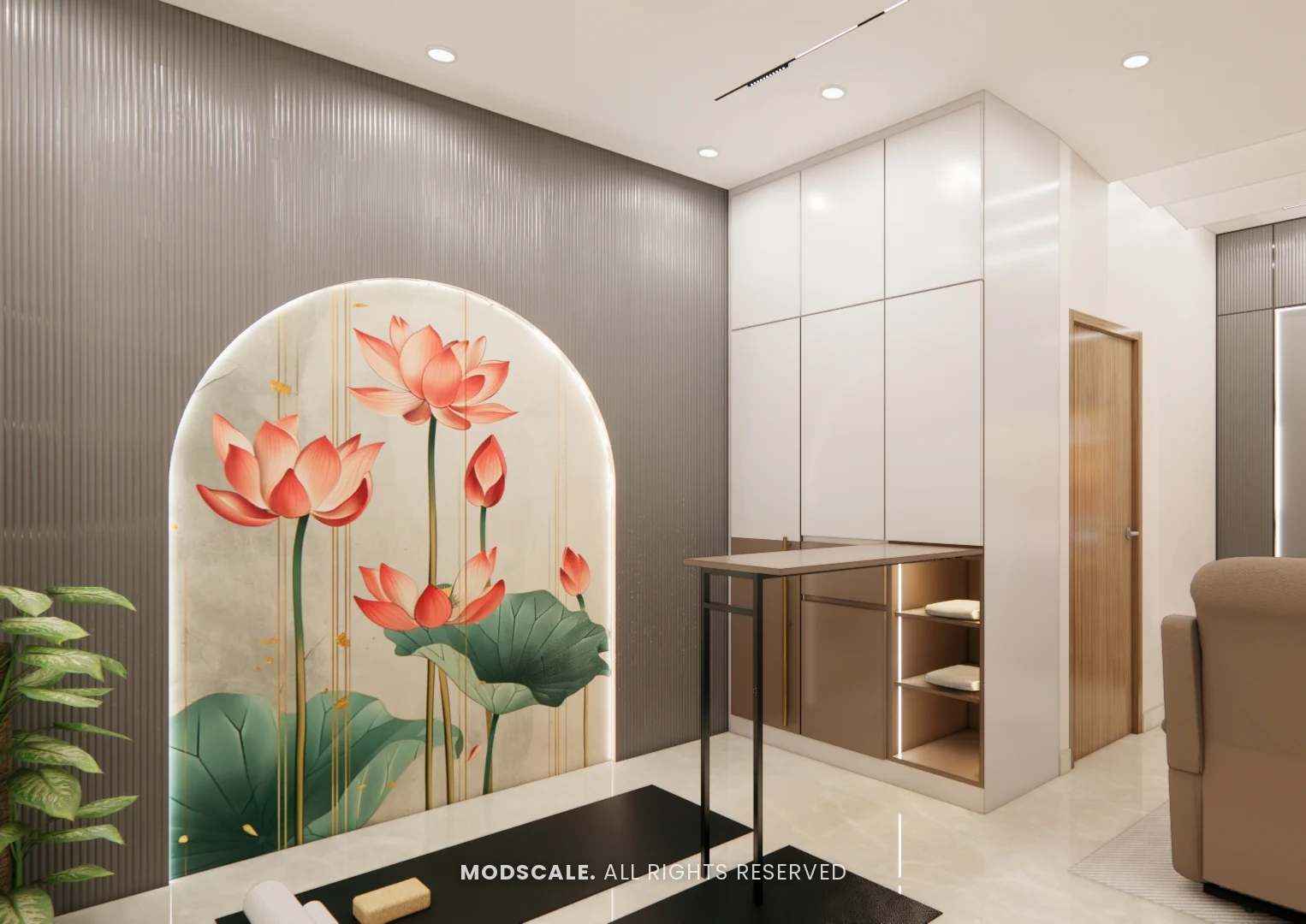
Getting started: a simple plan for an apartment
Biophilic design does not need a full renovation. You can bring it into an existing flat in stages, starting with the changes that make the biggest difference to how a room feels.
- Open up daylight. Remove heavy curtains from the main windows, switch to sheer layers and keep the area in front of the window free of tall furniture.
- Add one living element per room. A large potted plant in the living room, a herb shelf near the kitchen window and a small trailing plant in the bedroom are enough to begin with.
- Bring in natural materials. Replace a plastic side table with wood or cane, add a jute or cotton rug, and choose linen or cotton for cushions and curtains.
- Use nature-inspired colours. Soft greens, sand, clay and warm whites work well with Bengaluru’s light.
- Create a view. If your balcony is visible from the living room, treat it as part of the room with planters, a small seat and warm outdoor lighting.
Common mistakes
- Buying many small plants and placing them where they get no light. Fewer, larger plants in the right spot look better and survive longer.
- Placing planters directly on wooden flooring or against laminated joinery without a tray. Water marks and swelling are avoidable with saucers and a small gap from the wall.
- Using artificial plants everywhere. A few good-quality ones in dark corners are fine, but real plants and natural materials are what give the feeling of calm.
Plan plant positions with your electrician and carpenter: a balcony tap, a shelf near a window and a light on a timer make a green corner much easier to maintain.
Frequently asked questions
What is biophilic interior design?
Design that connects people to nature indoors through daylight, plants, natural materials, natural forms and views.
Can biophilic design work in a small apartment?
Yes. Open windows, a few plants, natural materials and earthy colours give most of the effect.
Which plants are best for biophilic interiors?
Snake plant, ZZ plant, pothos and peace lily tolerate low light; areca palm and rubber plant like brighter spots.
Is biophilic design expensive?
Not necessarily. Plants, textiles and paint are low cost; wood-tone finishes and stone are part of normal interior choices.
Is biophilic design a 2026 trend?
Yes. It appears in several 2026 trend reports, including designer surveys on bathrooms.
Do plants damage interiors?
Only if water reaches wood or laminate. Use trays and keep planters off joinery.