
The wall between your kitchen counter and the upper cabinets, the dado, takes more punishment than any other wall in the house: oil, turmeric, steam and daily scrubbing. Kitchen wall tiles protect it and set the kitchen’s character. This guide covers simple and modern kitchen wall tiles design ideas that suit Indian cooking, and the practical choices that keep them looking good for years.
How much of the wall to tile
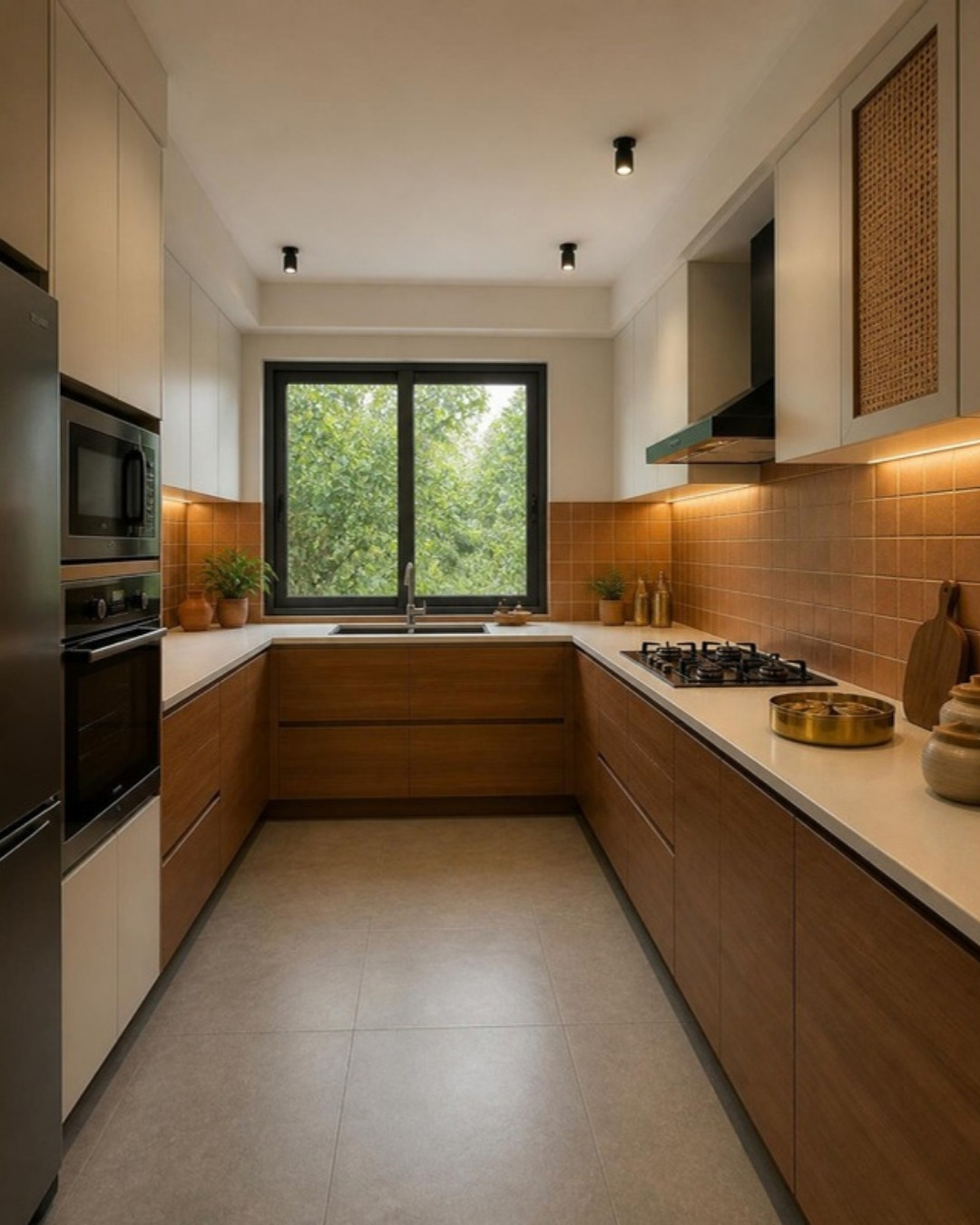
In a modular kitchen, tile the full height between the counter and the underside of the wall cabinets, usually around 600 mm. Behind the hob, tile up to the chimney. Where there are no upper cabinets, take the tiles to at least 1200 to 1500 mm above the floor, or to the ceiling for a cleaner look. Tiling the whole kitchen wall is rarely needed once cabinets cover most of it.
Simple kitchen wall tiles design ideas
Plain white or off-white
Never dates, makes a small kitchen feel larger and suits any cabinet colour. Choose a warm white if your cabinets are wood or beige, a cooler white with grey or blue shutters.
Subway tiles
Small rectangular tiles laid in a brick pattern. Classic, easy to source and forgiving of slightly uneven walls. Try them stacked vertically for a modern twist.
One colour to match the shutters
A soft sage, grey or blue dado picking up the cabinet colour gives a calm, coordinated kitchen. Keep the counter neutral if you do this.
Large-format slabs
Big tiles, or a single slab of quartz or sintered stone, give an almost seamless backsplash with very few grout lines, which is the easiest surface to keep clean. They cost more and need careful handling.
Modern kitchen wall tiles design ideas
- Marble-look tiles for a premium look without the staining risk of real marble.
- Fluted or 3D textured tiles on one short wall, such as a breakfast counter, rather than behind the hob where texture traps grease.
- Hexagon and fish-scale tiles as a feature panel; keep the rest plain.
- Terrazzo-look tiles for a playful, contemporary kitchen.
- Two-tone layouts, for example a plain dado with a patterned panel behind the hob only.
Matte or glossy?
Glossy tiles bounce light and wipe clean easily, which suits most Indian kitchens. Matte tiles look softer and more modern but show oil marks more; choose a satin or easy-clean matte finish if you prefer that look. Avoid heavily textured tiles behind the hob.
Grout matters as much as the tile
Cement grout stains yellow with turmeric and oil. Epoxy grout costs more but resists stains and moisture, and is worth it in a kitchen. Choose a grout colour close to the tile, or slightly darker, so lines stay neat as they age.
Colours that work in Indian kitchens
- White, ivory and light grey: safe, bright and easy to pair.
- Sage and olive greens: warm and current, good with wood-look shutters.
- Soft blues: fresh in a south- or west-facing kitchen.
- Terracotta and warm beige: earthy, suits traditional and tropical homes.
For full colour pairings with shutters and counters, see modular kitchen colour combinations.
Plan tiles with the rest of the kitchen
Fix the sockets, the chimney position, the window and the counter material before choosing tiles, so cut lines fall in sensible places. Our guides to modular kitchen design for Indian cooking, kitchen countertop materials and small kitchen design ideas cover those decisions.
Frequently asked questions
Glossy or easy-clean ceramic or vitrified tiles in a light colour, set with epoxy grout, suit most Indian kitchens because they resist oil and turmeric stains and wipe clean easily.
In a modular kitchen, tile from the counter to the underside of the wall cabinets, and up to the chimney behind the hob. Without upper cabinets, go to at least 1200 to 1500 mm above the floor.
Large tiles or a single slab mean fewer grout lines, so they are easier to keep clean. They cost more and need careful installation.
Yes, if the budget allows. Epoxy grout resists stains and moisture far better than cement grout, which yellows in Indian kitchens.
Planning your interiors? Book a free design consultation or WhatsApp us on +91 88845 55998.