
Every interior project reaches the point where someone asks whether a wall should be painted, papered or textured. All three can look excellent, and all three can disappoint if they are used on the wrong wall. This comparison looks at how wallpaper, plain paint and texture finishes behave in a Bangalore apartment, with attention to humidity, upkeep, the factors that drive cost, and how to choose a feature wall.
The three options in brief
Paint
Plain emulsion paint is the default wall finish in Indian homes. It is available in any colour, in matt to gloss sheens, and in tiers from economy to top-end washable products. It is the easiest finish to repair and to change.
Wallpaper
Wallpaper is a printed or embossed sheet pasted to the wall. The common types are:
- Paper-based: printed paper, sometimes with a light protective coat. The most delicate type.
- Vinyl or vinyl-coated: a plastic surface layer that can be wiped and tolerates humidity better.
- Non-woven: a blend of fibres that is dimensionally stable, breathable and easier to hang and to strip.
- Fabric, grasscloth and other natural textures: rich to look at, but delicate and harder to clean.
- Custom-printed murals: a single image or pattern printed to the wall’s dimensions.
- Peel-and-stick: self-adhesive sheets aimed at renters and quick makeovers.
Texture finishes
Texture finishes are thicker coatings or special-effect paints worked on the wall with tools to create a pattern or a tactile surface. They range from roller and comb patterns in textured paint, through metallic and pearlescent effects, to trowel-applied finishes such as lime-based plasters, stucco and micro-concrete looks. The result depends heavily on the applicator’s hand.
Durability in Bangalore’s humidity
Bangalore does not have coastal humidity, but the monsoon months are damp, and many apartments have at least one wall that takes in moisture: an external wall facing the rain, a wall shared with a bathroom, or a top-floor wall beneath a terrace. How each finish copes with moisture is the most important practical difference between them.
Paint
A good emulsion over cement-based putty tolerates normal seasonal humidity well. On a wall with actual seepage, paint blisters and flakes, but the damage is visible early and the repair is straightforward once the leak is fixed: scrape, re-putty, prime and repaint the affected area.
Wallpaper
Wallpaper is the most sensitive of the three. Moisture coming through a wall weakens the adhesive, lifts the seams and can allow mould to grow unseen behind the sheet. Vinyl-faced papers resist moisture on the room side, but that does not help if the damp is coming from within the wall; an impermeable surface can even trap it. Wallpaper is therefore best kept to dry internal walls, away from bathrooms, kitchens and window walls that take rain.
Texture
Texture coatings are generally thicker and more robust than plain paint, and they mask hairline cracks and minor unevenness. They still sit on the same wall, so serious dampness will eventually push them off too, and a damaged textured patch is hard to repair invisibly. Mineral finishes such as lime plaster are often described as breathable, but performance varies by product and system; ask the supplier for the technical specification before using one on a damp-prone wall.
The rule that applies to all three: fix the moisture first. No wall finish is a waterproofing treatment.
Cleaning and everyday wear
- Paint: washability depends on the tier. Better emulsions can be wiped with a damp cloth and mild soap. Scuffs can be touched up, though touch-ups on older or dark walls may show.
- Wallpaper: vinyl surfaces wipe clean. Paper and fabric types should only be dusted. Tears, pet scratches and peeling corners are the usual failures, and children find loose seams irresistible.
- Texture: the peaks and hollows hold dust, so deep textures need periodic brushing or vacuuming. Smooth trowelled finishes are easier to keep clean than heavy relief patterns.
Repair and changing your mind
This is often the deciding factor.
- Paint is the easiest to change. A new colour is a matter of sanding, priming and recoating.
- Wallpaper can be replaced a drop at a time if you have kept spare rolls from the same batch, since shades vary between print runs. Removing it is usually manageable with non-woven types, and messier with older paper-backed ones, which can pull putty off the wall. Expect some wall repair before repainting.
- Texture is the hardest to undo. Going back to a smooth wall means grinding or scraping the pattern down and re-levelling with putty, which is dusty and labour-intensive. Choose a texture you are confident of living with.
How they look
Paint gives colour. It is the calmest backdrop and lets furniture, art and lighting take attention. Wallpaper gives pattern and imagery that nothing else can: botanical prints, geometrics, chinoiserie, murals, children’s themes. Texture gives depth and a hand-made quality; it responds to light, looking different by day and under grazing light at night.
A useful way to think about it: if you want a wall to recede, paint it. If you want it to tell a story, paper it. If you want it to feel like a material, texture it.
What drives the cost of each
We have not quoted rupee figures here. Prices for all three span a very wide range depending on brand and specification, and a headline rate without those details is not a useful comparison. Instead, these are the factors to look at in a quotation.
Paint
- The paint tier and brand.
- The extent of putty and surface preparation needed.
- The number of coats and colours.
Wallpaper
- The roll price, which varies enormously between domestic prints and imported designer collections.
- Roll size and pattern repeat. Large repeats mean more wastage when matching drops.
- Wall preparation. Wallpaper needs a smooth, primed wall, so the putty work is not saved.
- Installation charges, and custom printing where applicable.
Texture
- The material system: a simple roller texture differs greatly from a multi-layer trowelled plaster.
- The skill of the applicator. Specialist finishes are labour-led.
- Top coats and sealers, which some finishes need for stain protection.
In general terms, plain paint is the most economical way to finish a large area, which is why wallpaper and texture are normally used on one wall rather than on all of them. For the wider picture, see our article on what drives interior cost.
Choosing and planning a feature wall
Pick the right wall
The feature wall should be the one the eye meets naturally: the wall behind the bed, behind the sofa, or at the end of the dining area. Avoid walls broken up by doors, windows and air-conditioner units, as the pattern will be chopped into pieces. Avoid external walls with any history of damp for wallpaper.
One per room
A feature wall works by contrast with the plain walls around it. Two treatments in one room compete. In an open living-dining space, treat the whole space as one room for this purpose.
Match the finish to the room
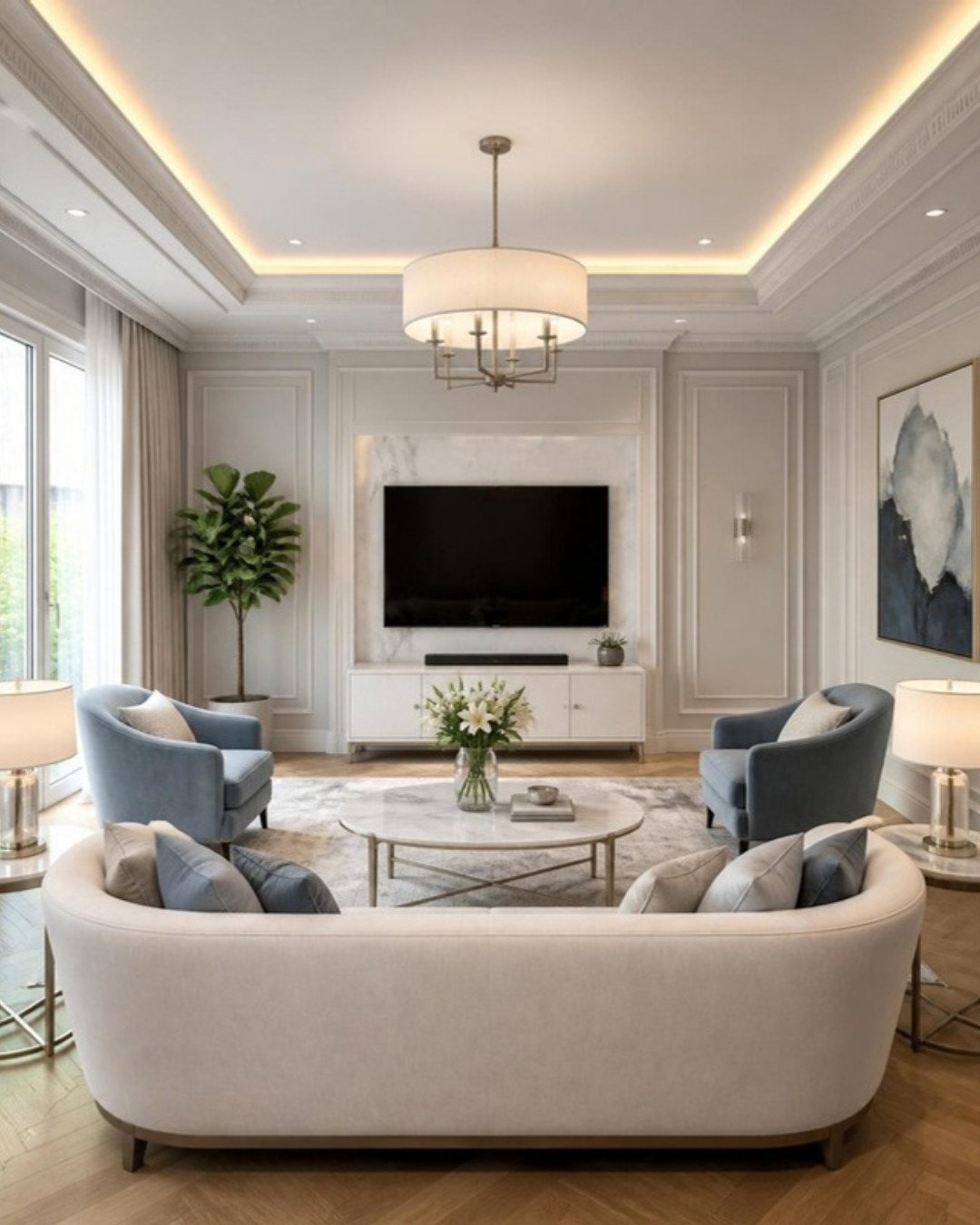
- Living room: texture or a restrained wallpaper behind the sofa. If the TV wall already has panelling, keep the remaining walls plain. See our living room design ideas.
- Master bedroom: wallpaper works well behind the bed, since the wall is dry, rarely touched and seen from a distance. Our bedroom design ideas show how it combines with a headboard.
- Children’s room: themed wallpaper is tempting, but tastes change quickly. Peel-and-stick or a single painted colour block is easier to update.
- Dining: texture with wall lights, or a mural.
- Foyer and passages: washable paint or a hard-wearing texture, as these walls get brushed against.
- Kitchen and bathrooms: tile and moisture-resistant paint. Wallpaper only in a well-ventilated powder room with no shower, and even then with a vinyl type.
Light it properly
Texture needs grazing light from a cove or wall washer to show its relief; under flat frontal light it can look like an uneven wall. Wallpaper with metallic inks changes under warm and cool light. Decide the feature wall and its lighting together; our lighting design guide covers the basics.
Always see a sample on the wall
Ask for a wallpaper sample large enough to show a full pattern repeat, and for a texture sample board made by the person who will apply it. Small swatches and screen images are unreliable.
A quick decision guide
- Choose paint if the wall is damp-prone, if you redecorate often, if the budget is tight, or if the room already has strong furniture and furnishings.
- Choose wallpaper if you want pattern or imagery on a dry internal wall that is not handled much, and you accept that it may need replacing sooner than paint.
- Choose texture if you want depth and a material feel, you are settled on the look for the long term, and you have access to a skilled applicator.
There is also a fourth route, wall panelling in wood, laminate or fluted profiles, which suits TV and bed-back walls and is usually planned together with the furniture.
Frequently asked questions
On a dry internal wall with proper preparation and a suitable adhesive, a good-quality wallpaper can serve well. On walls that take in moisture during the monsoon it is likely to lift at the seams or develop mould behind it, so choosing the right wall matters more than choosing the right paper.
Not well. Wallpaper shows whatever is beneath it, so the wall should be levelled with putty, sanded and primed first.
Texture coatings are usually thicker and hide minor cracks, and many are hard-wearing. They also gather dust in the relief and are difficult to patch or remove. Durability depends on the specific product, so check the manufacturer’s data.
Plain emulsion paint, in general. Wallpaper and texture are normally reserved for one feature wall per room, which keeps both cost and visual clutter under control.
Can I use peel-and-stick wallpaper in a rented flat?
It is designed for that purpose, but results depend on the paint beneath. On poorly bonded or low-grade paint it may pull the surface off when removed. Test a small piece in an inconspicuous corner and check with the owner.
Planning your interiors? Book a free design consultation or WhatsApp us on +91 88845 55998.