
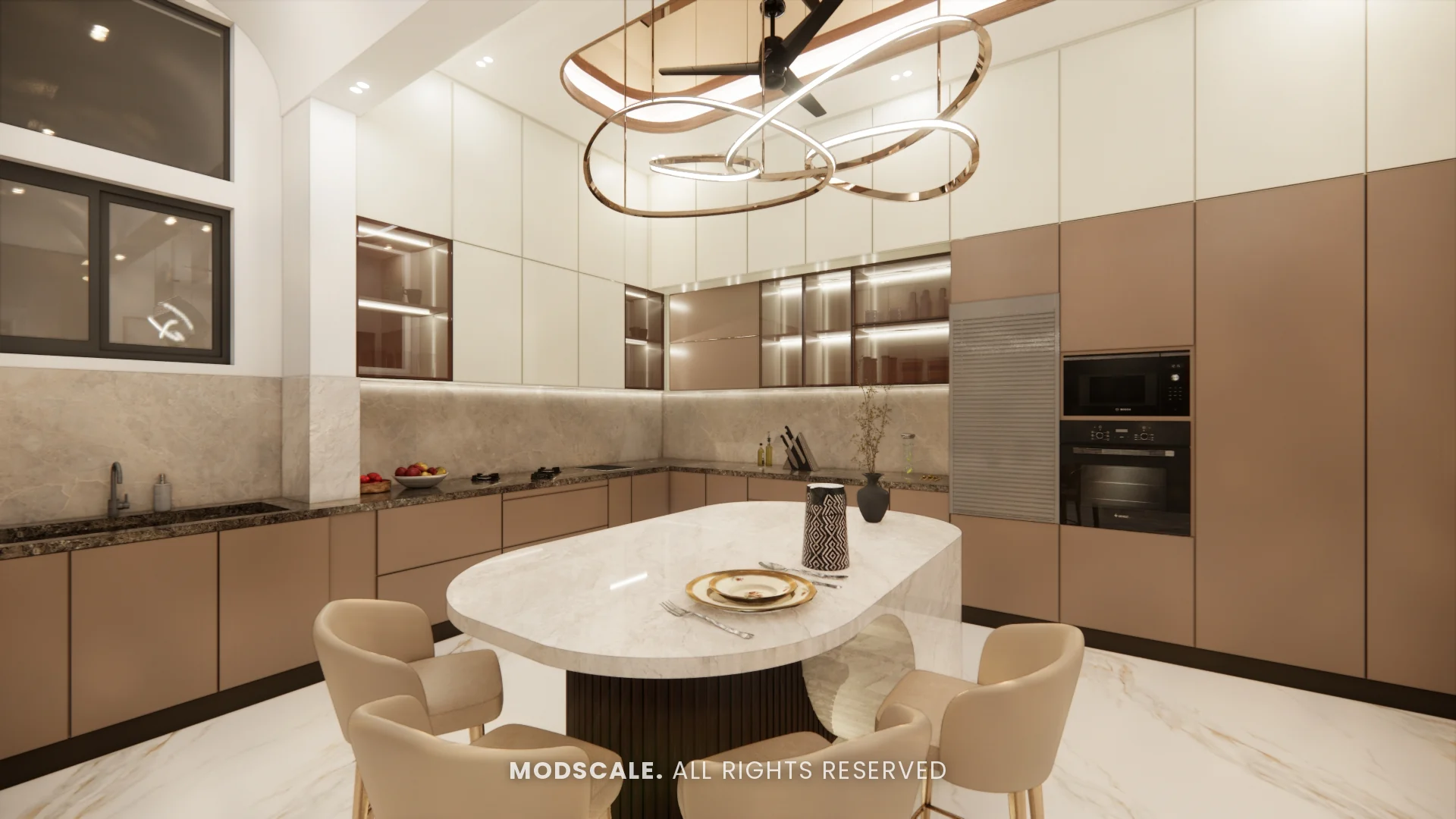
PVC boards do not absorb water and resist termites, which makes them attractive under sinks. But they are less rigid, hold hinges and screws less firmly and can sag under load or heat. BWP plywood is boiling-water-proof, stronger, holds hardware well and takes laminates, acrylic and PU. ModScale builds kitchen carcasses in BWP plywood.
PVC kitchens are often sold as fully waterproof. The question is whether the board is strong enough for daily use.
Comparison
| Factor | PVC board | BWP plywood |
|---|---|---|
| Water | Does not absorb water | Boiling-water-proof glue, edges sealed |
| Strength | Lower; can sag | High |
| Hardware holding | Weaker | Strong |
| Heat | Can deform near heat | Stable |
| Finishes | Limited | Laminate, acrylic, PU, veneer |
When PVC makes sense
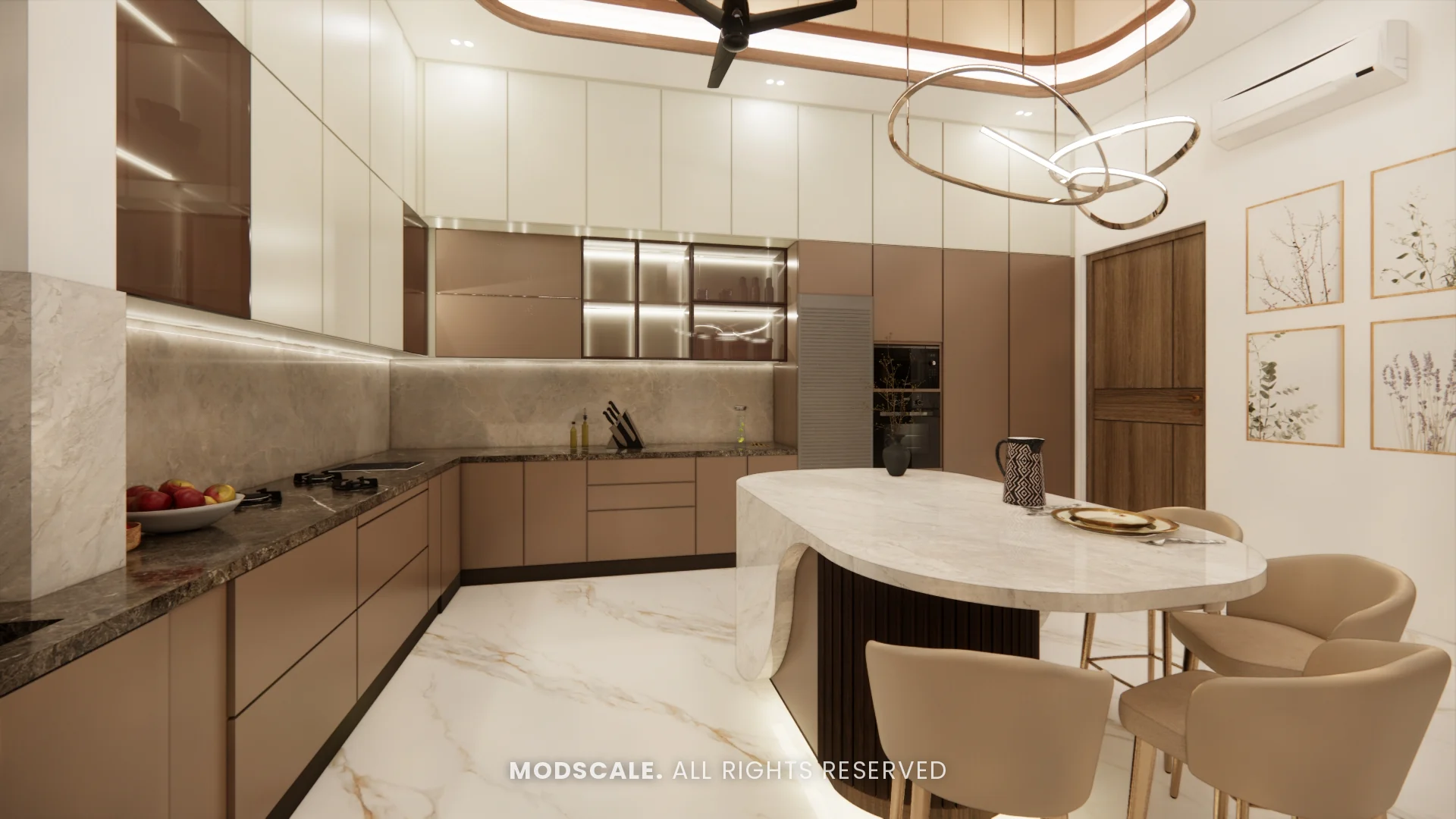
PVC can suit low-load, wet zones such as a sink base in a rental flat. For a long-term kitchen, BWP plywood with sealed edges is the stronger choice.
Whatever the board, edge-band every exposed edge and keep the sink cabinet ventilated.
Related
See kitchen accessories.
Frequently asked questions
Is PVC better than plywood for kitchens?
PVC resists water but is weaker; BWP plywood is stronger for long-term kitchens.
Do PVC cabinets sag?
They can under heavy load or heat.
Is BWP plywood waterproof?
It uses boiling-water-proof glue; edges must still be sealed.
Are PVC kitchens termite-proof?
Yes, PVC itself does not attract termites.
What does ModScale use?
BWP plywood for kitchen carcasses.