
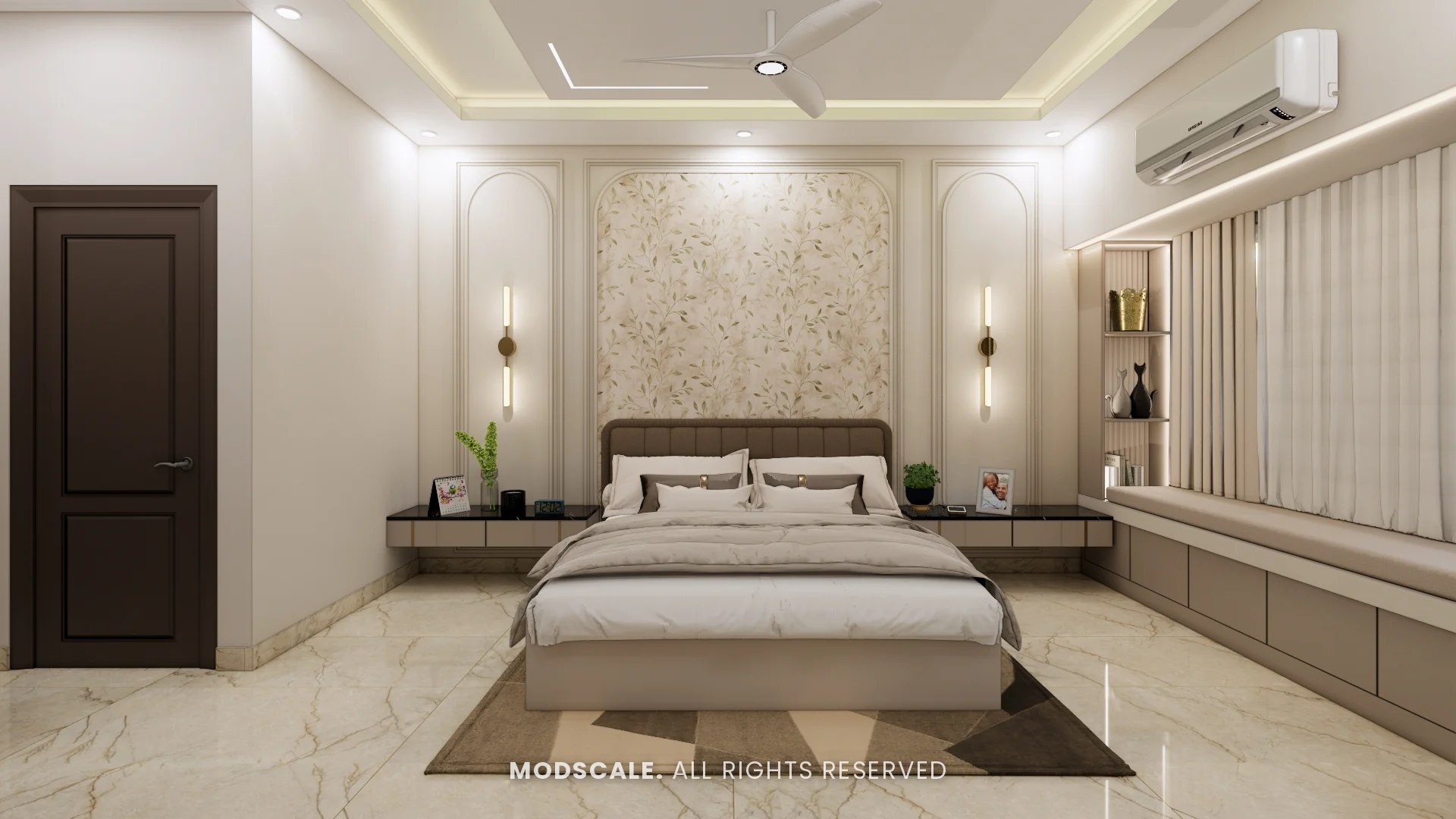
As a general guide: rooms up to about 75 sq ft (kitchens, small study rooms) suit a 900 mm (36 in) fan, rooms of about 75–110 sq ft a 1050 mm (42 in) or 1200 mm fan, standard bedrooms of about 110–160 sq ft a 1200 mm (48 in) fan, and larger rooms of about 160–250 sq ft a 1400 mm (56 in) fan or two fans. Keep the blades at least about 7–8 ft above the floor and use a shorter or longer downrod to suit the ceiling height and any false ceiling.
In this guide
Fan placement is one of the first things to fix when planning a false ceiling, because the fan hook and point decide the ceiling layout. Here is a simple sizing guide. For ceiling layouts with fans, see false ceiling designs with fan.
Fan size chart
| Room size (sq ft) | Example | Fan sweep |
|---|---|---|
| Up to 75 | Kitchen, small study, utility | 900 mm (36 in) |
| 75–110 | 10 × 10 ft room | 1050 mm (42 in) or 1200 mm |
| 110–160 | 10 × 12 to 12 × 12 ft bedroom | 1200 mm (48 in) |
| 160–250 | Master bedroom, living room | 1400 mm (56 in) |
| Above 250 | Large living-dining | Two fans, one per zone |
General guide; check the manufacturer’s recommendation. Room sizes: standard room sizes.
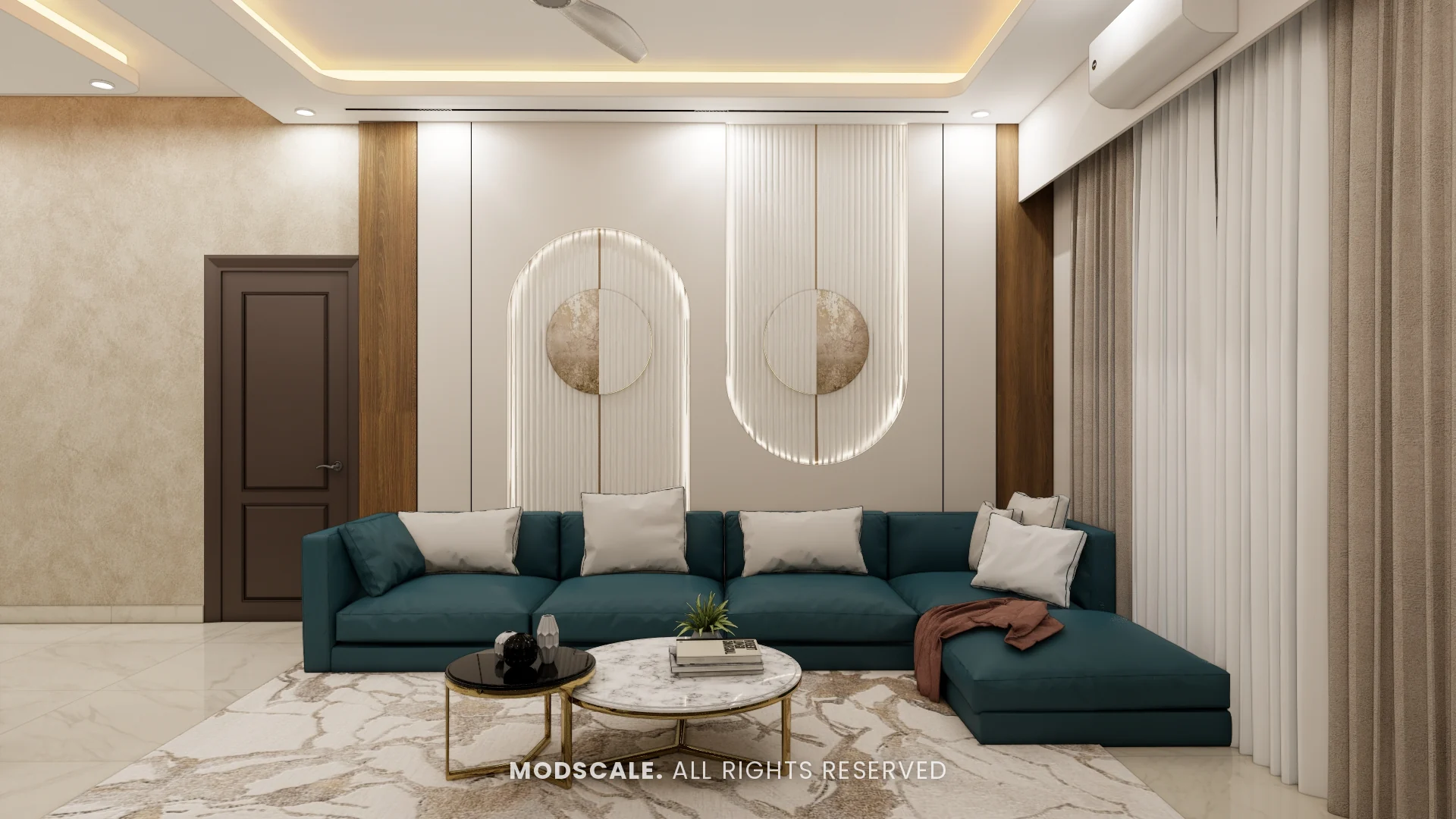
Mounting height and downrods
| Ceiling height | Approach |
|---|---|
| About 9 ft | Short downrod or flush (hugger) fan |
| About 10 ft (common in apartments) | Standard downrod supplied with the fan |
| About 11–12 ft | Longer downrod so blades sit around 8–9 ft |
| Double height | Long downrod or a fan on a lower ceiling zone |
Keep at least about 1 ft between the blades and the ceiling for good airflow, and keep blades clear of wardrobe lofts and cabinets.
Planning with a false ceiling
- Fix the fan hook to the slab, not to the false ceiling frame.
- Mark the fan point at the centre of the seating or bed area, not just the room centre.
- In living-dining rooms, plan one fan per zone.
- Keep cove lights and chandeliers clear of the blade sweep.
- Leave a neat ring or canopy cut-out around the downrod.
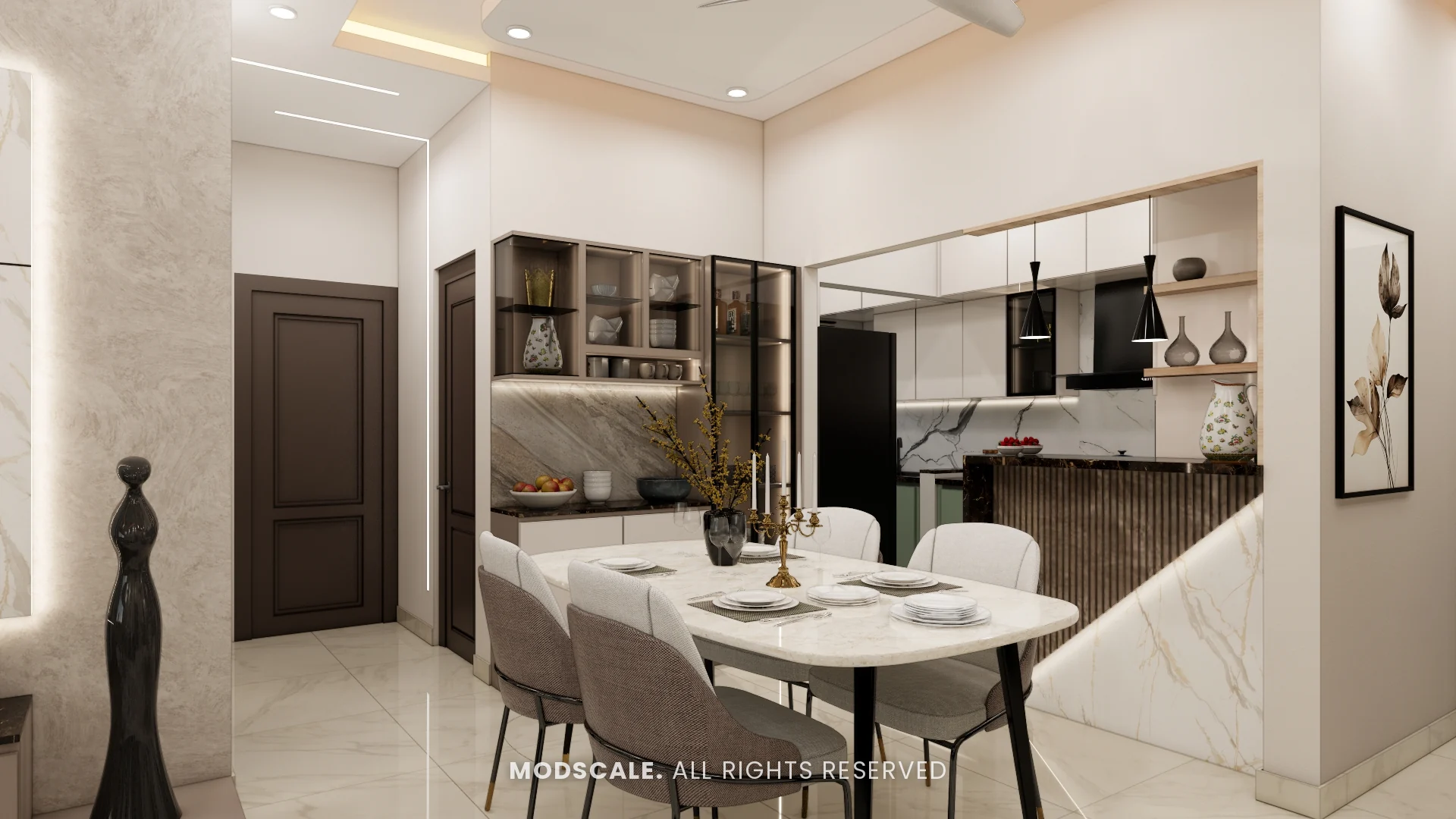
See false ceiling height guide.
Energy and noise
BLDC fans use noticeably less power than older induction fans and are quieter at low speeds, which suits bedrooms. Look for the BEE star rating on the box. Fans with remotes are convenient where switch boards are far from the bed.
Common mistakes with ceiling fans
A fan that is the right size can still perform poorly if it is placed or fixed badly. Keep these points in mind.
- Fan too close to a light or AC. A fan running under a pendant light causes a flicker effect, and a fan right in front of the AC throws its air back. Plan the positions together on one drawing.
- Hook not centred. In many flats the fan hook is fixed before the room layout is decided. If the bed or seating moves, consider shifting the hook during civil work.
- Short or long downrod by guesswork. Ask for the downrod length based on your ceiling height and the fan maker’s recommended clearance.
- Fixing a fan only to a false ceiling. The fan must hang from the slab hook or a proper structural support, with the false ceiling built around it.
- One fan for a long living-dining room. In a long room, two smaller fans spaced evenly often work better than one large one.
Quick checklist
- Fan positions marked with lights and AC on the ceiling plan.
- Slab hooks checked and placed where the fans will go.
- Regulator or remote type decided before switchboards are fixed.
Frequently asked questions
What size fan is best for a 10 × 12 ft bedroom?
A 1200 mm (48 in) fan suits most rooms of about 120 sq ft.
Which fan size is good for a kitchen?
A 900 mm (36 in) fan for most Indian kitchens, placed away from the hob flame.
Can I use one fan in a living-dining room?
Large living-dining rooms usually need two fans, one over each zone.
How high should a ceiling fan be?
Blades should be at least about 7–8 ft above the floor, with about 1 ft clearance below the ceiling.
Can a fan be fixed to a false ceiling?
No. The hook should be fixed to the concrete slab; the false ceiling only gets a neat cut-out.
Are BLDC fans worth it?
They use less power and are quieter at low speed, which helps in bedrooms.