
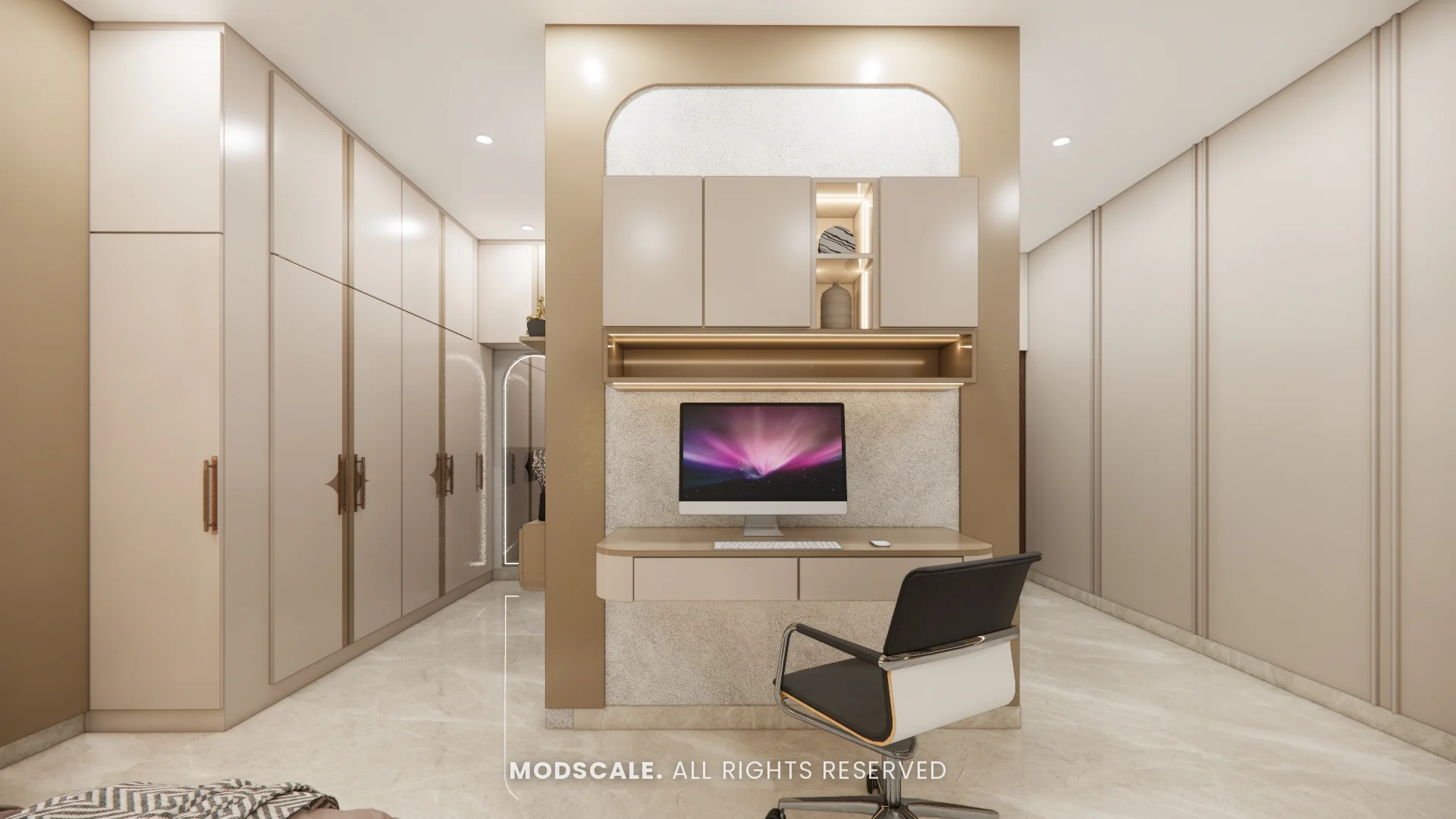
Particle board (chipboard) is made from wood chips and resin pressed into sheets, usually covered with a laminate. It is the cheapest board and fine for light, dry-area furniture, but it is weak at screw points, sags under load and breaks down quickly if wet. Plywood is stronger, holds hardware firmly and, in BWR/BWP grades, handles moisture. For built-in kitchens, wardrobes and bathroom units, plywood lasts far longer.
In this guide
Flat-pack furniture is usually particle board because it is cheap and machines well. Built-in interiors face more load and more moisture, which is where the differences matter.
Comparison
| Factor | Particle board | Plywood |
|---|---|---|
| Made from | Wood chips and resin | Cross-layered wood veneers |
| Strength | Low; sags on long spans | High |
| Screw holding | Weak, especially after re-fixing | Good |
| Moisture | Swells and crumbles | Good in BWR/BWP grades |
| Weight | Heavy for its strength | Lighter for its strength |
| Cost | Lowest | Higher |
| Typical use | Flat-pack, office furniture | Kitchens, wardrobes, built-ins |
How long does each last?
In dry rooms with little load, laminated particle board furniture can serve for years. In kitchens and bathrooms, or under heavy loads, it often fails at hinges and bottoms much sooner. Good-grade plywood, kept away from standing water, routinely lasts far longer in built-in interiors.
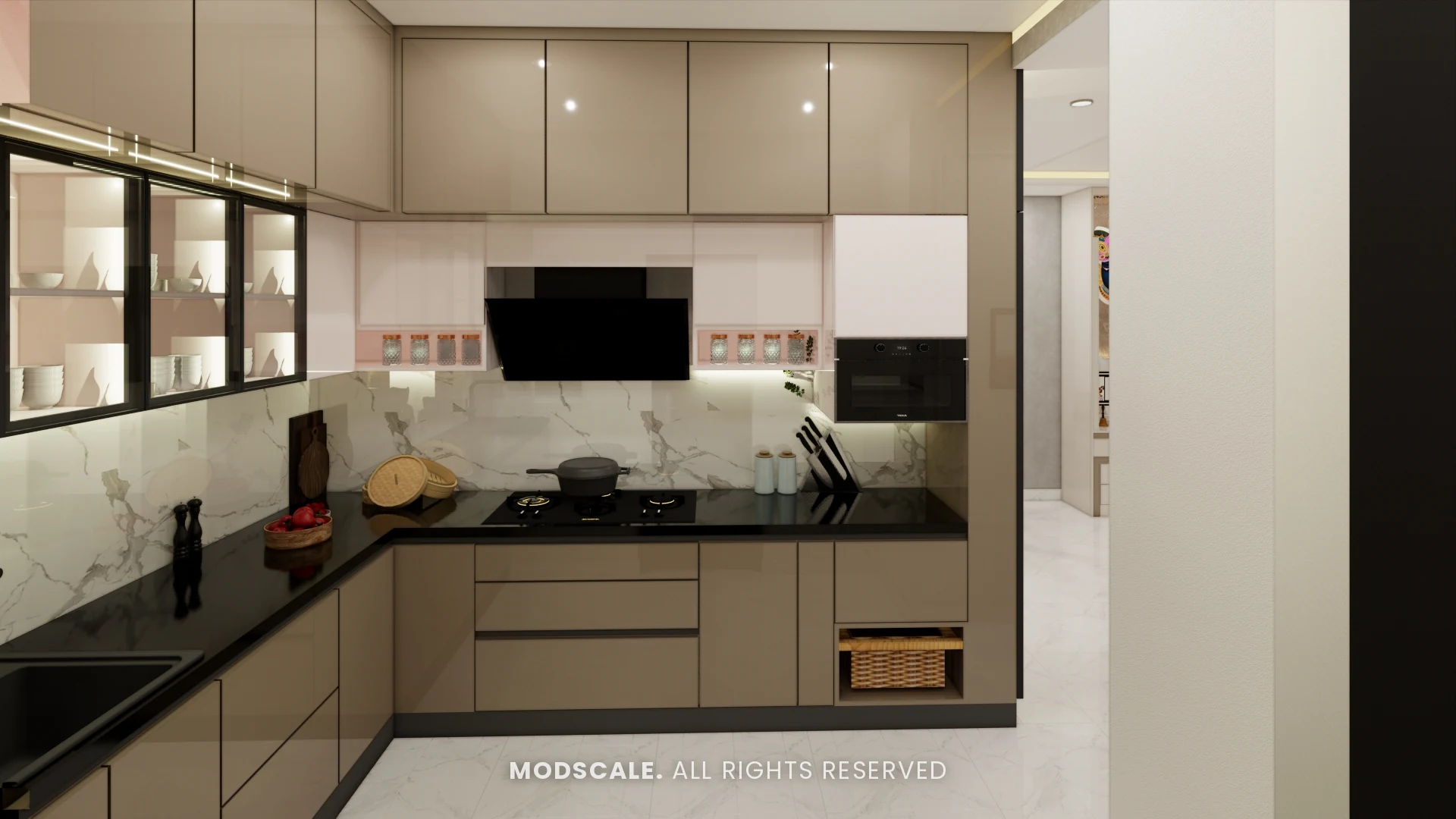
Spotting particle board in a quote
- Look for words like “pre-lam board”, “chipboard” or “PB”.
- Ask what the carcass, shelves and shutters are made of, separately.
- Ask for the board grade and brand on the itemised quote.
Look at a cut edge: plywood shows layers of veneer; particle board shows a mass of small chips.
What ModScale uses
ModScale builds kitchens, wardrobes and units in BWP plywood throughout. Read modular vs carpenter-made and how to compare interior quotations.
Frequently asked questions
Is particle board better than plywood?
No for strength and moisture. Particle board is cheaper and fine for light, dry-area furniture.
Can particle board be used in the kitchen?
It is not recommended; it swells and breaks down when wet.
How do I identify particle board?
A cut edge shows compressed chips rather than layers of veneer.
Why is ready-made furniture made of particle board?
It is cheap and easy to machine in a factory.
What board should built-in wardrobes use?
Plywood, ideally BWR or BWP grade.