
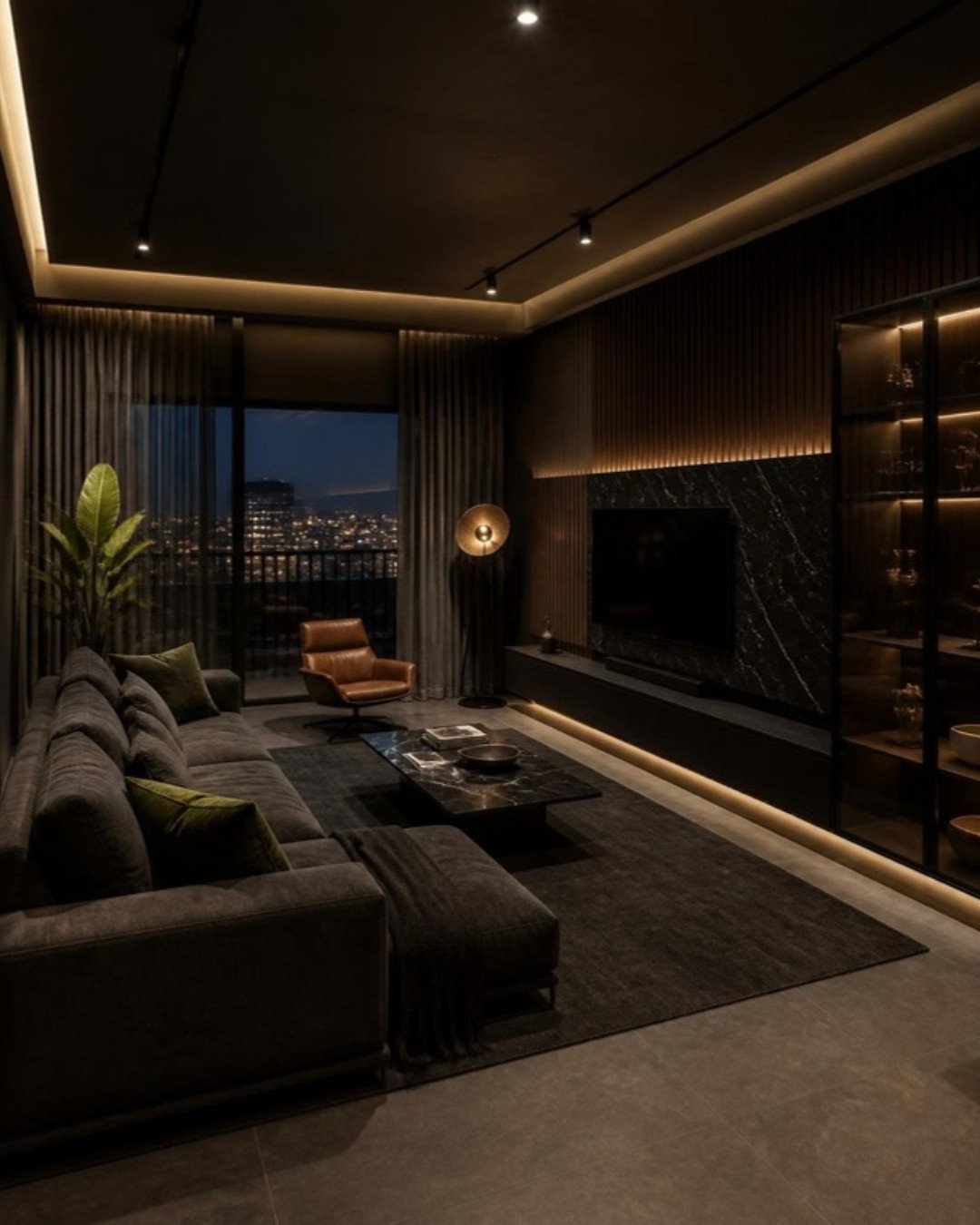
A sofa is the largest piece of loose furniture most families buy, and it is also the one most often bought in a hurry. It looks right in a showroom with a six-metre ceiling, then arrives at a Bengaluru apartment and blocks the balcony door. This guide walks through the decisions in the order that actually matters: size first, then configuration, then what is inside the sofa, then what covers it, and finally whether to buy ready-made or have one built.
We have deliberately left out prices. Sofa prices vary enormously by city, brand, fabric and season, and we could not find a single published source reliable enough to quote. Ask for itemised quotations instead and compare like with like using the checklist below.
Start with the room, not the sofa
Measure the living room before you look at a single catalogue. Note the length of the wall the sofa will sit against, the position of doors, balcony sliders, switchboards and the TV wall, and the route from the lift to the room. The numbers below are approximate rules of thumb used in furniture planning, not fixed standards, so treat them as a starting point.
Seating width and depth
- Seat width per person: allow roughly 55 to 60 cm of seat for each adult. A three-seater therefore usually ends up around 190 to 215 cm wide overall once the arms are included.
- Overall depth: most sofas are about 80 to 95 cm deep. Deep lounge-style sofas can cross 100 cm and eat into a compact room quickly.
- Seat height: around 40 to 45 cm from the floor suits most adults. Very low sofas look elegant but are hard on older knees.
Clearances that keep the room usable
- Main walkway: keep about 75 to 90 cm clear on the route people use most, such as from the entrance to the dining area or the balcony.
- Sofa to centre table: about 40 to 45 cm, close enough to reach a cup and far enough to walk through.
- Sofa to TV: depends on screen size, but in most apartments the sofa ends up 2.4 to 3.3 metres from the screen. If you are planning the media wall at the same time, our notes on TV unit design cover the viewing height and storage side of it.
The masking tape test
Mark the footprint of the sofa on the floor with masking tape or newspaper, including the chaise or the second sofa, and live with it for a day or two. Open the balcony door, walk through with a laundry basket, pull out a dining chair. This simple step catches most sizing mistakes before any money changes hands.
Check the delivery route
Measure the lift door, the lift’s inner depth, the staircase turn and your main door. Many sofas are returned because they cannot enter the flat. If the route is tight, look for a sofa that arrives in sections, has removable legs and arms, or is assembled on site.
L-shape or 3+2: which configuration suits your room?
This is the question we hear most often, and the honest answer is that it depends on the shape of the room and how your family sits.
When an L-shaped sofa works
- The living room is squarish or has a clear corner with two uninterrupted walls.
- You want one piece that also separates living and dining in an open plan.
- The family likes to stretch out, and a chaise will be used daily.
The trade-offs: an L-shape is fixed to one orientation (left-hand or right-hand), so it is harder to rearrange or carry to your next home. The corner seat is the least comfortable for a guest. Before ordering, confirm which side the chaise is on while standing facing the sofa, because showrooms and websites do not always describe this the same way.
When a 3+2 or 3+1+1 set works
- The room is long and narrow, or has doors and windows that break up the walls.
- You host often and want people facing each other rather than sitting in a row.
- You may move house in a few years and want pieces that adapt to a new layout.
Separate pieces are also easier to bring up in a lift and easier to re-upholster one at a time. The trade-off is that two sofas need more floor area than an L of the same seating capacity, because each has its own pair of arms.
What is inside: frame, suspension and foam
Two sofas that look identical can differ entirely in how long they last. Since you cannot see inside, you have to ask, and ask for the answers in writing on the quotation.
Frame
- Seasoned hardwood such as sal or teak is the traditional choice for long life. The wood must be properly seasoned and treated; unseasoned timber warps and invites borers.
- Kiln-dried pine or rubberwood is common in factory-made sofas. It is lighter and adequate when joints are properly made.
- Plywood frames are used in many custom and modular sofas. Ask which grade is used; our guide to plywood grades explains the difference between MR, BWR and BWP.
- Metal frames appear in sofa-cum-beds and recliners. Check the welds and the finish for rust protection.
Whatever the material, look at the joinery. Corner blocks, screws and glue hold up better than staples alone. Lift one front corner of the sofa about 15 cm; if the other front leg does not rise with it, the frame is flexing more than it should.
Suspension
Under the cushions there is usually either elastic webbing, zig-zag (sinuous) steel springs, or a solid board. Webbing is economical but can slacken over the years. Zig-zag springs give a livelier, more durable seat. A solid ply base feels firm and suits people who dislike sinking in. Sit in the middle of the sofa and at the edge of the seat; neither should sag noticeably.
Foam
Sellers in India generally describe foam by its density, with seat cushions commonly offered in the range of about 32 to 40 density and softer foam used for backs. As a general principle, higher-density foam holds its shape longer, while firmness is a separate property. High-resilience (HR) foam springs back better than standard PU foam. Many good sofas layer a firm core with a softer top, or wrap the foam in polyester fibre for a plumper look.
- Ask for the foam density and type for the seat and the back separately.
- Prefer removable seat cushions with zips, so foam can be replaced after some years without rebuilding the sofa.
- Sit for at least ten minutes in the showroom. A seat that feels luxurious for thirty seconds can feel too soft through a full film.
Fabric or leatherette?
Fabric
Fabric breathes, which matters in Indian summers and in homes without constant air-conditioning. It comes in endless textures, and a tightly woven polyester blend or a performance fabric with a stain-resistant finish copes well with daily use. The drawbacks are dust and spills: fabric needs regular vacuuming, and light colours show marks. Ask for removable, washable covers if you have children, and check the weave is tight if you have cats or dogs.
Leatherette
Leatherette (also sold as faux leather, rexine or PU leather) wipes clean in seconds, which makes it popular with young families. It does not breathe, so it can feel sticky in humid weather, and lower-grade material may peel or crack after a few years, particularly on sofas that sit in direct sun. Ask about the thickness and backing of the material and keep the sofa away from west-facing glass where possible.
Choosing colour
Mid-tones such as greys, taupes, olive and muted blues hide everyday dust better than white or black. Pick the sofa colour alongside your wall, floor and curtain samples rather than in isolation. If you are still deciding the overall look, our piece on living room design ideas may help you settle a palette first.
Custom-made or ready-made?
Ready-made
- You can sit on the exact model before buying.
- Delivery is usually quicker, and there is a brand warranty and return policy to fall back on.
- Sizes are fixed, so the sofa may be 15 cm too long or too short for your wall.
Custom-made
- Built to the exact length, depth, seat height and firmness you want, which is valuable in awkward rooms.
- You choose the frame material, foam and fabric yourself.
- You cannot try the finished piece beforehand, so quality depends on the workshop. Insist on a written specification and, if possible, sit on a similar piece the maker has built.
The same thinking applies to the rest of the home; our comparison of modular and carpenter-made furniture covers the wider trade-offs. If your sofa is part of a full home project, it helps to finalise it along with the layout, so that switchboards, floor lamps and the TV wall are positioned around it rather than the other way round.
A quick checklist before you pay
- Room measured and footprint taped out on the floor.
- Lift, staircase and door sizes checked against the sofa’s largest section.
- Orientation of the L or chaise confirmed in writing.
- Frame material, suspension type and foam density written on the quotation.
- Fabric name and code recorded, with a swatch kept at home.
- Warranty terms read: what is covered for frame, foam and fabric, and for how long.
- Delivery, installation and return terms understood.
Frequently asked questions
There is no single answer because living rooms differ, but many compact living rooms take a three-seater comfortably with one or two chairs, or a small L-shape. Tape the footprint on the floor and keep the main walkway clear before deciding.
It can be, if the room has a free corner and the chaise does not block a door or balcony. In a narrow room, a three-seater with a movable pouffe usually gives the same comfort with more flexibility.
For daily use, a higher-density or high-resilience foam generally keeps its shape longer than low-density foam. Ask the seller to state the density and type in writing, and judge comfort by sitting on it for several minutes.
Is fabric or leatherette better for Indian weather?
Fabric breathes better in heat and humidity; leatherette is easier to wipe clean. Homes with small children often prefer leatherette or washable fabric covers, while homes without air-conditioning tend to find fabric more comfortable.
Planning your interiors? Book a free design consultation or WhatsApp us on +91 88845 55998.