
Decorative (outer) laminates are usually 0.8 mm or 1 mm, with some premium ranges at 1–1.25 mm. 1 mm is more durable and is preferred on shutters and high-wear surfaces. Liner laminates (0.6–0.8 mm, plain) cover the inside of cabinets and the back of shutters to balance them. Always laminate both faces of a shutter so it stays flat.
Laminate thickness is easy to miss in a quote but affects how shutters wear and whether they warp. Here is what to ask for.
Thickness by use
| Use | Typical thickness |
|---|---|
| Kitchen and wardrobe shutters (outer) | 1 mm |
| Visible carcass sides | 0.8–1 mm |
| Cabinet insides | 0.6–0.8 mm liner |
| Shutter backs | Liner or matching laminate |
| Post-formed edges | About 0.6–0.8 mm, flexible grade |
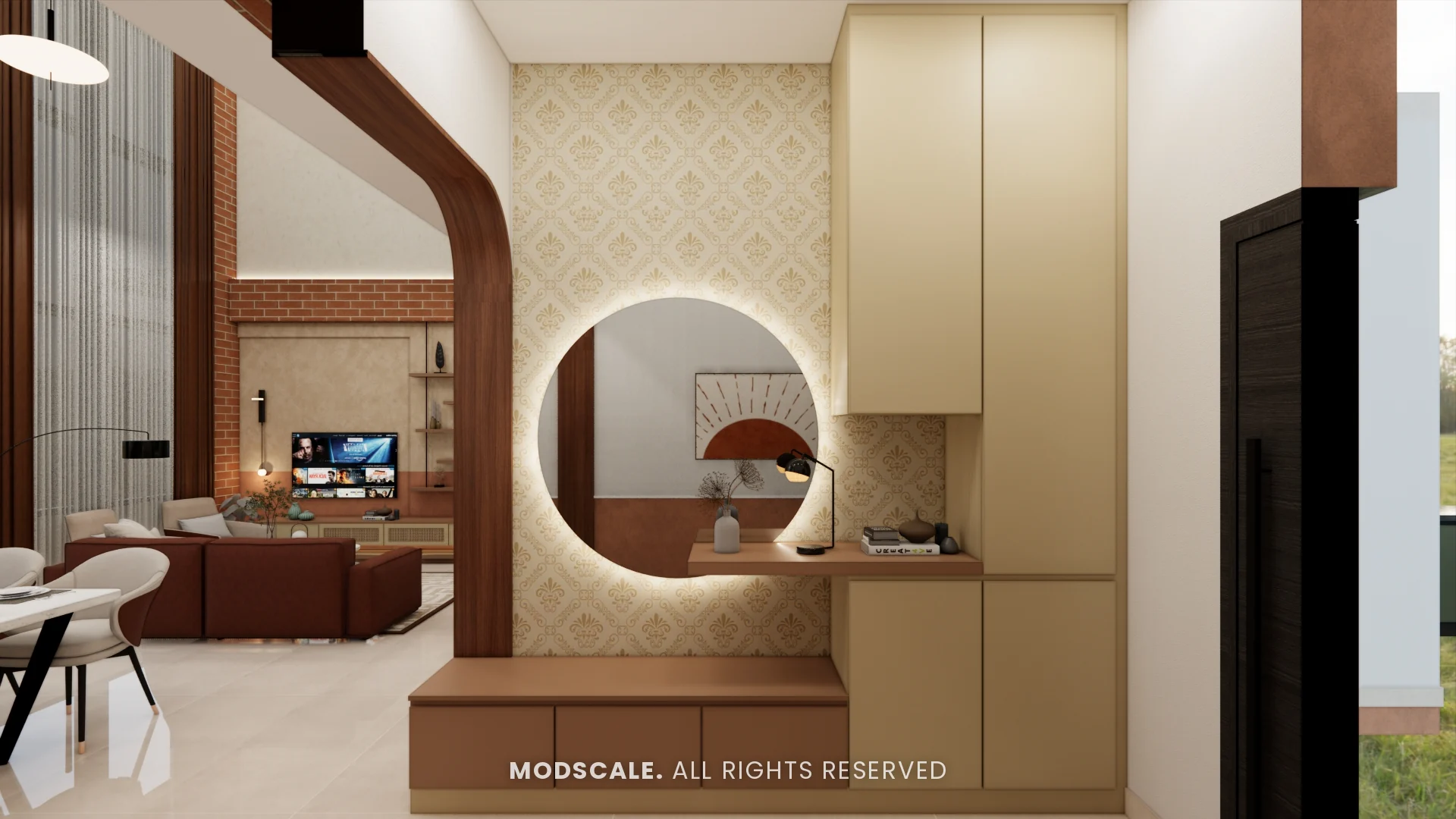
Why balance both faces
A shutter laminated on one side only pulls towards that side as humidity changes and slowly warps. A liner on the inside face balances it. More on finishes in PU vs acrylic vs laminate and laminate colour combinations.
Ask the quote to state outer laminate thickness, liner thickness and brand for each unit.
Board underneath
Laminate is only as good as the board it is pressed on. ModScale presses laminates on BWP plywood. See plywood grades.
Frequently asked questions
Which laminate thickness is best?
1 mm for shutters and high-wear surfaces; 0.8 mm is standard elsewhere.
What is a liner laminate?
A thinner, plain laminate (about 0.6 to 0.8 mm) used inside cabinets and on shutter backs.
Is 1 mm laminate better than 0.8 mm?
It is more durable and resists dents better.
Why do shutters warp?
Often because only one face is laminated; balance both faces.
Does laminate thickness affect cost?
Yes, thicker and premium laminates cost more per sheet.