
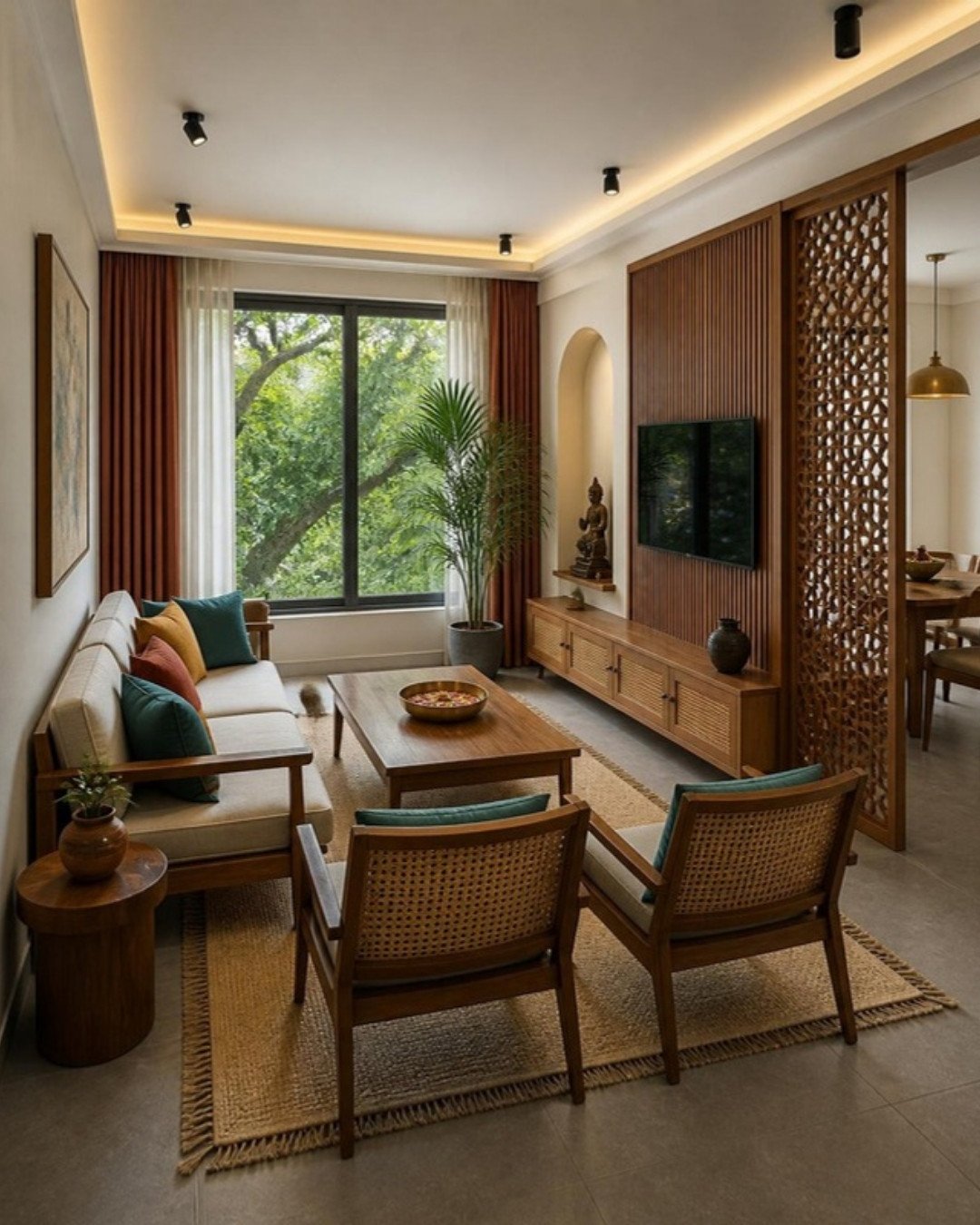
Doing up a flat you will live in and doing up a flat you will let out are two different jobs. In your own home you design around your taste and routines. In a rental, you design for a tenant you have not met, for wear you cannot supervise and for repairs you will be paying for. The aim is a home that lets quickly, cleans up easily between tenants and does not need rework every two years.
This guide sets out what is worth installing in a Bangalore rental flat, what to skip and how to decide between semi-furnished and fully furnished.
What the Bangalore rental market looks like right now
A few published data points are useful context before you spend anything:
- The Magicbricks Rental Index for Q1 2026 (January to March), as reported by Outlook Money, described Bengaluru as the strongest rental performer among major cities that quarter, with rental demand up 5.2 per cent and rents up 8.6 per cent quarter on quarter. The report attributed this largely to hiring in IT and technology corridors.
- The Magicbricks Rental Index for Q2 2026 (April to June), as reported by The Realty Today, recorded a further 13.4 per cent quarter-on-quarter rise in rental demand in Bengaluru.
- The same Q2 2026 report found that, nationally, semi-furnished homes accounted for more than half of rental demand and that 2 BHK homes made up 46 per cent of it.
- Anarock Research, as reported by Business Today in August 2026, linked the strength of rental markets such as Bengaluru to the city’s employment base, the expansion of Global Capability Centres and sustained migration into the city.
These are market-wide snapshots from the named reports for the periods stated. They are not a forecast, and they say nothing about what your particular flat will fetch. Rent depends on locality, building, floor, condition and timing, and no interior package can guarantee a rent or a yield. What the data does suggest is the direction to design in: a working professional or young family, most often looking for a two-bedroom home that is semi-furnished.
Semi-furnished or fully furnished?
What each term usually means
There is no legal definition, and listings use the words loosely. In practice, in Bangalore:
- Unfurnished: bare shell with basic electrical points, sanitary fittings and perhaps a kitchen slab.
- Semi-furnished: fixed items are in place, typically a modular kitchen, wardrobes in the bedrooms, lights, fans, geysers and curtain rods. Sometimes a chimney and hob as well.
- Fully furnished: everything above plus loose furniture and appliances, such as beds, mattresses, sofa, dining table, fridge, washing machine, television and often air conditioners.
Why semi-furnished is the safer default
- It matches where demand is, going by the Magicbricks figures above.
- Many tenants already own a bed, sofa and fridge, and do not want to pay for or store duplicates.
- Fixed woodwork survives a change of tenant. Loose furniture and appliances are what get damaged, argued over at deposit time and replaced.
- Your upfront spend and your ongoing repair list are both shorter.
When fully furnished makes sense
Fully furnished can suit studio and one-bedroom flats near large tech parks, where tenants are often single professionals, people on short assignments or new arrivals with no household goods. If you go this way, accept that appliances will need servicing and replacement, keep a signed inventory with photographs, and buy sturdy, plain furniture rather than anything delicate.
What to install
A simple, hard-wearing modular kitchen
The kitchen is the first thing most tenants check. They expect it to be ready to cook in from day one. A sensible rental specification is:
- Base units and wall units in a straight or L-shaped layout, with a mix of drawers and shelves.
- Moisture-resistant carcass material, particularly under the sink and beside the hob. BWP-grade plywood or a comparable moisture-resistant board is worth it in the wet zone even if you economise elsewhere.
- Laminate shutters in a matt or suede finish. They hide fingerprints and scratches better than high gloss, and far better than acrylic or lacquered glass.
- A granite or other hard stone counter. It tolerates hot vessels and rough use.
- Stainless-steel sink, standard soft-close hinges and drawer channels from a brand whose spares are easy to find.
- A chimney and hob are increasingly expected in mid-range and premium apartment complexes. A basic, easily serviced model is enough.
- Electrical points and space for the tenant’s fridge, water purifier, microwave and washing machine.
Wardrobes in every bedroom
After the kitchen, wardrobes are what make a flat count as semi-furnished. Keep them straightforward:
- Floor-to-ceiling units with lofts, so that tenants have somewhere for suitcases.
- Laminate finish inside and out, in a neutral shade.
- A plain internal layout of hanging space, shelves and one or two drawers. Skip specialised pull-out accessories.
- Hinged shutters are the simplest to maintain. Sliding shutters save floor space in tight rooms but depend on track quality; our comparison of sliding and hinged wardrobes explains the trade-off.
Fixtures tenants take for granted
- LED lights and ceiling fans in every room.
- Geysers in the bathrooms, and exhaust fans in the bathrooms and kitchen.
- Curtain rods or tracks on all windows. Curtains themselves are optional.
- Mosquito mesh on windows and balcony doors, which matters a great deal in Bengaluru.
- A basic vanity or mirror cabinet and towel rods in bathrooms.
- Grilles or safety rails on balconies where the building permits, especially for family tenants.
- A cloth-drying arrangement in the utility area.
- Enough plug points, including provision for air conditioners (power point, core cut and drain) even if you do not supply the units.
Durable base finishes
- Walls: a washable emulsion in white or a light neutral. You will repaint between tenancies, so choose a shade that is easy to match and touch up.
- Floors: vitrified tiles, already present in most apartments, are ideal. Avoid laying wooden or laminate flooring in a rental.
- Bathrooms: anti-skid floor tiles and standard fittings from a mainstream brand, so that a washer or cartridge can be replaced the same day.
What to skip
- Elaborate false ceilings and cove lighting. They add cost, hide leaks from the flat above and tenants rarely pay extra for them. A plain ceiling with good surface lights is enough.
- Wallpaper, textured paint and wall panelling. Taste-specific and hard to repair after a tenant has hung pictures.
- High-gloss, acrylic, glass and veneer finishes. They scratch, chip or need polishing.
- A built-in TV unit with back panelling. A simple low console or a clear wall with points at the right height lets tenants place their own screen.
- Fixed study tables, crockery units and pooja units. Needs differ from household to household. Leave the walls free.
- Built-in appliances. Built-in ovens and microwaves are costly to repair and awkward to replace in a fixed niche.
- Expensive hardware. Lift-up systems, tandem pantry pull-outs and corner carousels are pleasant to own and costly to fix when handled roughly.
The principle is to put money into what every tenant uses every day and leave out what only some would appreciate. For a fuller view of where the money goes in any project, read what drives interior cost, and for pared-back specifications see our approach to budget home interiors.
Designing for low maintenance
- Standardise. Use the same laminate, handle, hinge and light fitting throughout the flat. One spare of each covers every room.
- Keep leftovers. Store a spare laminate sheet, a box of floor and wall tiles and the paint shade code. Matching them three years later is difficult.
- Protect the wet zones. Aluminium or PVC skirting under kitchen base units, a sealed sink cut-out and a proper slope in the utility area prevent most water damage.
- Add edge banding everywhere. Exposed board edges are where swelling starts.
- Choose serviceable brands. For chimneys, geysers and bathroom fittings, pick makes with a service network in the city.
- Document the handover. Photograph every room and list the fixtures in the rental agreement. Leave a simple care note covering chimney filter cleaning and what not to use on laminate.
- Inspect between tenancies. Tighten hinges, re-seal the sink and counter joints, service the geysers and touch up paint before the next viewing.
Budgeting and execution
We have deliberately not quoted rupee figures here, because the cost of a rental fit-out varies with flat size, material grade and scope, and a number without a drawing is misleading. Start instead with a scope list: kitchen, wardrobes, electrical fixtures, bathroom accessories, mesh and painting. Then ask for an itemised quotation against that list so you can drop or downgrade items line by line.
Factory-made modular units are generally quicker to install and more consistent, which matters when the flat is sitting empty; our guide to modular versus carpenter-made work covers the differences. If you live outside Bengaluru or simply do not have the time to coordinate several vendors, a single-contract turnkey interior service keeps design, manufacture and installation under one point of responsibility.
Frequently asked questions
For most two- and three-bedroom flats, semi-furnished is the lower-risk choice. The Magicbricks Rental Index for Q2 2026 reported that semi-furnished homes made up more than half of rental demand nationally. Fully furnished is worth considering mainly for studios and one-bedroom flats aimed at single professionals or short stays.
A ready kitchen and wardrobes generally make a flat easier to let and more comparable with other semi-furnished listings in the building, but nobody can promise a specific rent or return. Check current listings for similar flats in your own complex before deciding how much to spend.
Moisture-resistant plywood or board for the kitchen carcass, matt laminate for shutters, granite for the counter, vitrified floor tiles and washable emulsion on the walls. All are easy to clean and easy to repair or match later.
For a semi-furnished flat, providing the AC points and leaving the units to the tenant is common. If you do supply appliances, list them with their condition in the agreement and budget for servicing and eventual replacement.
How long does a basic rental fit-out take?
It depends on the scope and on whether the units are factory-made or built on site, so ask for a written schedule with your quotation. Painting and electrical work are normally finished before the woodwork is installed.
Planning your interiors? Book a free design consultation or WhatsApp us on +91 88845 55998.